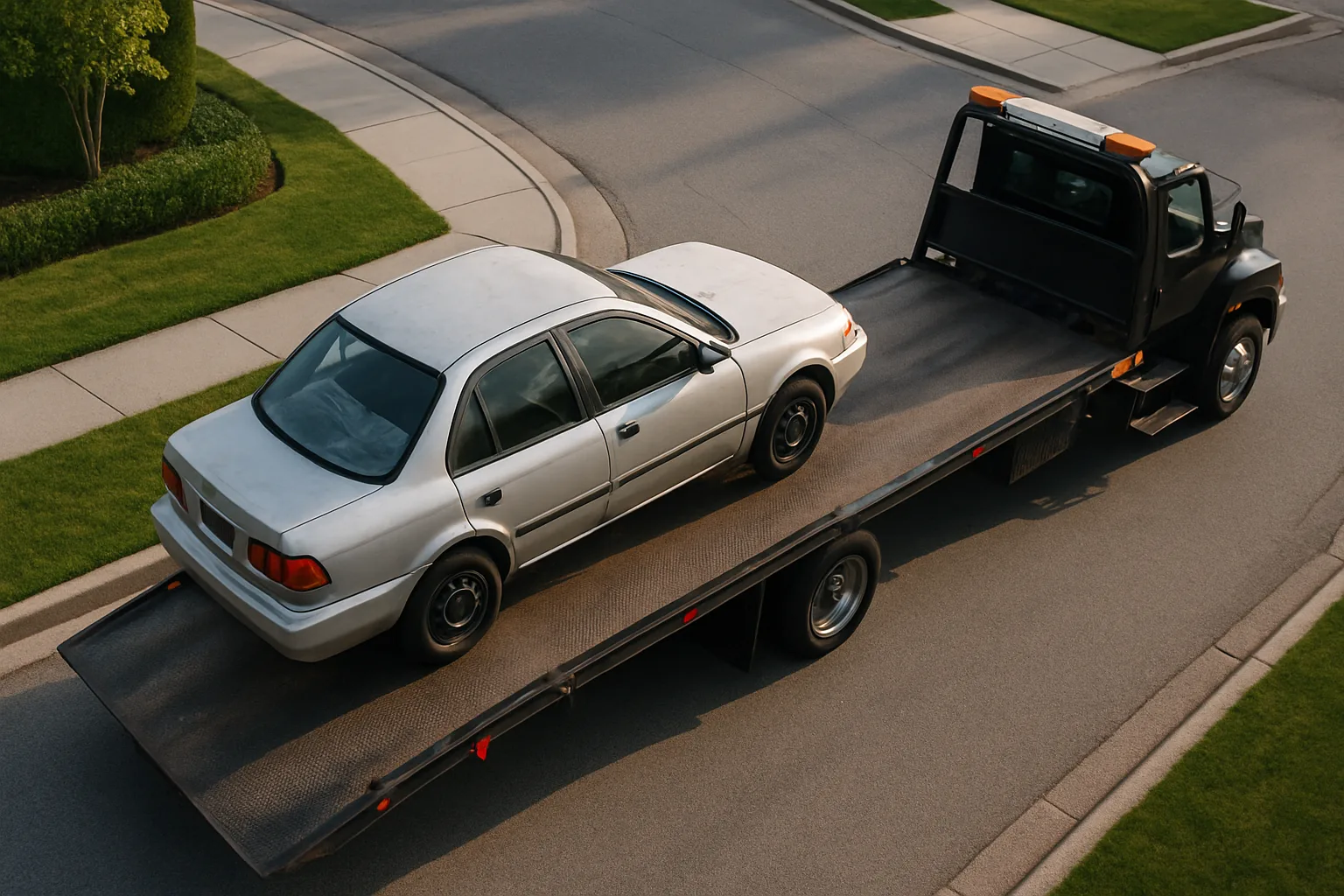
Most Canadians don't realize their unwanted car could be worth more than a tax receipt. Car donation sounds noble — and it can be — but before you hand over your keys, you need to understand what you're actually getting, what you're giving up, and whether selling makes more sense for your situation. If you're sitting on an old beater in Kamloops, a written-off vehicle, or an inherited car you don't know what to do with, this guide walks you through both paths clearly.
Whether you want to donate a car in Canada or sell your junk car in Kamloops for cash, the process matters. Done right, you walk away with either a legitimate tax receipt or real money in your pocket. Done wrong, you get neither.
What Car Donation in Canada Actually Means
Donating a car in Canada means transferring ownership of your vehicle to a registered charity. The charity typically sells the car — either at auction, to a dealer, or to a scrapper — and uses the proceeds for their programs. In return, you may receive a charitable donation receipt for the fair market value of the vehicle, which you can use to claim a tax credit when you file.
The key word there is may. Not every car donation program issues receipts for the full amount you expect. Some programs deduct administrative fees, towing costs, and processing charges before calculating the receipt value. A car you think is worth $3,000 might only generate a $900 receipt after those deductions. That's not a scam — it's just how many programs work — but it's worth knowing before you commit.
- Only donate to CRA-registered charities — otherwise your receipt is worthless at tax time
- Ask upfront: does the receipt reflect gross sale value or net proceeds after fees?
- Confirm the charity actually handles vehicle donations directly, or uses a third-party processor
- Get the receipt in writing before the car leaves your driveway
If the vehicle is in rough shape — salvage title, engine gone, major collision damage — the donation value drops fast. A scrapper will pay scrap weight prices for it, and that's what your receipt will reflect. In that case, you might be better off selling it outright and donating the cash if giving back is the goal.
Step-by-Step: How to Donate a Car in Canada
The process is straightforward when you follow the right order. Skipping steps costs you money or causes transfer headaches later.
- Find a CRA-registered charity that accepts vehicles. Many hospitals, food banks, and social service organizations run vehicle donation programs. Search the CRA's charity registry at canada.ca to confirm registration status before you contact anyone.
- Get a vehicle assessment. Some charities send someone to inspect the car. Others rely on photos and your description. Either way, be honest about the condition — overestimating value leads to a smaller receipt than you expected.
- Confirm what the receipt will cover. Ask directly: will I receive a receipt for the full sale price, or the amount after processing fees? Get the answer in writing.
- Arrange pickup or drop-off. Most programs offer free towing for donated vehicles. Confirm this before agreeing — some third-party processors charge towing fees that come off your receipt.
- Sign over the title. In British Columbia, you transfer ownership through ICBC. You'll need the vehicle's registration and your ID. Don't forget to cancel your insurance after the transfer — that's money back in your pocket.
- Receive your charitable donation receipt. You should receive this within a few weeks of the vehicle being sold. Keep it for your tax return.
- Claim the tax credit. In Canada, charitable donation credits reduce your federal and provincial tax owing — not your income. The credit rate depends on your province and the total amount donated. Consult a tax professional if you're unsure how to apply it correctly.
That's the honest version of the process. It works well when the vehicle has real value and the charity is legitimate. But if the car is seriously damaged, uninsured, or sitting on a suspended registration, the donation route may not deliver what you're hoping for.
Sell My Junk Car Kamloops: When Selling Beats Donating
Here's the math most people don't run. If your car sells for $1,500 and you're in a 30% marginal tax bracket, a donation receipt saves you roughly $450 in taxes. If you sell it outright instead, you walk away with $1,500 cash. That's not a close comparison. Donating makes more financial sense when the tax receipt is large and your tax owing is high enough to use it — not as a blanket rule for every unwanted vehicle.
If you're trying to sell my junk car Kamloops — whether it's a write-off from a collision on the Coquihalla, an estate vehicle you inherited and can't insure, or an old truck that hasn't run in two years — selling is usually the faster and more financially rewarding path. The question is: selling to whom, and for how much?
The old way is one phone call to one buyer who gives you one number. You have no idea if that number is fair. You either take it or spend days calling around to compare. That's time most people don't have, and it shouldn't be that hard. Platforms like SMASH bring vetted buyers to you. Competition between buyers is what reveals what your car is actually worth — not a single buyer's lowball offer. If you want to get a free car valuation in Canada without the runaround, that's exactly what SMASH is built for.
How Much Is My Salvage Car Worth in British Columbia?
Vehicle value at end-of-life comes down to a few factors, and knowing them helps you negotiate or evaluate any offer you receive.
- Make, model, and year: Popular vehicles with widely available parts hold value longer. A 2012 Honda Civic in poor condition is still more valuable than a 2003 vehicle with no parts demand.
- Condition of the catalytic converter: Cats are often the highest-value component on a junk car. If yours has been stolen or gutted, that affects your offer significantly.
- Engine and transmission status: Running vehicles almost always get higher offers than non-running ones, even if the body is rough.
- Curb weight and steel content: Scrap buyers price by weight when the vehicle has no parts value. Steel prices fluctuate — what a car is worth today may differ from what it's worth in three months.
- Location: A vehicle in Kamloops accessible by a standard tow truck will get better offers than one on an acreage with no road access.
If you've been searching for a scrap car value calculator to get a quick number, know that most online tools give you a rough estimate at best. Real quotes require real information. Describing your vehicle accurately — year, condition, running or not, title status — is what gets you an offer you can actually rely on. You can connect with trusted auto buyers in Canada through SMASH Cars and get a real number based on real buyer demand, not a formula.
And if you're exploring scrap car removal specifically, explore scrap car removal in Canada at GetMyScrapCar — a straightforward option for end-of-life vehicles across the country.
Documents You Need to Sell or Donate a Vehicle in Kamloops
Whether you're donating or selling, you need your paperwork in order. Missing documents slow everything down — or in some cases, kill the deal entirely. Here's what to have ready if you're in British Columbia.
- Vehicle registration: Your current registration from ICBC confirms you are the registered owner
- Government-issued ID: Driver's licence or equivalent — required for ownership transfer
- Title or ownership document: If the vehicle is financed, the lien must be cleared before transfer
- Estate documents (if applicable): If you're selling an inherited vehicle, you may need a grant of probate or letters of administration — confirm with the buyer or charity before proceeding
- Bill of sale: For private sales, a signed bill of sale protects both parties
If the registration is expired or the vehicle is uninsured, you can still sell it. You cannot legally drive it to a buyer, but you can arrange pickup. Make sure the buyer or removal service is handling transportation — that's standard for junk and salvage vehicles. For more guidance on selling in tricky situations, browse Canadian car selling tips on our blog where we break down common scenarios step by step.
Donation vs. Selling: Which Is Right for Your Situation?
There's no universal right answer. But here's a clear breakdown to help you decide based on your actual situation — not what sounds most virtuous.
Donate if:
- You have meaningful tax owing and can use a large charitable credit
- The vehicle has enough value to generate a receipt worth more than a cash sale
- You've already committed to supporting a specific registered charity
- Selling the car yourself feels overwhelming and the tax benefit is adequate compensation
Sell if:
- You need cash now — donation receipts don't pay bills
- The vehicle is heavily damaged and the scrap value is low — a receipt for $300 isn't worth the process
- You're in a low tax bracket where the credit value is minimal
- The estate needs to be settled quickly and liquid funds are required
- You want to sell my car fast Kamloops without waiting weeks for a charity to process the vehicle
The honest answer for most people with a junk vehicle in Kamloops: sell it, get real money, and donate cash to whatever cause matters to you if that's the goal. You'll likely end up with more to give and more in your pocket.
If you're ready to find out what your car is actually worth — not what one buyer feels like offering — SMASH connects you with vetted buyers who compete for your vehicle. That competition is what drives better offers. No subscription fees. No obligation. Just real buyers and real numbers. Get your free offer at smash-cars.ca.
Frequently Asked Questions
Q: Can I donate a car in Kamloops if it doesn't run?
Yes, most vehicle donation programs accept non-running vehicles and will arrange towing at no charge to you. However, a non-running car has lower resale or scrap value, which means your donation receipt will reflect that lower amount. If the vehicle is truly at end-of-life, compare the receipt value against a direct cash offer before deciding.
Q: How long does it take to sell my junk car in Kamloops?
With the right buyer or platform, same-day or next-day offers are realistic. Pickup typically happens within one to three business days once an offer is accepted. The process slows down when paperwork is missing or the vehicle is in a difficult location — having your registration and ID ready speeds things up significantly.
Q: How much is my salvage car worth in British Columbia?
It depends on the year, make, model, condition, and current scrap metal prices. A running vehicle in poor cosmetic condition typically gets a stronger offer than a non-running one. Steel prices fluctuate, so a real-time quote from a vetted buyer gives you a more accurate number than any general estimate. Prices fluctuate — always check current rates before committing to a sale.
Q: Can I sell a car in Kamloops without insurance or a valid registration?
Yes. You cannot drive an uninsured or unregistered vehicle, but you can sell it. The buyer or removal service arranges transportation. Make sure you have proof of ownership (your most recent registration document) and a valid ID to complete the transfer through ICBC.
Q: Is donating a car or selling it better for an inherited vehicle in Canada?
If the estate needs cash, sell it — a donation receipt doesn't settle debts or pay legal fees. If the estate has significant tax owing and the vehicle has real value, a donation to a CRA-registered charity could reduce that tax burden. Talk to an estate lawyer or accountant before deciding — the right answer depends on the estate's specific financial position.
Stay current on scrap metal market shifts and Canadian auto selling insights by following SMASH on LinkedIn: follow SMASH on LinkedIn.
```