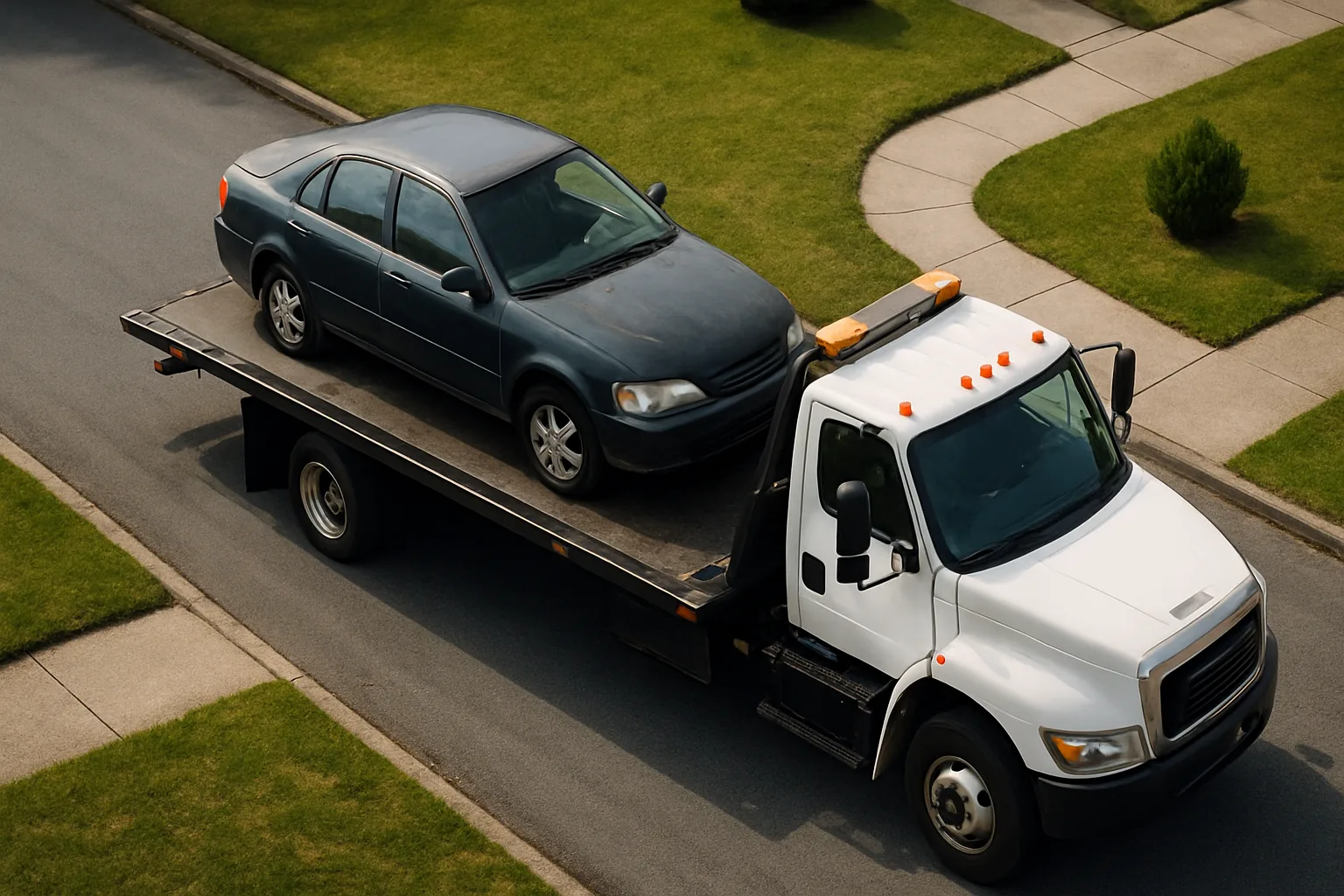
Your car just failed inspection. Now what? For a lot of Halifax drivers, a failed inspection isn't just an inconvenience — it's a financial turning point. Repair costs pile up fast. And once the estimate lands, you start doing the math on whether the fix is even worth it.
Here's the thing most mechanics won't tell you: a car that failed inspection still has real value. You don't have to hand it over for pennies. You don't have to donate it out of frustration. And you definitely don't need to pay someone to haul it away. If you play this right, you can walk away with cash in hand — sometimes significantly more than scrap metal value alone.
This is what scrap car removal Halifax actually looks like when you know your options.
Why a Failed Inspection Doesn't Mean Your Car Is Worthless
Nova Scotia has some of the strictest vehicle inspection requirements in the country. Fail an inspection and you can't legally drive or sell the car as roadworthy. But "not roadworthy" is not the same as "not sellable." There's an important distinction most car owners miss.
Your car still contains components that buyers want. Catalytic converters, alternators, starters, transmissions, and body panels all hold value. The engine block alone can be worth hundreds of dollars to the right buyer. Non-ferrous metals — copper wiring, aluminum wheels, brass fittings — add up quickly. A full-size truck that failed inspection due to a rusted frame might still fetch strong money because of the powertrain and cab components inside it.
The problem isn't the car. The problem is most people take the first offer they get, from a single buyer, with no idea what the market looks like. That's the old way. And it costs you real money.
Your Real Options When a Car Fails Inspection in Halifax
You have more choices than you think. Let's break them down honestly.
Option 1: Repair It and Sell It Certified
Sometimes this makes sense — usually when the repair cost is low relative to what you'd get for the car certified. A broken taillight or a worn tire that caused the fail? Fix it. But if you're looking at suspension work, brake line replacement, or anything structural, the math usually doesn't add up. Get the repair estimate first. Then get a quote for the car as-is. Compare both numbers before you commit to anything.
Option 2: Sell It As-Is to a Private Buyer
Private buyers will sometimes buy failed-inspection vehicles — especially if they have mechanical ability or plan to part it out themselves. You must disclose the inspection failure in Nova Scotia. This limits your buyer pool, but doesn't eliminate it. Expect a lower price than a certified vehicle, but sometimes still more than scrap value if the car is a popular model with parts demand.
Option 3: Sell It for Parts Value
Wreckers and dismantlers buy failed vehicles specifically to strip them. If your car is a high-demand make or model — think late-model imports, popular North American trucks, or vehicles with expensive components like hybrid systems — parts buyers will pay more than scrap weight alone. Call at least two or three before accepting any offer.
Option 4: Scrap It — But Do It Right
If the car is truly end-of-life — rusted out, high mileage, collision damage — scrapping makes sense. But even here, price varies significantly by buyer. A vetted platform like SMASH connects you with multiple buyers competing for your vehicle. More competition means better price discovery. That's not a promise of a specific number — it's how markets work.
Want to get a free car valuation in Canada before you commit to anything? That's the right first move. Know what your car is worth before the conversation starts.
What Halifax Buyers Actually Look At When Pricing Your Failed-Inspection Car
Understanding how buyers price these vehicles helps you negotiate better — or at least walk away from a lowball offer with confidence.
Here's what drives the number:
- Vehicle weight and metal composition. Heavier vehicles with more ferrous steel return more at current scrap metal prices. Aluminum-intensive vehicles add non-ferrous value on top.
- Catalytic converter presence and condition. Cats contain platinum group metals — palladium, rhodium, platinum — and prices for those metals shift constantly. A working cat on a 2019 or newer vehicle can add meaningful value.
- Engine and drivetrain condition. A seized engine gets scrapped. A running or recently-running engine gets sold as a remanufactured core or tested unit. That gap in value is real.
- Make, model, and year. Parts demand is highest for vehicles with large registrations across North America. A common pickup truck platform or a popular import sedan generates buyer interest faster than a discontinued nameplate.
- Location and access. Halifax scrap metal services providers, including those listed at Halifax scrap metal services, factor in pickup logistics. Easy driveway access or a vehicle that still rolls gets processed faster — sometimes for a better offer.
- Title status. Clear title, even on a failed-inspection vehicle, gives buyers confidence. A salvage title or missing paperwork complicates the transaction and usually reduces the offer.
Document everything before you call a buyer. Photos of all four corners, the engine bay, the interior, and the undercarriage. If there's visible rust damage or accident history, don't hide it — that just leads to price reductions after the fact. Transparency builds trust and speeds up the process.
The Weekly Market Reality for Scrap Cars in Halifax Right Now
As of this week in August 2026, scrap steel prices across Canada continue to fluctuate with global demand signals — particularly manufacturing output from key steel-consuming sectors. Non-ferrous metals, including the aluminum and copper recovered from end-of-life vehicles, have seen moderate activity. Catalytic converter metal prices remain sensitive to automotive production levels.
What does that mean practically? If you've been sitting on a failed-inspection vehicle in Nova Scotia waiting for "the right time," waiting rarely pays off in scrap markets. Prices move both directions. The administrative cost of storing an uninsured, uninspectable vehicle — registration fees, driveway space, potential property issues — adds up faster than metal price swings typically benefit you.
Disclaimer: Scrap metal and vehicle prices fluctuate based on market conditions. Always check current rates before finalizing any sale. The figures referenced here are general in nature and do not constitute a guaranteed offer.
If you want a current read on what your specific car might be worth in today's market, connect with trusted auto buyers in Canada through SMASH Cars and get a real number based on real market activity — not a guess.
How SMASH Makes Selling a Failed-Inspection Car Easier
Most people selling an uninspectable vehicle deal with one buyer at a time. You call a yard, they give you a number, you take it or leave it — usually with no way to verify if that number is fair. That's not negotiation. That's hoping.
SMASH changes the dynamic. Instead of one phone call to one buyer, your vehicle gets in front of multiple vetted buyers who compete for it. That competition is what reveals actual market value. The platform handles photo documentation, vehicle details, and the paperwork side — so you're not chasing anyone down for a bill of lading or an invoice.
There's no subscription fee to sell. SMASH only wins when the seller wins. For a Halifax car owner sitting on a vehicle that failed inspection and doesn't know what it's worth, that's a meaningful difference from the traditional model.
You can also browse Canadian car selling tips on our blog if you want to do more research before reaching out. Knowledge is negotiating leverage.
What to Do Before You Call Anyone About Your Failed-Inspection Car
A little preparation makes a big difference in the offer you receive. Here's the short checklist:
- Locate your ownership documents. Title or registration — whoever you sell to will need it. In Nova Scotia, a signed transfer of ownership is required.
- Get the inspection report. The failed inspection certificate tells a buyer exactly what's wrong. That transparency works in your favour — it speeds up valuation and reduces back-and-forth.
- Take photos now, before anything changes. Four corners, engine bay, odometer reading, interior condition, any visible damage.
- Note whether the vehicle still runs. "Runs and drives" versus "non-runner" has a real impact on buyer interest and offer amounts.
- Check for aftermarket parts you might want to remove. Upgraded stereo, new tires on winter rims, aftermarket wheels — if they're yours and the car is being scrapped, pull them first.
- Do not cancel your insurance before the vehicle is picked up. In most provinces including Nova Scotia, you need to maintain coverage until physical transfer is complete.
For anyone dealing with an estate vehicle, an accident write-off, or simply a car that's been sitting uninsured because it can't pass inspection — the process is the same. Clean up the paperwork, document the vehicle, and get it in front of buyers who will actually compete for it. You can also explore scrap car removal in Canada at GetMyScrapCar for additional options if the vehicle is fully end-of-life.
Frequently Asked Questions
Q: Can I sell a car that failed inspection in Halifax, Nova Scotia?
Yes. A failed inspection means you can't drive it on public roads, but it doesn't prevent you from selling the vehicle. You must disclose the inspection status to any buyer. You can sell it for scrap, for parts, or as-is to a private buyer — depending on the vehicle's condition and what the market will bear.
Q: How do I find junk car buyers near me in Halifax?
Start with a platform like SMASH that connects Halifax sellers with multiple vetted buyers rather than relying on a single cold call. You can also check local salvage yards and dismantlers, but get at least two or three quotes before accepting any offer. Competition between buyers is what reveals market value.
Q: Will I get more than scrap weight value for a failed-inspection car?
It depends on the vehicle. Newer models with sought-after parts — catalytic converters, transmissions, engines in good condition — often return more than scrap weight alone. Older vehicles with high mileage and significant rust may be priced primarily on metal weight. Getting your car in front of multiple buyers is the best way to find out what it's actually worth.
Q: How does scrap car removal in Halifax actually work?
Once you agree on a price with a buyer, they typically arrange pickup at your location — no tow cost on your end in most cases. You hand over the signed ownership documents, receive payment (cash, e-transfer, or cheque depending on the buyer), and the vehicle is removed. The whole process can often be completed within one to three business days.
Q: Do I need to cancel my Nova Scotia registration before scrapping my car?
Yes — after the vehicle is sold and removed, you should cancel the registration and insurance in Nova Scotia to stop ongoing fees. In some cases you may be eligible for a partial insurance refund if you cancel mid-term. Contact Service Nova Scotia and your insurer once the vehicle transfer is complete.
A failed inspection doesn't close the door on getting real money for your car. Halifax has an active market for end-of-life and damaged vehicles — you just need the right buyers in the room. SMASH puts multiple vetted buyers in front of your vehicle so the market decides the price, not a single phone call. Get your free offer at smash-cars.ca and find out what your car is actually worth this week.
Follow SMASH on LinkedIn for weekly market updates, scrap metal price insights, and tips on getting the most out of your next vehicle sale.
```