Strip It or Crush It? How Salvage Yards Decide What Your Car Is Really Worth
Most people assume a salvage yard just sees a pile of metal. Hand over the keys, get a flat rate, drive away. But the decision a yard makes in the first five minutes — strip it or crush it — determines how much money ends up in your pocket. Understanding that decision is how you stop leaving cash on the table when you sell my car for cash Gatineau or anywhere else across Canada.
Salvage yards are running a business, not a charity. Every vehicle that rolls through the gate gets evaluated fast. The yard is asking one question: where does this car make us the most money? Your job is to understand that logic — because it directly affects what offer you'll get.
The Two-Track System: What Happens When a Car Hits the Lot
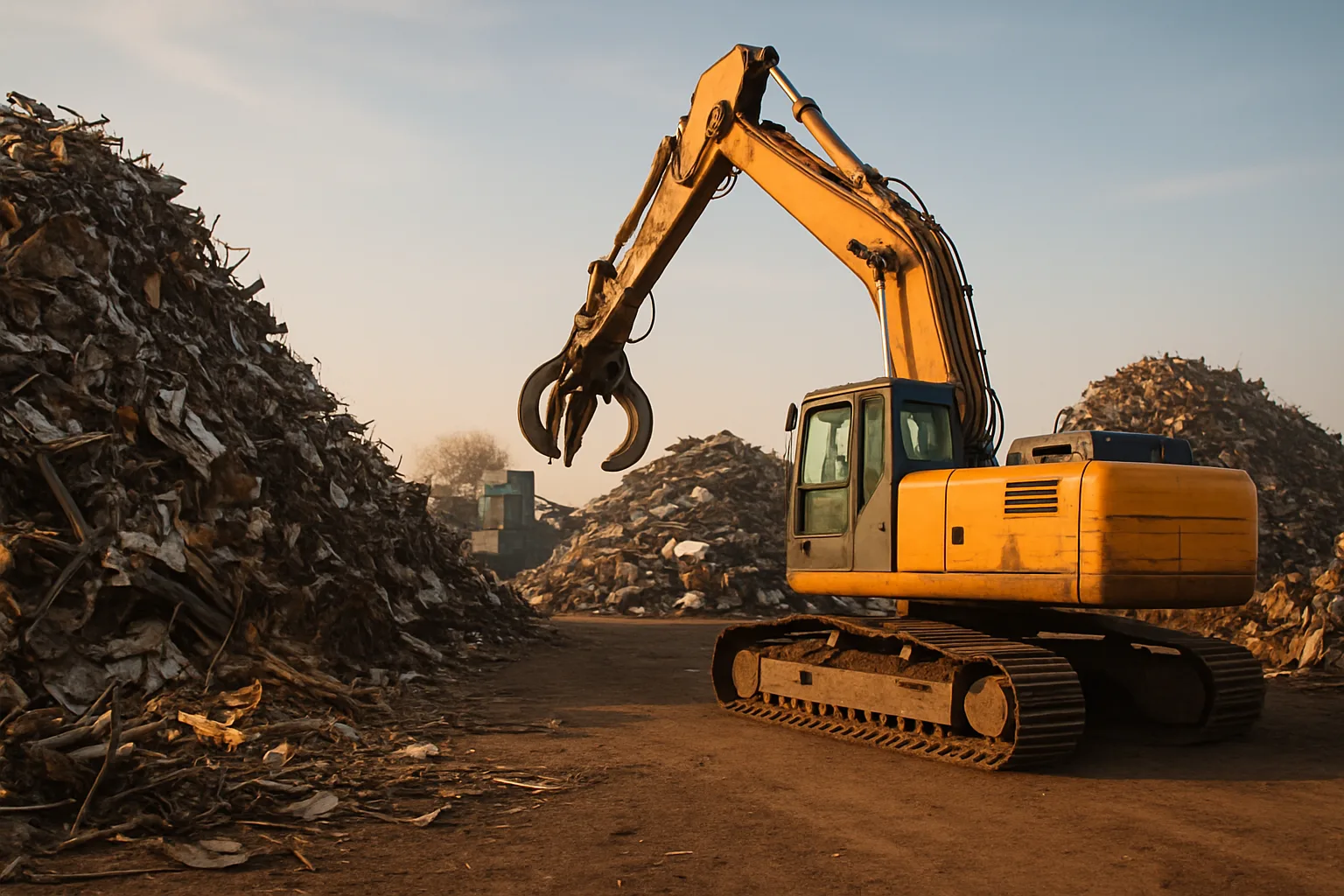
When a vehicle arrives at a salvage facility, it goes one of two directions. Track one: parts stripping, where the car gets disassembled and components are sold individually. Track two: the crusher, where the vehicle gets baled or shredded and sold as bulk scrap metal by the ton.
The yard isn't being sentimental about either option. They're doing math. A car that goes to the crusher typically generates revenue based on its weight and the current price of shredded steel. In Canada, that shredded steel price fluctuates with global commodity markets — and it can swing meaningfully over weeks, not just months. A stripped vehicle, on the other hand, can generate multiples of its scrap weight value if the right parts are in demand and in good condition.
Here's what that means for you: if your car has parts worth pulling, a yard that knows how to monetize them should theoretically offer you more for the vehicle. The problem is, many don't pass that value upstream to the seller. That's where platforms like SMASH Cars change the dynamic — by creating competition among buyers so the car's real value gets reflected in your offer.
What Makes a Car Worth Stripping (And What Gets It Crushed Fast)
Salvage yards evaluate several factors when deciding whether a vehicle is worth the labour to strip. It's not just about age or damage. A ten-year-old pickup with a low-mileage engine is a different asset than a two-year-old sedan with a written-off frame and airbags deployed. Labour costs money, so parts have to justify the time.
Parts that typically make stripping worthwhile:
- Low-mileage or rebuildable engines and transmissions — These are the highest-value pulls. A usable drivetrain from a popular make and model can be worth more than the entire scrap weight of the car.
- Catalytic converters — Still one of the most valuable items on end-of-life vehicles due to platinum group metals inside. Even damaged cars often have intact cats.
- Body panels, doors, and glass on undamaged sections — If the front end is crushed but the rear doors are perfect, those panels have resale value.
- Wheels and tires — Especially OEM alloys in good condition. Popular sizes on common vehicles move fast.
- Electronics: ECUs, infotainment units, instrument clusters — Late-model vehicles carry significant value in their electronic systems.
- Interior components: seats, trim pieces, steering wheels — Condition-dependent, but can add up on nicer vehicles.
- HVAC components, alternators, starters, ABS modules — High-turnover parts that rebuilders and independent shops regularly source from yards.
What pushes a car toward the crusher instead:
- High mileage with worn or failed drivetrain components
- Fire damage — melts wiring, contaminates fluids, and makes most parts unsellable
- Flood damage — corrosion, electrical failure, and mould make parts unreliable and hard to move
- Older vehicles where parts demand has dried up (too old to have a parts market, too common to be collectible)
- Vehicles where labour to strip exceeds the likely resale value of parts
- Vehicles where the scrap metal price is currently strong enough to make crushing the better play
That last point matters right now. As of mid-2026, ferrous and non-ferrous metal markets have seen continued volatility tied to global manufacturing demand and trade dynamics. When scrap prices are high, the crusher becomes more attractive even for vehicles that might otherwise be stripped. When prices dip, yards lean harder on parts revenue. The yard is always reading the market — and so should you.
How Your Car's Profile Affects the Offer You Receive
If you're trying to sell my junk car Gatineau — or anywhere in Quebec — knowing what makes your car strip-worthy versus crush-ready gives you leverage. You don't need to become a parts expert. But you do need to know what you have.
Popular makes and models with large owner bases tend to have stronger parts demand. Toyota, Honda, Ford, and GM vehicles with high registration numbers in Canada mean there's a consistent market for used OEM parts. A 2018 Honda CR-V with a bent frame but a perfect engine is not the same asset as a 2010 Chrysler minivan with 280,000 kilometres and a seized transmission. One has a parts story. One goes straight to the crusher.
Your car's history also plays a role. A vehicle with documented service records, no flood history, and a clear title — even if it's been in an accident — carries more credibility than an unverifiable vehicle with a rebuilt or salvage title and unknown history. Buyers and yards both price in uncertainty. When you get a free car valuation in Canada through a platform that accounts for this properly, you're more likely to see an offer that reflects actual market value rather than a lowball guess.
If you're in the Gatineau area, you're also operating in a cross-border market — proximity to Ottawa means you have access to buyers on both sides of the river. That matters for parts demand, since a larger metro population means more potential buyers for stripped components and more competition among scrap car removal services.
Why the Strip vs. Crush Decision Costs You Money If You Don't Know About It
Here's the honest truth: if you call one buyer and accept one offer, you have no idea whether that offer reflects what your car is actually worth to a yard that knows how to monetize it properly. A yard focused purely on volume crushing will offer you the scrap weight price. A yard that runs a parts operation — or a buyer who wholesales to dismantlers — may offer you significantly more for the same vehicle.
That price gap is real, and it's the core reason that getting multiple offers matters. A single phone call gives you a single data point. Competition gives you the market. That's the difference between settling for scrap weight value and getting paid for what your car actually is — a parts asset, a metal asset, or both.
This is exactly the problem a B2B scrap metal marketplace approach solves at the commercial level — and it applies to individual sellers too. When multiple buyers compete for your vehicle, the one who sees the most value in it has an incentive to reflect that in their offer. Without competition, you're just guessing, and the yard wins.
For sellers in Quebec — whether you're in Gatineau, Laval, or anywhere else in the province — the same principle holds. Your car has a real market value. The only question is whether you access it or leave it behind. Services like Canadian scrap car removal from GetMyScrapCar and platforms like SMASH Cars are built specifically to close that gap for Canadian sellers.
What to Do Before You Sell: Document What You Have
You don't need to strip your own car before selling it — that's illegal in most cases and counterproductive. But you should know what's on it before you take the first offer. A few minutes of documentation before you call a buyer can change the conversation entirely.
- Note the mileage and confirm whether the engine runs. A running vehicle is worth more than a non-runner, even if both are going to a salvage yard.
- Check for a functioning catalytic converter. If it's been stolen (a common issue in Quebec and across Canada), that affects your offer and you should disclose it.
- Identify any recent repairs or new parts. A new alternator, fresh tires, or a recently replaced battery are worth mentioning.
- Take photos of the interior, exterior, and engine bay. Documented condition gives buyers confidence and reduces the chances of a lowball offer based on assumed worst-case condition.
- Know your title status. Clear title, salvage title, rebuilt title, or lien — each affects your offer and your process.
Armed with this information, you're not just another phone call. You're a seller who knows their asset. That positioning matters, especially when you're trying to get more than flat scrap value for a vehicle that has real parts worth.
You can also browse Canadian car selling tips on our blog for more guidance on pricing, documentation, and getting the most from your vehicle — whether it runs or not.
If your vehicle ended up unwanted through an estate, an accident, or simply sitting too long without insurance, that doesn't disqualify it from being worth more than scrap. The strip vs. crush calculus doesn't care how the car got to this point — only what it's worth now. Get your offer through SMASH Cars and let buyers compete for it rather than leaving that decision — and that money — entirely in the yard's hands.
Frequently Asked Questions
Q: How do I know if my car is worth more than scrap value in Gatineau?
The best way is to get multiple offers and compare them to current scrap weight prices in Quebec. If buyers are offering noticeably more than the raw metal value, your vehicle likely has parts worth pulling. SMASH Cars connects you with multiple buyers so you can see where the real market sits, not just one yard's floor price.
Q: Can I sell my junk car in Gatineau even if it doesn't run?
Yes. Non-running vehicles are bought and sold regularly across Canada. A non-starter doesn't mean no value — it means the buyer will factor in towing and the cost of further diagnosis. Disclose the condition upfront and let buyers make informed offers. You'll get better results than hiding the issue and negotiating later.
Q: What happens to my catalytic converter when I sell my car for cash in Gatineau?
It stays with the vehicle unless you've negotiated otherwise. Catalytic converters contain platinum group metals and are one of the most valuable components on an end-of-life vehicle. If yours is intact, it's already factored into a competitive offer — which is another reason to get multiple bids rather than accepting the first number you hear.
Q: Do salvage yards in Quebec offer more for newer cars?
Generally, yes — newer vehicles tend to have stronger parts demand, more current electronics, and components that fit a larger active fleet. But age alone isn't the only factor. Condition, mileage, make, model, and current demand for specific parts all play a role. A well-maintained older vehicle with a sought-after engine can outperform a newer car with extensive damage.
Q: Is it better to sell my car to a private buyer or a salvage yard in Gatineau?
It depends on the vehicle's condition. If it still runs and drives, a private buyer through a classified listing may get you more. If it's damaged, uninsured, or end-of-life, a buyer through a platform like SMASH Cars — where multiple salvage and recycling buyers compete — often delivers better results than either option alone, with less hassle than a private sale.
Ready to stop guessing what your car is worth? Connect with trusted auto buyers in Canada through SMASH Cars and get a free offer today — no subscription, no runaround, just real buyers competing for your vehicle at smash-cars.ca.
Stay current on scrap metal market conditions and Canadian car selling insights — follow SMASH on LinkedIn for regular industry updates.