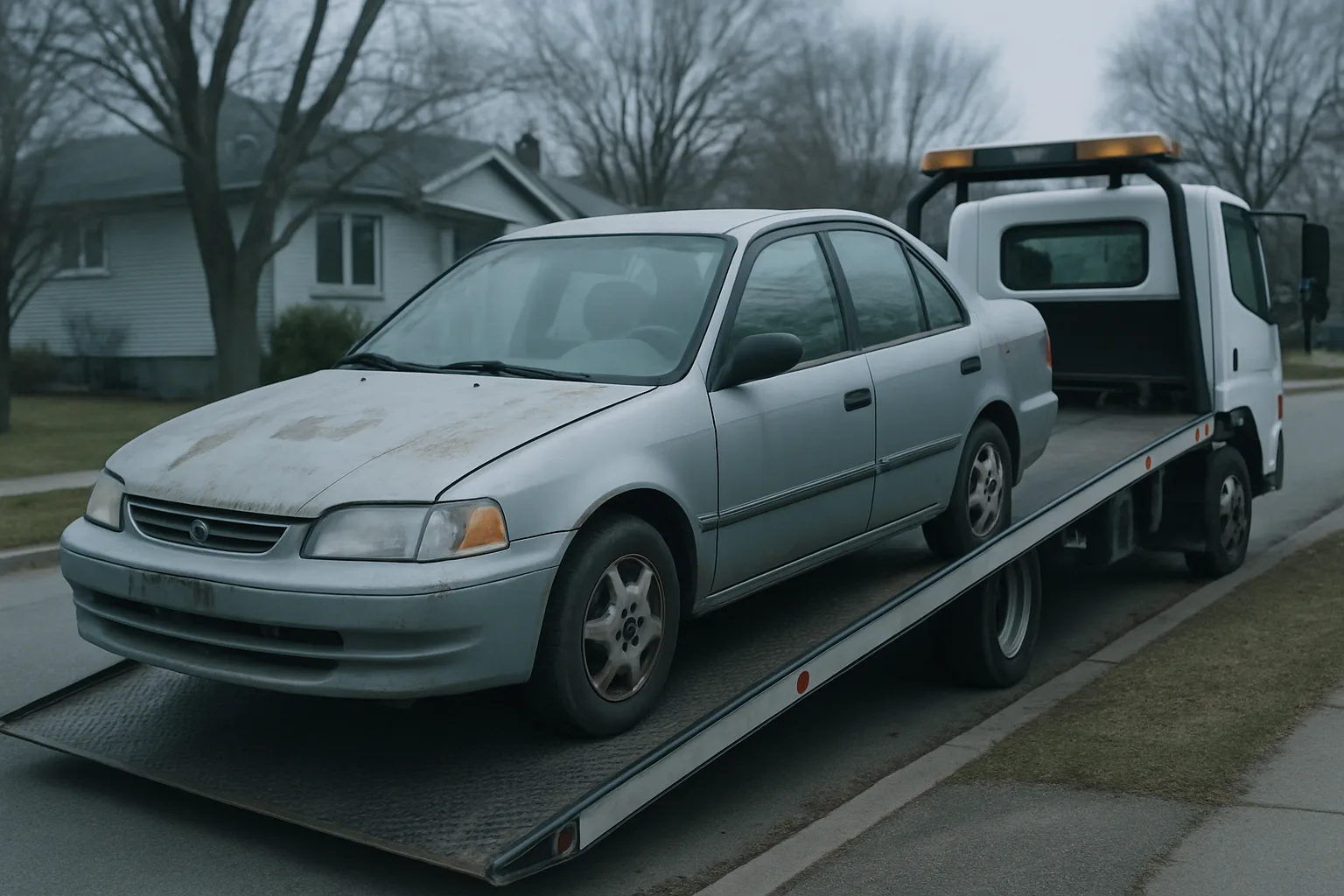
Your Old Car Is Worth More Than the Metal — Here's the Proof
Most people selling a junk car think they're selling weight. Tons of steel, a bit of aluminum, maybe some copper wiring. They get a scrap quote, they take the number, and they hand over the keys. But here's what they don't know: the average end-of-life vehicle sitting in a Scarborough driveway could have hundreds — sometimes thousands — of dollars in parts value that never gets counted in a flat scrap offer.
This isn't a hypothetical. It's what happens every day when car owners skip the step of understanding what's actually inside the vehicle they're trying to offload. The goal of this post is simple: show you what's worth money, why it matters, and how a smarter approach to selling gets you more than a scrap yard's flat rate.
If you've been searching for cash for junk cars Scarborough, you already know the market exists. What you might not know is that not all offers start from the same baseline — and the difference often comes down to whether your buyer sees a pile of metal or a vehicle with recoverable value.
The Parts That Drive Hidden Value in End-of-Life Vehicles
Before a buyer can make you a fair offer, they need to know what's inside. Not every old car is the same. A 2009 Toyota Camry sitting in a Scarborough backyard has a very different parts profile than a 2005 Ford F-150 or a 2012 Honda Accord. Model, make, trim level, mileage, and condition all shift the math.
Here are the components that consistently carry recoverable value beyond raw scrap weight:
- Catalytic converters: This is the big one. Cats contain platinum, palladium, and rhodium — precious metals that hold real market value. Certain vehicles (particularly trucks, SUVs, and hybrids) carry converters with significantly higher precious metal content. If you want to sell catalytic converters online, platforms built for that purpose will always outperform a general scrap quote that bundles the cat into the overall vehicle weight.
- Engines and transmissions: A working or rebuildable engine from a popular model is a commodity. Mechanics and rebuilders actively look for them. Even a seized engine on a high-demand platform can recover parts value.
- Rims and tires: Steel rims go with the scrap weight. Alloy rims do not. Aftermarket or OEM alloys in decent shape have a separate resale market entirely.
- Electronics and infotainment systems: Alternators, starters, ECUs, navigation units, and backup cameras are all pulled and resold. These add up fast.
- Body panels and glass: Undamaged doors, hoods, fenders, and windshields are in constant demand for collision repairs — especially for common domestic and import models.
- AC compressors, alternators, and starters: High-demand items for rebuilders. These are almost always worth more pulled than left in the car.
The point isn't that you need to pull parts yourself before selling. The point is that a buyer who accounts for this recoverable value before making an offer will pay more than one who doesn't. That difference goes into your pocket — or it goes into theirs.
What a Flat Scrap Quote Misses — and Why It Costs You Money
A flat scrap quote is simple. Someone weighs your car, applies the current price per tonne for shredder steel, and gives you a number. That model made sense when scrap was simpler. It doesn't reflect the real value of what you're selling in 2026.
Scrap steel prices fluctuate. Some weeks they're up, some weeks they're not. But precious metals inside catalytic converters, rebuildable mechanical components, and in-demand body parts don't follow the same curve. Their value comes from a different market entirely — one that a flat scrap quote completely ignores.
Here's a practical example. Say you have a 2011 Honda CR-V sitting uninsured and unplated in your driveway. If you call a standard scrap yard, they'll price it as shredder feed. But that vehicle has:
- A catalytic converter with meaningful precious metal content
- An engine and transmission that rebuilders actively look for
- A transfer case with a strong parts market
- Alloy rims that aren't worth scrap weight — they're worth resale value
The gap between a flat scrap quote and a parts-informed offer on that vehicle can be substantial. And for anyone trying to sell my car for cash Scarborough and get a genuinely fair return, that gap matters.
You don't have to become a parts expert to capture this value. You just need to work with buyers who do this assessment before they make the offer — not after they already have your vehicle.
Selling a Car With No Plates, No Insurance, and No Title in Ontario
One of the most common barriers people face when trying to sell an old or damaged car is paperwork. In Ontario, vehicles that have been sitting, written off, inherited, or kept post-accident often have complicated ownership situations. No current insurance. Lapsed plate stickers. Sometimes a missing or transferred title.
The good news: these situations are far more manageable than most people assume. Buyers who specialize in end-of-life and unwanted vehicles deal with these scenarios every day. Whether you're selling a written-off car, a car from an estate, or a vehicle that's been sitting uninsured for two years, there are clear paths forward.
In Ontario, you need the vehicle's ownership (the registration certificate) to transfer ownership — but there are established processes for estate sales, lost ownership replacements, and inherited vehicles. A buyer who works in this space knows the paperwork path. They won't turn you away because the situation is slightly complicated.
If you're searching cash for cars no title near me, the key is to find a buyer upfront about what they need and willing to walk you through it. Not one who makes you figure it out alone before they'll talk to you.
For estate vehicles and inherited cars specifically: if you're the executor or legal next of kin, you have options. Browse Canadian car selling tips on our blog for guidance on what documentation you'll need and how to move through the process without stress.
How SMASH Cars Approaches Vehicle Value Differently
Most sellers in Scarborough and across Ontario are leaving money on the table — not because they're uninformed, but because the default option in the market is a flat quote from a single buyer. One call, one number, no competition.
SMASH was built to fix that. The same auction logic that drives better price discovery for scrap metal loads applies here: when vetted buyers compete for your vehicle, you stop guessing what it's worth and start seeing what the market will actually pay.
When you get a free car valuation in Canada through SMASH Cars, the assessment accounts for more than the steel weight. It factors in recoverable parts, catalytic converter value, mechanical condition, and demand from multiple buyer types — dismantlers, rebuilders, exporters, and parts resellers. That's a very different starting point than a flat scrap call.
For Scarborough residents specifically, connect with trusted auto buyers in Canada through SMASH Cars and see what your vehicle is actually worth to a competitive market — not just the nearest yard.
And if your vehicle is truly at end-of-life with minimal recoverable value, there's still a straightforward path. Free junk car removal across Canada means the vehicle gets removed at no cost to you, handled responsibly, and you're done with it without paying for a tow.
What to Do Before You Accept Any Offer on Your Old Car
You don't need to spend hours researching before you sell. But a few quick steps before you accept the first offer you receive can make a meaningful difference in what ends up in your pocket.
Here's a simple pre-sale checklist:
- Know your vehicle's make, model, trim, and engine size. This directly affects parts demand and catalytic converter value. Don't just say "it's a Honda" — the specific model matters.
- Check for any recent work. New tires, a recent battery, or a replaced alternator are selling points. Mention them.
- Take photos before anything is removed. Document the interior, engine bay, undercarriage, and all four sides. Buyers who can see the vehicle accurately will price it more confidently.
- Don't strip parts yourself unless you know the market. Pulling a catalytic converter before selling can sometimes reduce a buyer's offer more than the cat itself was worth to you separately. Know the math before you act.
- Get more than one offer. A single quote is not a market. It's one buyer's number. The only way to know if it's fair is to have something to compare it to.
For cash for cars Ontario sellers, the process doesn't have to be complicated. It just has to be informed. Taking 20 minutes to gather basic information and get a competitive valuation is almost always worth it.
Frequently Asked Questions
Q: How do I get cash for junk cars in Scarborough if my car doesn't run?
Non-running vehicles are some of the most common cars sold through end-of-life auto buyers. You don't need the car to start, drive, or even roll. Most buyers handle their own towing and logistics. The key is to describe the vehicle's condition accurately — engine seized, transmission gone, fire damage — so the offer reflects reality from the start.
Q: What's the difference between scrap value and parts value for my old car?
Scrap value is based on the weight of the metal in your vehicle multiplied by the current price per tonne for shredder steel. Parts value accounts for recoverable components — catalytic converters, engines, transmissions, body panels, and electronics — that are worth more sold separately or assessed individually than melted down. Buyers who do this assessment before making an offer typically pay more than flat scrap quotes.
Q: Can I sell my car for cash in Scarborough without a title or current insurance?
Yes. Buyers who specialize in unwanted and end-of-life vehicles in Ontario deal with these situations regularly. You'll typically need the vehicle's ownership (the pink slip), but there are clear processes for estate sales, lost ownership replacement, and inherited vehicles. Be upfront with your buyer about your documentation situation from the start — it speeds up the process significantly.
Q: How do I sell catalytic converters online if I've already pulled them from the car?
Selling converters separately requires identifying the exact cat by the serial number or OEM number stamped on the unit. Platforms that specialize in catalytic converter buying use these numbers to assess precious metal content and make an offer. If you haven't pulled the cat yet, consider whether bundling it with the full vehicle sale through a parts-informed buyer might net you more overall.
Q: Is free junk car removal actually free in Scarborough and the rest of Ontario?
Reputable end-of-life vehicle buyers include towing in the offer — meaning you don't pay out of pocket for removal. The towing cost is factored into the overall transaction. Always confirm upfront that there are no hidden fees before you agree to anything. If a buyer quotes you a strong number and then deducts a towing fee at pickup, that's a red flag.
If you're ready to find out what your vehicle is actually worth — not just what the nearest yard will give you — the next step is straightforward. Get your free offer at smash-cars.ca and connect with vetted auto buyers across Canada who compete for your vehicle. SMASH brings the competition to you. You keep the difference.
Stay current on scrap metal market insights and auto selling tips by following SMASH on LinkedIn.