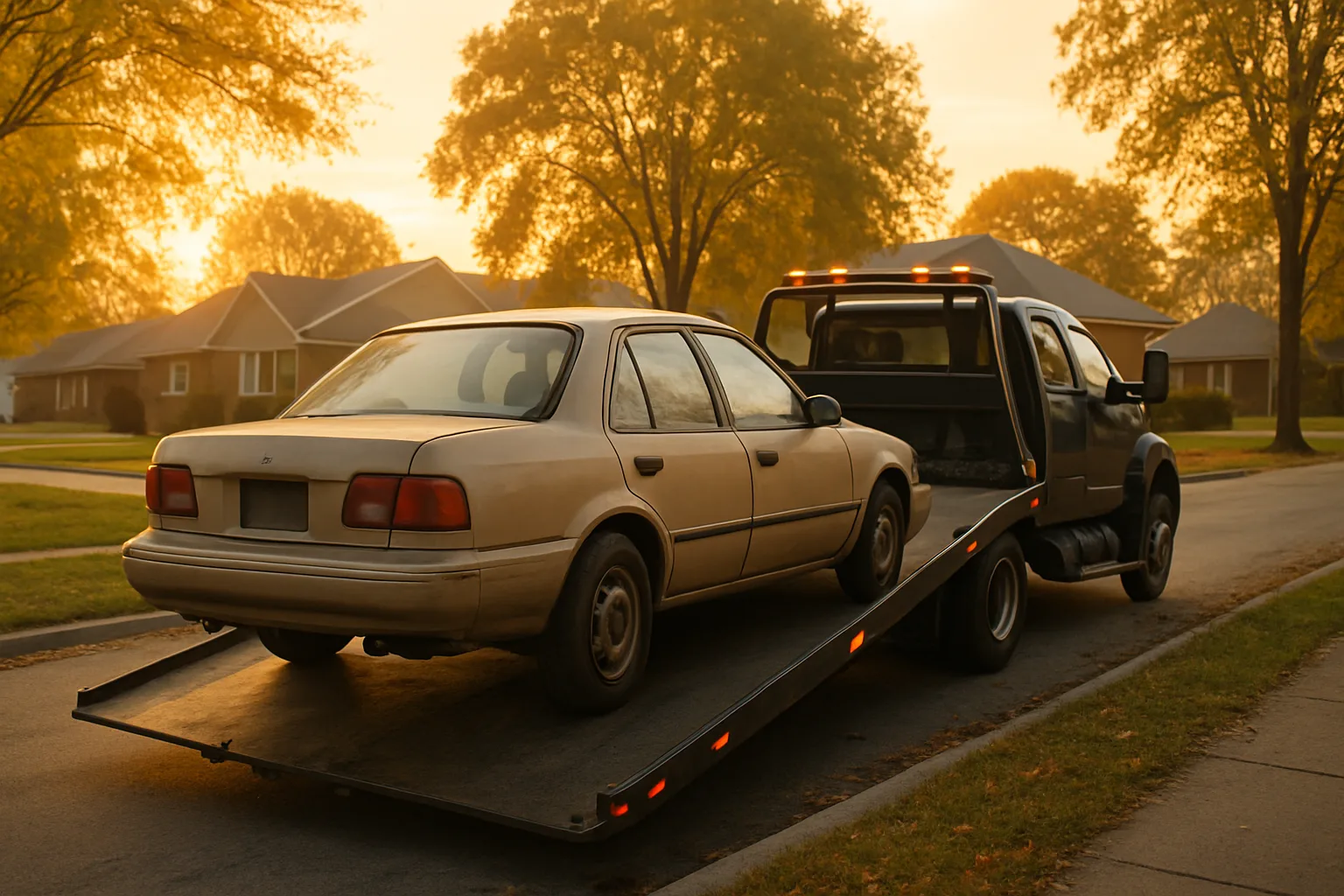
The Dealership Trade-In Is One of the Most Expensive Mistakes You Can Make
Most Canadian car owners leave serious money on the table every single year — not because they didn't try, but because they trusted the wrong process. The dealership trade-in feels easy. Hand over your keys, sign a few forms, knock a number off your next purchase. Simple, right? Not quite. When you understand what your vehicle is actually worth versus what a dealer is willing to offer, the gap is often jaw-dropping. Understanding scrap car value today — and where your vehicle sits on the spectrum between scrap and retail — is the difference between getting paid fairly and getting processed.
This isn't about attacking dealerships. They're running a business. But you should be too. If you're in Oshawa, Ontario sitting on a damaged car, an inherited vehicle, an accident write-off, or just an old unit you no longer need, this article is for you. Selling privately — or through a competitive buyer platform — almost always puts more money in your pocket. Here's why.
What Happens to Your Car After a Trade-In (It's Not What They Tell You)
When you trade in a vehicle, the dealer isn't doing you a favour. They're acquiring inventory. Your car goes through their appraisal process — which is designed to protect their margin, not maximize your return. They factor in reconditioning costs, auction fees if they wholesale it, and their own profit targets. The number they land on reflects all of that. You see a clean, convenient offer. What you're actually seeing is the floor of what your car is worth after they've accounted for everything they need to make money on it.
For damaged vehicles, write-offs, or cars with no registration or title, the trade-in option often disappears entirely. Dealers don't want the liability or the paperwork. So you're left with fewer options — unless you know where to look. Platforms like SMASH connect sellers with vetted buyers who actually want these vehicles and will compete for them. That competition changes the math entirely.
- Dealers lowball on condition to protect reconditioning margins
- Salvage, damaged, or uninsured vehicles are often declined outright
- Trade-in value is bundled into financing deals — making it harder to compare apples to apples
- You have zero negotiating leverage in a trade-in situation
- The dealer controls the information. You don't.
Scrap Car Value Today — And Why "Scrap" Doesn't Mean What You Think
Here's a misconception that costs car owners money: they assume a damaged, old, or non-running vehicle is only worth scrap metal value. Sometimes that's true. But often, it isn't. A vehicle has multiple layers of value — its parts, its fluids, its catalytic converter, its core components — and none of that is captured when someone just weighs it at a yard. Scrap car value today is a starting point, not a ceiling.
The reality is that scrap metal markets fluctuate. Steel prices shift with global demand. Non-ferrous metals like copper and aluminum follow their own cycles. A vehicle that weighs 1,400 kilograms has real commodity value — but it also has a catalytic converter that may contain platinum, palladium, and rhodium. It has an alternator, a starter motor, usable tires, and body panels that someone in the aftermarket wants. When you sell to a single buyer without competition, you're handing them all of that upside. When you sell through a competitive process, buyers factor in what they can recover — and that drives the offer up.
If you're wondering what your specific vehicle might fetch, get a free car valuation in Canada before you accept anything. Know your number before you negotiate.
Disclaimer: Scrap metal and vehicle prices fluctuate based on market conditions, vehicle condition, and location. Always check current rates before making a decision.
Why Selling Privately — or Through a Buyer Platform — Beats the Dealership
Private sales have always had the potential to return more money. The problem is that private sales take time, require you to handle inquiries, deal with lowball offers, worry about payment safety, and navigate title transfers. For a clean, drivable car, the effort can be worth it. For a damaged, uninsured, or estate vehicle? The private sale route gets complicated fast. That's where a structured buyer platform changes everything.
Platforms like SMASH don't replace private selling — they improve the process. Instead of one phone call to one buyer who gives you one number with no explanation, you get multiple vetted buyers competing for your vehicle. That's price discovery. That's how markets are supposed to work. The SMASH auction format means buyers put their best number forward, because they know someone else is in the room. You're not guessing what your car is worth. The market is telling you in real time.
For Oshawa sellers specifically, this matters. Ontario has a dense network of auto recyclers, parts dealers, and salvage buyers. That demand exists — but most individual sellers never access it because they don't have a way to reach those buyers simultaneously. Connect with trusted auto buyers in Canada through SMASH Cars and let that demand work in your favour.
Key advantages of competitive buyer platforms over dealership trade-ins:
- Multiple buyers competing — not one appraiser working against you
- Transparency on offers — you see what buyers are willing to pay
- Vehicles accepted in any condition — damaged, written off, no insurance, no registration
- No subscription fees — you only pay when you sell
- Same-day or fast pickup options — no waiting weeks for a buyer to materialize
- Documentation support — photo records, BOLs, packing lists handled properly
Special Cases: Estate Vehicles, Accident Cars, and No-Title Situations
Not every vehicle comes with a clean title and a full service history. A significant portion of vehicles sold in Canada every year come from estates, accidents, or situations where insurance has lapsed. These are the vehicles dealerships are least interested in — and where sellers feel the most stuck. If you've inherited a car in Oshawa and have no idea what it's worth, or you're dealing with a write-off after an accident, the process feels overwhelming.
The good news: buyers who specialize in end-of-life and damaged vehicles deal with these situations constantly. Title issues, missing registration, salvage designations — these aren't deal-breakers for the right buyer. What matters is that you document what you have accurately. Photos of the vehicle, VIN details, known damage, and any paperwork you do have all increase buyer confidence and can positively affect what you're offered. Platforms with built-in scrap metal inventory management tools make this documentation straightforward — no spreadsheets, no guessing, no back-and-forth.
If you're navigating a complex situation like this, browse Canadian car selling tips on our blog for guidance on estate sales, accident vehicles, and more. You're not the first person dealing with this, and there are clear paths forward.
Common "complicated" vehicle situations buyers still purchase:
- Vehicles from estates with no title transfer yet completed
- Accident write-offs with salvage designations
- Uninsured or unregistered vehicles sitting in a driveway
- Vehicles with mechanical failure that won't start or drive
- Flood or fire-damaged vehicles
- Cars donated or given away where the original owner wants paperwork handled properly
How SMASH Brings Competitive Buying to the Scrap and Used Car Market
The SMASH scrap metal auction model was built around a simple premise: sellers deserve competition. For too long, the scrap and salvage market ran on relationships and phone calls — one buyer, one price, take it or leave it. That works great for buyers. It doesn't work for sellers. SMASH changes the dynamic by bringing vetted buyers into a structured auction environment where your vehicle's value is determined by the market, not by whoever picks up the phone first.
For Oshawa and broader Ontario sellers, this means access to buyers beyond your immediate area. A buyer in Hamilton, Toronto, or further afield may want your specific vehicle more than a local yard — and the SMASH platform connects you to that demand. The result is better price discovery. Not guaranteed higher prices on every load — markets are markets — but a genuine process where competition can help reveal what your vehicle is actually worth.
If you're exploring your options, you can also explore scrap car removal in Canada at GetMyScrapCar for a fast, straightforward removal service. And for Oshawa residents looking for local support, check out Oshawa scrap metal services to understand what's available in your area.
The bottom line is this: the dealership trade-in exists to serve the dealer. A competitive buyer platform exists to serve you. Those are fundamentally different propositions, and the financial outcome usually reflects that difference clearly.
What to Do Before You Sell — Regardless of Which Route You Choose
Before you accept any offer — from a dealer, a private buyer, or a scrap yard — take a few steps to protect yourself and maximize your return. This doesn't take long, and it can make a real difference in what you walk away with.
- Document the vehicle thoroughly. Photos of all four sides, the interior, the engine bay, and any damage. Buyers who can see what they're bidding on bid more confidently — and more competitively.
- Pull the VIN. Know your vehicle's history before someone else uses it against you in negotiations.
- Gather what paperwork you have. Even partial documentation helps. Title, registration, insurance history — whatever exists.
- Get more than one offer. This sounds obvious, but most sellers call one buyer and accept. That's leaving money on the table by default.
- Understand what's in the car. Catalytic converter, intact or missing? Non-ferrous components present? These affect value and buyers will ask.
Once you've done this, you're in a much stronger position to evaluate any offer you receive. You're not guessing, and neither is the buyer. That shared clarity tends to move deals faster and at better prices.
If you're ready to move forward, connect with trusted auto buyers in Canada through SMASH Cars and get your free offer today. No pressure, no obligation — just a real number based on real competition.
Frequently Asked Questions
Q: How do I know what my scrap car value today actually is?
Scrap car value is based on the vehicle's weight, current scrap metal prices, the condition of recoverable components, and demand from local buyers. The best way to get an accurate number is to get competing offers rather than relying on one buyer's assessment. Prices fluctuate, so checking current rates before you commit is important.
Q: Can I sell my car in Oshawa if I don't have the title or registration?
In many cases, yes. Buyers who specialize in salvage, scrap, and end-of-life vehicles deal with title and registration situations regularly. You'll typically need to provide the VIN and proof of your connection to the vehicle (such as estate documentation or an insurance record). Always be transparent about what paperwork you have — buyers account for it in their offers.
Q: Is a private sale always better than trading in at a dealership?
For most vehicles — especially damaged, older, or uninsured ones — yes. Dealerships need margin to recondition and resell, so their trade-in offer reflects that. Private buyers and competitive platforms like SMASH don't have the same overhead structure, which means the offer to you can be meaningfully higher. The difference is most significant for vehicles a dealer would decline or heavily discount.
Q: How fast can I sell my car in Ontario through a platform like SMASH?
Timelines vary by vehicle type, condition, and buyer availability, but the process is typically faster than waiting for a private sale to close. Competitive buyer platforms move quickly because multiple buyers are engaged simultaneously. Same-day or next-day offers are possible in many cases.
Q: What happens to my car after I sell it for scrap or to a salvage buyer?
Most end-of-life vehicles are either parted out (high-demand components are removed and resold) or processed for scrap metal. Catalytic converters, engines, transmissions, and electronics often have significant resale value in the aftermarket. The remainder of the vehicle is crushed and the metal is recycled. Responsible buyers handle depollution and disposal in compliance with provincial regulations in Ontario.
Whether you're in Oshawa, across Ontario, or anywhere else in Canada — you have more options than you think. Don't settle for the first number someone throws at you. Get connected with trusted auto buyers in Canada through SMASH, let competition work in your favour, and walk away with a fair price. Start your free offer at smash-cars.ca.
Stay current on scrap metal market trends and vehicle selling insights — follow SMASH on LinkedIn for regular updates from across the industry.