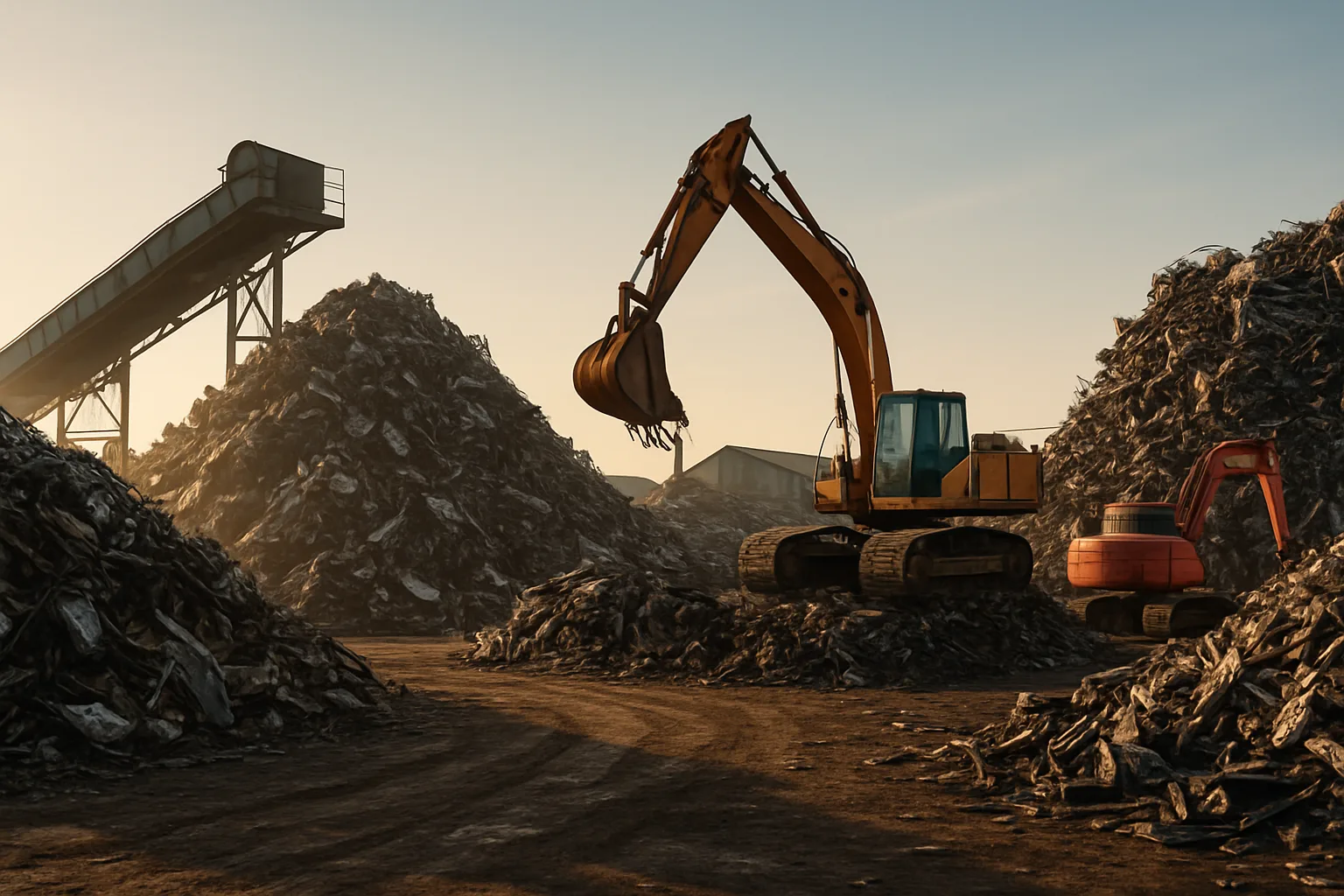
Most people think recycling a car means crushing it flat and melting it down. The reality in 2026 looks nothing like that — and if you're trying to sell my car fast Richmond, understanding what actually happens to your vehicle can help you get more for it.
Car recycling has quietly become one of the most technically sophisticated sectors in the scrap industry. From AI-assisted disassembly sorting to closed-loop battery material recovery, the way end-of-life vehicles get processed has changed dramatically. And that shift is good news for sellers. Better recovery rates mean buyers can pay more. More buyers mean more competition for your car.
Here's what's actually changing — and what it means for your wallet.
How Car Recycling Actually Works in 2026
The old image of a junkyard — a dog, a fence, a pile of rust — doesn't reflect how modern vehicle recycling works. Today, an end-of-life vehicle goes through a structured, multi-stage process designed to recover as much value as possible before anything gets shredded.
The basic flow looks like this:
- Depollution — Fluids get drained. Refrigerants, oil, coolant, transmission fluid, and fuel all get removed and either recycled or safely disposed of.
- Parts harvesting — High-value components get pulled. Catalytic converters, alternators, starters, usable body panels, seats, and electronics all have aftermarket demand.
- Battery removal — In 2026, this step has become critical. Hybrid and EV battery packs require specialized handling and have their own recovery chain entirely.
- Shredding and metal separation — The hulk goes through an industrial shredder. Ferrous and non-ferrous metals get separated. Aluminum, copper wire, and steel go to separate streams.
- Residue processing — Automotive shredder residue (ASR) — the plastics, foam, glass, and rubber — used to go straight to landfill. New technologies are changing that.
Each of these steps has seen meaningful innovation. The result is that recyclers recover more value per vehicle than they did five or ten years ago. When recyclers earn more per car, they can offer more per car.
The Innovations Changing Scrap Car Value Across Canada
Across the scrap metal recycling Canada sector, a few specific technologies are making the biggest impact on what end-of-life vehicles are worth.
Sensor-Based Sorting at the Shredder
After a vehicle gets shredded, the mixed material stream moves through automated sorting systems using X-ray fluorescence (XRF), near-infrared sensors, and eddy current separators. These systems identify and separate metals by alloy type — not just "aluminum" but specific aluminum grades that command different prices. What used to get lumped together now gets sorted into higher-value streams.
For sellers, this matters because the shredded hulk of your car is worth more when the metal downstream is cleaner and better sorted. Recyclers who run these systems have better margins, and that flows back into what they'll pay to acquire vehicles.
EV and Hybrid Battery Recovery
This is the big one in 2026. Canada has seen a significant uptick in end-of-life hybrid and electric vehicles entering the recycling stream. Battery packs from these vehicles contain lithium, cobalt, nickel, and manganese — materials with serious value and serious handling requirements.
Specialized battery recyclers now operate across British Columbia and across Canada, running hydrometallurgical and direct recycling processes to recover these materials. A battery pack that would have been a liability five years ago is now a recoverable asset. If your vehicle is a hybrid or EV, that matters to your valuation. Platforms like SMASH help connect you with buyers who understand that value — rather than treating your car like a standard scrap hulk.
Automotive Shredder Residue (ASR) Diversion
Roughly 25% of a typical vehicle by weight ends up as ASR — the mixed non-metal fraction after shredding. Historically, most of that went to landfill. Newer thermal treatment and pyrolysis systems are now converting ASR into recovered fuel and raw material inputs. This reduces the disposal cost burden for recyclers, which again improves margins across the whole chain.
What This Means If You Want to Sell My Car Fast Richmond
Richmond, British Columbia sits in one of the most active auto recycling markets in Western Canada. The Lower Mainland has significant infrastructure — dismantlers, shredders, and buyers — operating within a competitive market. That competition works in your favour as a seller.
When you want to sell my car fast Richmond, you're not limited to walking into one yard and taking whatever they offer. The innovations driving more value out of each vehicle mean there are more buyers willing to compete for your car — whether it runs, whether it has a salvage title, whether it's been written off, or whether it's been sitting in a driveway for three years.
A few things that directly affect what your car is worth right now:
- Catalytic converter presence — Cats contain platinum group metals (PGMs) with significant value. A complete, uncut converter matters.
- Non-ferrous content — Aluminum wheels, copper wiring, and other non-ferrous components all factor in. Don't strip parts before you sell.
- Battery pack condition — For hybrids and EVs, the battery pack is a key value driver. Even a degraded pack has recoverable material value.
- Vehicle make and model — Parts demand varies. A common vehicle with a strong aftermarket parts market is worth more to a dismantler than a rare model with no buyer demand for spares.
- Overall weight — Ferrous scrap price fluctuates, but heavier vehicles carry more steel. Use a get a free car valuation in Canada tool to see what your vehicle's weight and composition might fetch.
You can also explore Richmond scrap metal services for local options tailored specifically to the Lower Mainland market.
The Documentation Gap — and Why It Costs Sellers Money
One of the biggest reasons sellers leave money on the table isn't the car — it's the paperwork. Or the lack of it.
Buyers across Canada, including those serving Richmond and the rest of British Columbia, can pay more when the transaction is clean. That means knowing the VIN, having some form of ownership documentation, and being clear about the vehicle's condition. When that information is missing or messy, buyers price in the risk.
If you're selling an inherited car, an estate vehicle, or a car without current insurance — that doesn't automatically kill the deal. But it does mean you need to work with buyers who understand those situations. Not every buyer does. Platforms like connect with trusted auto buyers in Canada through SMASH Cars to reach buyers who are used to handling vehicles with complicated ownership histories, salvage titles, and other non-standard situations.
If you're dealing with a written-off vehicle or a salvage title situation, check out browse Canadian car selling tips on our blog — there's solid guidance on navigating those scenarios without getting lowballed.
For vehicles that are truly end-of-life with no parts value, Canadian scrap car removal from GetMyScrapCar is worth a look for straightforward removal.
Getting More Than Scrap Value — The Real Goal
Here's the truth about cash for junk cars Richmond: not every car is just a scrap hulk. Even a non-runner, a hail-damaged vehicle, or a car that's been off the road for years may have parts value, salvage value, or auction value that exceeds simple scrap weight pricing.
The difference between getting scrap value and getting more than scrap value usually comes down to one thing: how many buyers see your car.
A single call to a single buyer gives you one number. That buyer has no incentive to go higher. Introducing competition — even among a small pool of vetted buyers — changes the dynamic. That's the core of what SMASH does. More buyers, real competition, documented inventory, and transparent pricing. No subscription fees. SMASH only wins when you do.
If you've been putting off dealing with an unwanted vehicle, the recycling innovations happening right now mean the market is actually paying more attention to end-of-life cars — not less. Now is a good time to find out what yours is actually worth.
When you're ready to move, connect with trusted auto buyers in Canada through SMASH Cars and get a free offer on your vehicle. No pressure, no guessing, no single buyer calling all the shots.
Frequently Asked Questions
Q: How fast can I sell my car in Richmond, BC?
In most cases, you can get an offer within 24 hours and have your vehicle picked up within one to three business days. Timing depends on your location within Richmond, vehicle condition, and how quickly ownership documentation can be confirmed. Having your VIN and ownership papers ready speeds the process up significantly.
Q: Do I need a title to get cash for junk cars in Richmond?
Not always, but it helps. Some buyers will work with alternative ownership documentation — especially for estate vehicles, inherited cars, or older vehicles where titles have been lost. Be upfront about your situation from the start. Buyers who specialize in end-of-life vehicles are used to these cases and can often still make an offer.
Q: How is scrap car value calculated in British Columbia?
Scrap car value is based on the vehicle's weight (ferrous metal content), non-ferrous components like aluminum and copper, parts demand for your specific make and model, and whether the catalytic converter is intact. Current scrap metal market prices also factor in — which means value fluctuates. Use a free valuation tool or connect with a buyer directly to get a current number for your vehicle.
Q: Can I sell a car without insurance in Richmond?
Yes. You don't need active insurance to sell a car for scrap or salvage. ICBC-regulated transactions in British Columbia do require proper transfer of ownership documentation, but the vehicle does not need to be insured at the time of sale. Confirm the specific paperwork requirements with your buyer before pickup.
Q: What's the difference between scrap value and market value for a junk car?
Scrap value is based purely on the metal weight of the vehicle — essentially what it's worth melted down. Market value accounts for working parts, aftermarket demand, and buyer competition. A car with a good engine, intact catalytic converter, or in-demand body parts may be worth significantly more than its scrap weight alone suggests. That gap is exactly what SMASH helps sellers capture.
Stay current on scrap metal markets, car selling strategies, and industry news — follow SMASH on LinkedIn for regular updates from inside the industry.
```