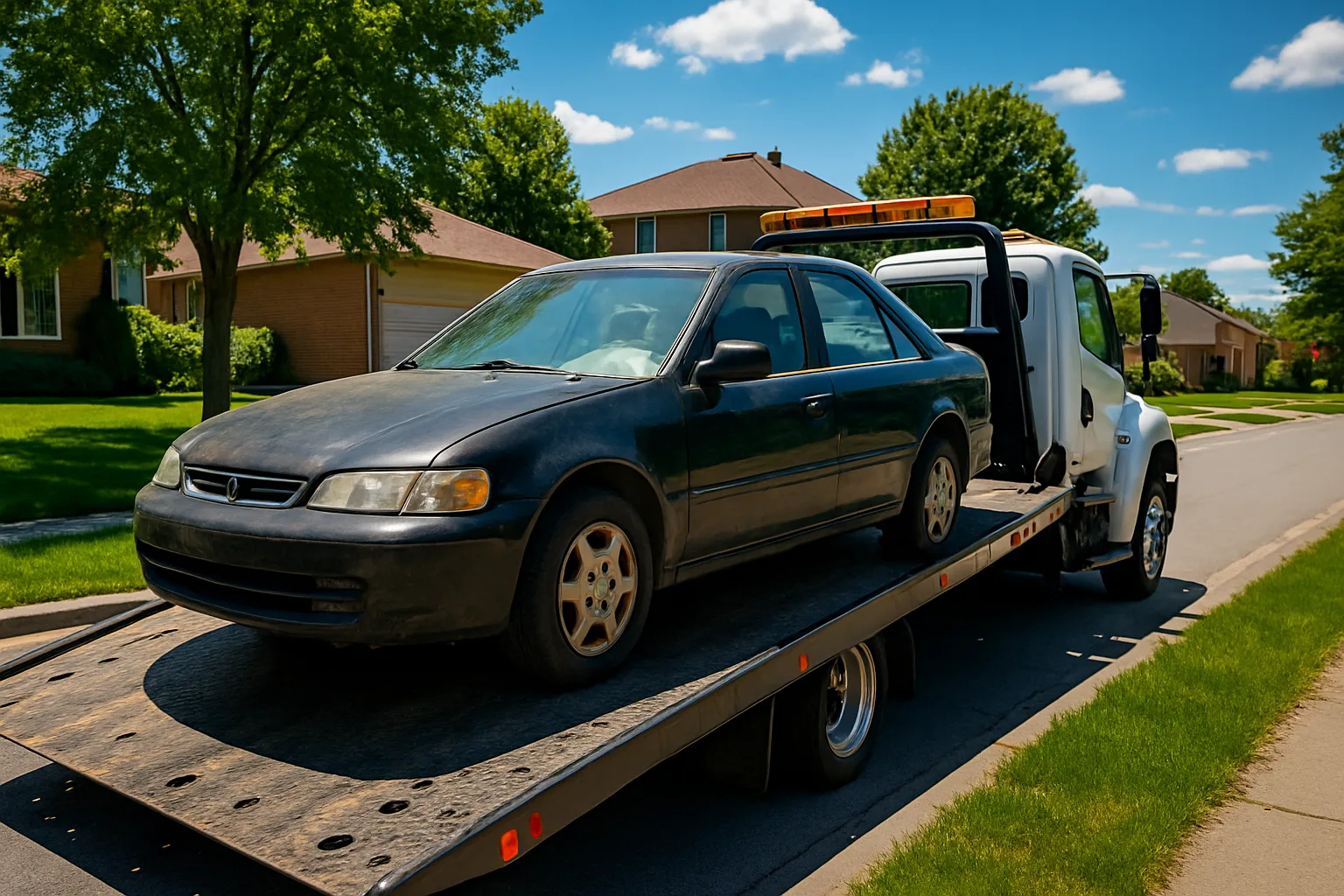
The Paperwork That Stands Between You and Getting Paid for Your Scrap Car
Most people assume scrapping a car is simple — call someone, they tow it away, you get cash. Then the questions start. Where's your ownership? Is the lien paid off? What if it's an estate vehicle? Suddenly a straightforward transaction gets complicated fast. Getting your paperwork right before you call isn't just smart — it's often the difference between a smooth same-day pickup and a deal that stalls for weeks.
Whether you're dealing with free scrap car pickup Ottawa or arranging scrap car removal across Ontario, the documentation requirements are consistent. Miss one, and you're looking at delays, reduced offers, or buyers who won't touch the vehicle at all. This guide breaks down exactly what you need — and what to do when you don't have it.
Why Paperwork Matters More Than You Think When Selling a Scrap Car
Scrap buyers and recyclers aren't just buying metal. They're buying legal ownership rights to a vehicle. Without clear documentation, a buyer can't legally deregister the vehicle, apply for a salvage title, or scrap the chassis. In Ontario and across Canada, selling a vehicle without proper paperwork opens both parties up to liability — and no legitimate buyer will take that risk.
This is especially true when you're trying to sell a junk car or unwanted vehicle that's been sitting in a driveway for years. The longer a vehicle has been idle, the more likely its paperwork has gaps. Platforms like SMASH Cars help sellers navigate these gaps before going to market — so your vehicle gets in front of vetted buyers with confidence, not confusion.
Here's what documentation actually does for you:
- Proves you have the legal right to sell the vehicle
- Protects you from liability if the car is used in a crime or accident after transfer
- Allows buyers to register, deregister, or crush the vehicle legally
- Unlocks higher offers — documented vehicles typically attract more buyer confidence
- Speeds up the transaction — no paperwork delays mean same-day pickup is actually possible
The Core Documents You Need to Scrap a Vehicle in Canada
Let's get specific. These are the documents most buyers and recyclers will require before completing a junk car removal transaction anywhere in Canada — Ottawa included.
1. Vehicle Ownership (Permit / Title)
This is the single most important document. In Ontario, this is called the vehicle permit — a two-part document issued by ServiceOntario. Part 1 contains vehicle details (VIN, make, model, year). Part 2 is the plate portion. When you sell or scrap a vehicle, you sign over the vehicle portion to the buyer. Both sections must be present.
Lost your ownership? You can apply for a replacement at any ServiceOntario location. Bring valid government-issued ID and your VIN. There's a small fee. Don't skip this step — it's the foundation of a legitimate sale.
2. Government-Issued Photo ID
Every legitimate buyer will verify your identity before completing a cash transaction. A driver's license, passport, or provincial ID card all work. This protects the buyer and confirms you are who you say you are. Keep a copy for your own records too.
3. Lien Release Documentation (If Applicable)
If you financed the vehicle and still have payments outstanding — or even if you paid it off — there may be a lien registered against it. A lien means another party (typically a bank or finance company) has a legal claim on the vehicle. You cannot legally sell or scrap a vehicle with an active lien without their sign-off.
Check your vehicle's lien status through ServiceOntario's online PPSA (Personal Property Security Act) registry. If a lien exists, contact the lender, confirm the payoff amount, and get written confirmation of lien discharge. This is non-negotiable. No buyer — scrap or otherwise — should accept a vehicle with an unresolved lien.
4. Death Certificate and Estate Documents (For Inherited or Estate Vehicles)
Selling an inherited car or estate vehicle adds a layer of complexity. The registered owner is deceased, so you'll need to prove you have the legal authority to transfer ownership. Typically, this means providing:
- A copy of the death certificate
- Letters Probate or Letters of Administration naming you as executor or administrator
- Your own government-issued ID
In some cases, a Notarial Certificate or Affidavit of Heirship may be accepted depending on the province and the vehicle's value. If the estate is in Ontario and the vehicle is worth relatively little, some buyers have streamlined processes for estate vehicles — worth asking about upfront when you get a free car valuation in Canada.
5. Insurance Cancellation Documentation
Once you've sold or transferred your scrap vehicle, cancel your insurance. More importantly — if you're selling an uninsured car that's been off the road, be upfront with the buyer. In Ontario, a vehicle doesn't need to be currently insured to be scrapped, but you should have documentation showing the plate was surrendered or the vehicle was not in active use. This protects you from any liability claims tied to the vehicle after you no longer own it.
6. Bill of Sale
A bill of sale isn't always legally required in every province, but it's best practice. It records the transaction date, agreed price, buyer and seller information, and the VIN. Reputable buyers will provide one. If yours doesn't, write your own and have both parties sign it. Keep your copy indefinitely — this is your paper trail if questions arise later.
What If You're Trying to Sell a Car With No Title in Ottawa?
Searches for sell car for scrap no title are common — and the situation is more common than people admit. Lost titles, vehicles from out of province, old family cars that were never formally transferred — these situations come up constantly in Ottawa and across Ontario.
Here's the honest answer: selling a scrap car without a title in Canada is possible but harder. Your options depend on the situation:
- Apply for a replacement title — ServiceOntario allows registered owners to apply for a replacement vehicle permit. If your name is already on the vehicle, this is the cleanest path.
- Use a statutory declaration — In some provinces, a sworn affidavit confirming ownership can substitute when title documentation is unavailable. A notary public or commissioner of oaths can assist.
- Provide supporting documentation — Old insurance documents, registration renewals, tax receipts, or purchase records can help establish ownership history even without a current title.
- Work with buyers who specialize in complex transactions — Not every buyer will touch a no-title vehicle. Platforms like SMASH connect you with vetted buyers experienced in these situations — which means fewer dead ends and more actual offers.
If you're in the Ottawa area dealing with a tricky ownership situation, you can also visit Ottawa scrap metal services to understand your local options and get guidance before you start calling around.
Comparison: Selling Prepared vs. Selling Unprepared
Let's make this concrete. Here's what typically happens when sellers come to the table prepared versus unprepared — this isn't a guarantee of any specific outcome, but it reflects the practical realities of the transaction.
- Prepared seller — Has ownership, ID, lien discharge, and bill of sale ready. Pickup is scheduled same day or next day. Offer reflects the vehicle's actual value. Transaction is clean.
- Unprepared seller — Missing ownership or lien paperwork. Buyer puts a hold on the transaction. Seller spends days tracking down documents. Some buyers walk entirely. The offer, if it comes at all, may be lower to account for perceived risk.
Documentation is leverage. The more you have, the stronger your position. That applies whether you're trying to get more than scrap value for a damaged car or simply move a written-off vehicle off your property as fast as possible.
For current market context, note that scrap metal prices fluctuate based on commodity markets. Always verify current rates before accepting an offer — and browse Canadian car selling tips on our blog for up-to-date guidance on timing your sale.
Special Situations: Written-Off Cars, Accident Vehicles, and Donations
Not every scrap car is a tired beater sitting in the driveway. Some of the most common calls come from people dealing with a car after an accident, a written-off vehicle the insurance company has settled on, or someone looking to donate a car rather than sell it outright.
Each situation has unique paperwork considerations:
- Insurance write-off — Your insurer will transfer ownership to themselves as part of the settlement. If you've bought back the salvage, you'll receive a salvage title. Keep all insurance settlement documentation and confirm what title you hold before approaching a buyer.
- Post-accident sale — If the car was not written off but is damaged, standard ownership transfer applies. Be transparent about the damage history — buyers will find out anyway, and disclosure protects you legally.
- Car donation — Legitimate charity vehicle donation programs in Canada require the same ownership transfer process as a private sale. The charity handles the paperwork from there, but you still need to sign over the ownership properly.
- Salvage title vehicles — Some buyers specifically seek salvage title vehicles for parts. Disclose the salvage status upfront. Trying to obscure it is fraud.
In all of these cases, working through a platform like connect with trusted auto buyers in Canada through SMASH Cars means your vehicle is reviewed by buyers who actually understand these scenarios — not buyers who will low-ball you because the situation is unfamiliar to them.
Disclaimer: Scrap metal prices and vehicle valuations fluctuate based on market conditions. Always check current rates before finalizing any transaction. The information in this article reflects general practices in Canada as of July 2026 — consult a legal or automotive professional for advice specific to your situation.
If you're ready to move forward, also check out getmyscrapcar.ca for a streamlined way to get an offer on your unwanted vehicle.
Frequently Asked Questions
Q: Can I get free scrap car pickup in Ottawa without a vehicle title?
Yes, but it's more complicated. Some buyers will work with statutory declarations or supporting ownership documents like old registration or insurance records. Your best move is to contact a buyer upfront, explain your situation, and ask what alternative documentation they accept. Replacing a lost title through ServiceOntario is usually the cleanest solution if time allows.
Q: What happens to my license plates when I scrap my car in Ottawa?
In Ontario, plates belong to the owner — not the vehicle. When you scrap your car, remove the plates before the tow. Surrender them to a ServiceOntario location or transfer them to your next vehicle. Do not leave plates on a vehicle you're scrapping — you may remain financially responsible for any activity tied to those plates.
Q: Do I need to cancel my insurance before junk car removal in Ottawa?
You should cancel or transfer your insurance once the vehicle is gone and ownership is transferred. Cancelling before pickup but before the transfer is complete can leave a window where you have no coverage on a vehicle still legally in your name. Coordinate the insurance cancellation with the ownership transfer to avoid gaps in liability protection.
Q: How do I sell a car I inherited in Ontario if probate isn't complete?
This depends on the vehicle's value and the estate situation. For lower-value scrap vehicles, some buyers will accept a death certificate plus a sworn affidavit of heirship. For higher-value vehicles, most buyers will wait for probate documents. Consult an estate lawyer in Ontario if the probate timeline is unclear — rushing this step can create legal problems later.
Q: How do scrap metal prices affect what I get for my junk car?
Scrap vehicle prices are partially tied to steel and non-ferrous metal commodity markets — which change daily. A heavier vehicle (like a truck or full-size SUV) will generally yield a stronger scrap offer when metal prices are up. Using a competitive platform rather than calling a single buyer gives you exposure to current market rates. Always check current scrap metal prices today before accepting any offer. Prices fluctuate — verify current rates at time of sale.
Getting your paperwork straight before you list or call isn't paperwork for paperwork's sake — it's how you get paid faster, avoid disputes, and protect yourself legally long after the car is gone. If you're in Ottawa or anywhere across Ontario and you want to know what your unwanted vehicle is actually worth, the process starts with a conversation. connect with trusted auto buyers in Canada through SMASH Cars and get a free offer today — no obligation, no pressure, just a real number for your real situation.
Follow SMASH on LinkedIn for scrap metal market updates, industry news, and tips on getting the most out of your next vehicle sale.