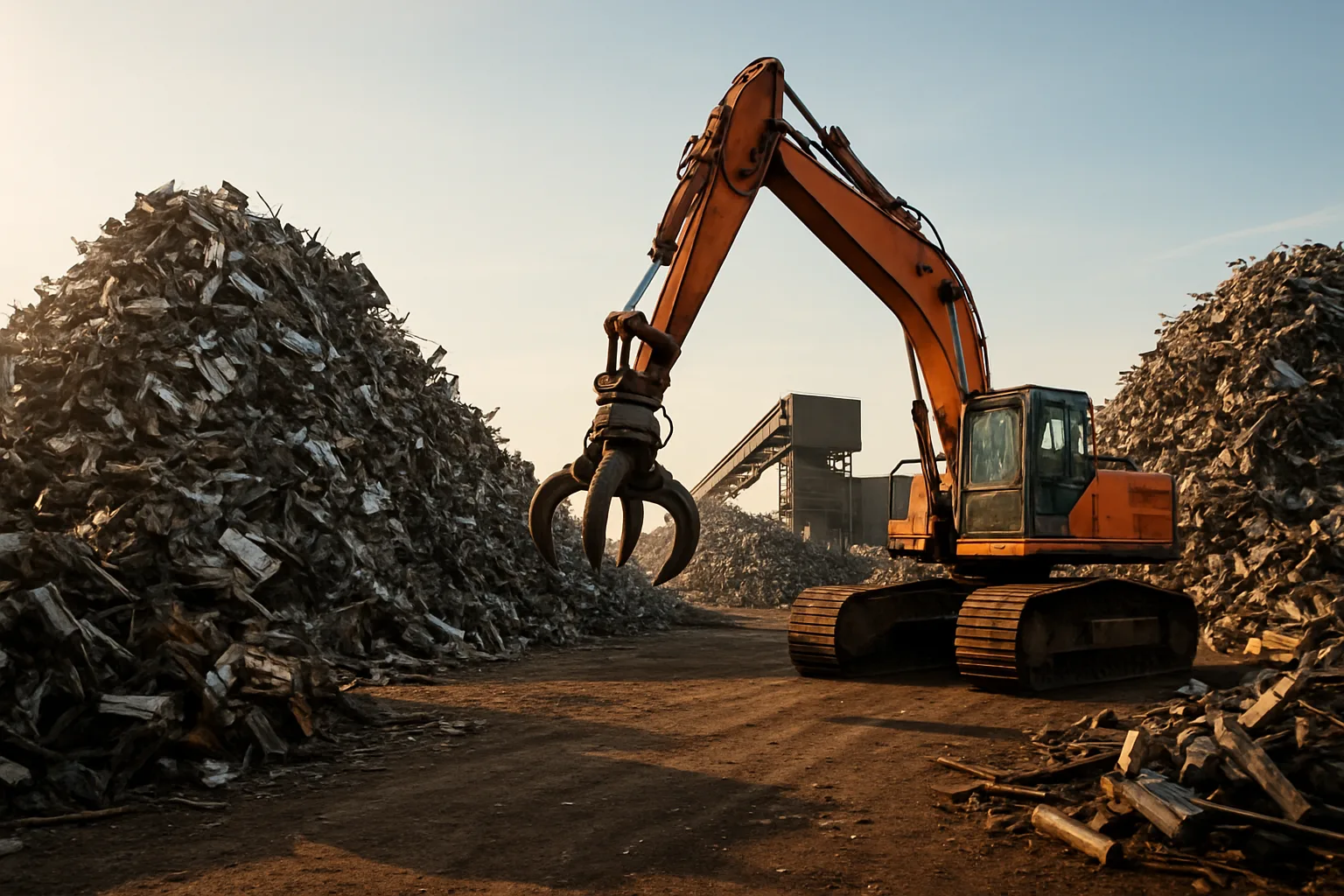
Most car owners think recycling ends when the tow truck leaves. It doesn't — not even close. What happens after your old vehicle gets hauled away has changed dramatically, and those changes are directly affecting what you get paid. Understanding the modern scrap car pipeline isn't just interesting — it can help you make smarter decisions when it's time to get rid of an unwanted vehicle.
If you're researching scrap car removal Cambridge, or anywhere in Ontario, this matters to you. The old model — one buyer, one phone call, a lowball offer — is getting replaced by something more transparent, more competitive, and more profitable for sellers.
Here's what's actually changing on the recycling floor, and how it filters back into your pocket.
How Car Recycling Has Shifted From Crushing to Component Recovery
For decades, end-of-life vehicles went one of two places: the crusher or the auction block. Neither gave the seller much leverage. Buyers knew what the scrap metal was worth, you didn't, and the spread between those two numbers was their profit margin.
Modern auto recyclers now operate closer to disassembly lines than junkyards. Before a vehicle ever gets shredded, trained technicians remove and catalog high-value components — catalytic converters, engines, transmissions, airbag modules, infotainment systems, EV battery packs, and hundreds of other parts with active resale demand. Each recovered part adds real value to the load. That value didn't disappear into the recycler's pocket the way it once did — today's competitive marketplace means more of it finds its way back to you.
Key components that modern recyclers prioritize before crushing:
- Catalytic converters — contain platinum, palladium, and rhodium; among the highest-value items per pound in any scrap vehicle
- EV and hybrid battery packs — lithium, cobalt, and nickel recovery is increasingly sophisticated
- Aluminum wheels and engine blocks — non-ferrous metals command a premium over basic shredder feed
- Functional drivetrain parts — engines and transmissions with usable life get pulled and resold, not scrapped
- Copper wiring harnesses — a single vehicle can contain 50+ lbs of copper in late-model trucks and SUVs
The more value a recycler can extract before the crusher, the more they can bid at acquisition. That's why competitive platforms matter — they surface buyers who know exactly what's in your vehicle, not just what the steel weighs.
The Rise of Data-Driven Valuation for Junk Car Buyers Near Me Cambridge
The phrase junk car is doing a lot of heavy lifting. A 2014 Honda Civic with a blown head gasket isn't junk — it's a parts vehicle with a specific market value. A 2019 F-150 that got T-boned on the passenger side has a salvage title, but it also has a largely intact drivetrain worth real money to a buyer. The challenge was always that sellers had no way to know this. They took the first offer because they had no baseline.
That's changing. VIN-based lookups now pull vehicle history, factory specs, and regional parts demand into a single valuation picture. Serial tracking on high-value components — particularly catalytic converters — gives buyers confidence that what they're bidding on is what gets delivered. Photo documentation of damage, missing parts, and condition creates a shared record that reduces disputes and supports competitive bidding. When junk car buyers near me Cambridge are competing through a structured platform, they're not guessing — they're bidding based on actual data.
This matters most when you're selling:
- A vehicle after an accident — where partial damage affects value differently depending on what got hit
- An inherited or estate vehicle — where title history may be incomplete but VIN data fills the gap
- A car with no keys or title — where condition documentation becomes your pricing anchor
- A late-model vehicle with intact cat converters — where accurate identification can significantly move the number
Why the B2B Scrap Metal Marketplace Model Benefits Private Sellers Too
You might assume a B2B scrap metal marketplace is only relevant to recycling yards moving bulk loads. That's not the full picture. The same buyer network and competitive auction structure that helps a yard sell a 40,000 lb load of shredder fluff also determines what individual vehicles are worth in the regional market on any given day.
When buyers are competing for inventory — whether that's loads of non-ferrous or individual end-of-life vehicles — the competitive pressure creates better price discovery. A buyer who would have offered you $300 for your car now knows three other vetted buyers are looking at the same VIN. That dynamic shifts the conversation.
SMASH operates exactly this way. Rather than routing your vehicle to a single yard who quotes you a number you can't verify, connect with trusted auto buyers in Canada through SMASH Cars and let competition do the work. Vetted buyers, documented inventory, no cold calls, no guessing. More buyers means better price discovery — that's not a marketing line, it's how markets function.
In the Cambridge and broader Ontario market, this kind of structured buyer competition is relatively new for private sellers. Yards have always had access to dealer networks and wholesale channels. Individual sellers haven't — until now.
Cash for Cars No Title No Keys — What Modern Recyclers Actually Accept
One of the persistent myths about selling an old or damaged vehicle is that you need a clean title and both sets of keys to get a fair offer. That's the old model talking. Modern recyclers — particularly those operating within a vetted buyer network — work with vehicles in various states of completeness.
If you're looking at cash for cars no title no keys in the Cambridge area, here's the realistic picture in 2026:
- No keys: Adds minor friction to the process, but buyers account for it in the bid. A vehicle with no keys that's otherwise intact still has full salvage value. The recycler handles it on their end.
- No title: More complex, but not a dead end. Ontario has a process for replacing lost or damaged vehicle ownership documents. In some cases, estate and inherited vehicles can be transferred with supporting documentation. A buyer who specializes in end-of-life vehicles will walk you through what's required.
- Salvage or written-off title: Common with accident-damaged or insurance write-off vehicles. Buyers price these based on what's intact, not what's damaged. A written-off car in Cambridge with a good engine and a working cat converter is worth more than its steel weight.
- No insurance: Irrelevant to a scrap or parts buyer. If the vehicle can't be driven, it doesn't need to be insured to be sold. You call, they pick it up.
If you're dealing with an estate vehicle or a donated car situation, get a free car valuation in Canada before assuming you're stuck. The paperwork challenges are almost always solvable, and the vehicle still has real market value.
Scrap Car Removal Cambridge — What the Local Market Looks Like in 2026
Cambridge sits within one of the densest automotive corridors in Canada. The Golden Horseshoe — from Windsor through Hamilton to the GTA — has more active scrap buyers, recyclers, and automotive dismantlers per square kilometer than almost anywhere else in North America. That's a structural advantage for sellers in Cambridge and across Ontario.
More buyers in a concentrated geography means more competition and faster pickup timelines. Free scrap car pickup is standard for most vehicles — the logistics cost is absorbed into the buyer's margin because regional transport is efficient. Same-day or next-day removal is common for vehicles within the Cambridge and Hamilton metro area.
If you've been comparing options and looking at scrap car removal Mississauga, the same buyer network typically extends across the region. A vetted buyer working out of Mississauga may well service Cambridge pickups — the distance is negligible for a tow truck operator running daily routes through Ontario's industrial corridor.
For Cambridge-specific service and local scrap metal infrastructure, Cambridge scrap metal services are available through SMASH's regional network — connecting you with buyers who operate in your actual market, not just the nearest major city.
Want to go deeper on the process before you call anyone? Browse Canadian car selling tips on our blog — practical guidance on paperwork, pricing, and what to expect on pickup day.
What to Do Before You Sell — Getting the Most From the New Recycling Model
The innovations happening on the recycling floor only help you if you position your vehicle correctly before the sale. A few steps make a real difference in what you're offered.
Document what's there. If your catalytic converter is intact, make sure the buyer can see that clearly. Take photos from multiple angles. A buyer bidding remotely through a structured platform is working from your documentation — make it accurate and complete.
Know your VIN. It's on the dashboard (driver's side, visible through the windshield) and on your ownership papers. A VIN lookup pulls factory specs, options packages, and regional parts demand. Buyers use it; you should too.
Don't accept the first number. The market for end-of-life vehicles is competitive in 2026. If a buyer quotes you a number in 30 seconds with no documentation review, they're pricing in their own uncertainty — and charging you for it. A platform that lets multiple vetted buyers see the same vehicle creates real competition.
Remove personal items and plates. Obvious but worth stating. Ontario plates stay with the owner, not the vehicle. Cancel your insurance once the vehicle transfers. Keep a copy of the bill of sale.
If you want to skip the research and just connect with buyers who already know the Cambridge and Ontario market, schedule free scrap car pickup in Canada and let the process work for you.
The recycling industry has built better tools and better markets. SMASH exists to make sure individual sellers have access to the same competitive dynamics that yards and dealers have had for years. Get your free offer at smash-cars.ca and find out what your vehicle is actually worth in today's market — not last year's guess.
Frequently Asked Questions
Q: How does scrap car removal in Cambridge work, and is pickup actually free?
In most cases, yes — free pickup is standard for end-of-life and unwanted vehicles in the Cambridge and broader Ontario market. A buyer or tow operator comes to your location, the vehicle is loaded, and you receive payment at the time of pickup or via e-transfer. The pickup cost is factored into the buyer's offer, not billed separately.
Q: Can I sell my car in Cambridge if I don't have the title or ownership documents?
Missing or lost ownership documents are a common situation, especially with estate vehicles or older cars. Ontario ServiceOntario can reissue vehicle ownership with the right supporting documents. Buyers who specialize in end-of-life vehicles deal with this regularly and can guide you through what's needed. It's rarely a dealbreaker.
Q: What's the difference between scrap value and actual market value for a junk car?
Scrap value is based purely on the vehicle's weight as shredder feed — essentially what the steel is worth per ton. Actual market value accounts for functional parts, catalytic converter content, make and model desirability, and regional parts demand. A vehicle with a good engine or intact non-ferrous components can be worth significantly more than its scrap weight suggests.
Q: How do junk car buyers near me in Cambridge determine what they'll pay?
Buyers use VIN data, condition photos, mileage, and current commodity prices to build their bids. On a competitive platform, multiple buyers see the same information and bid against each other — which produces a more accurate market price than a single buyer quoting off the top of their head. Documentation quality directly affects bid confidence and, often, bid price.
Q: Is scrap car removal in Cambridge different from Mississauga or other Ontario cities?
The process is essentially the same across the Ontario corridor — the same buyer networks, the same pickup logistics, and the same documentation requirements apply whether you're in Cambridge, Mississauga, or Hamilton. Regional density means fast pickup times across the area. The main variable is which specific buyers are active in your market on a given day, which is exactly why a multi-buyer platform gives you an edge regardless of which city you're in.
Stay current on scrap metal market trends and car selling insights — follow SMASH on LinkedIn at linkedin.com/company/scrap-metal-auction-sales-hub for updates that actually matter to sellers and buyers in the Canadian market.
```