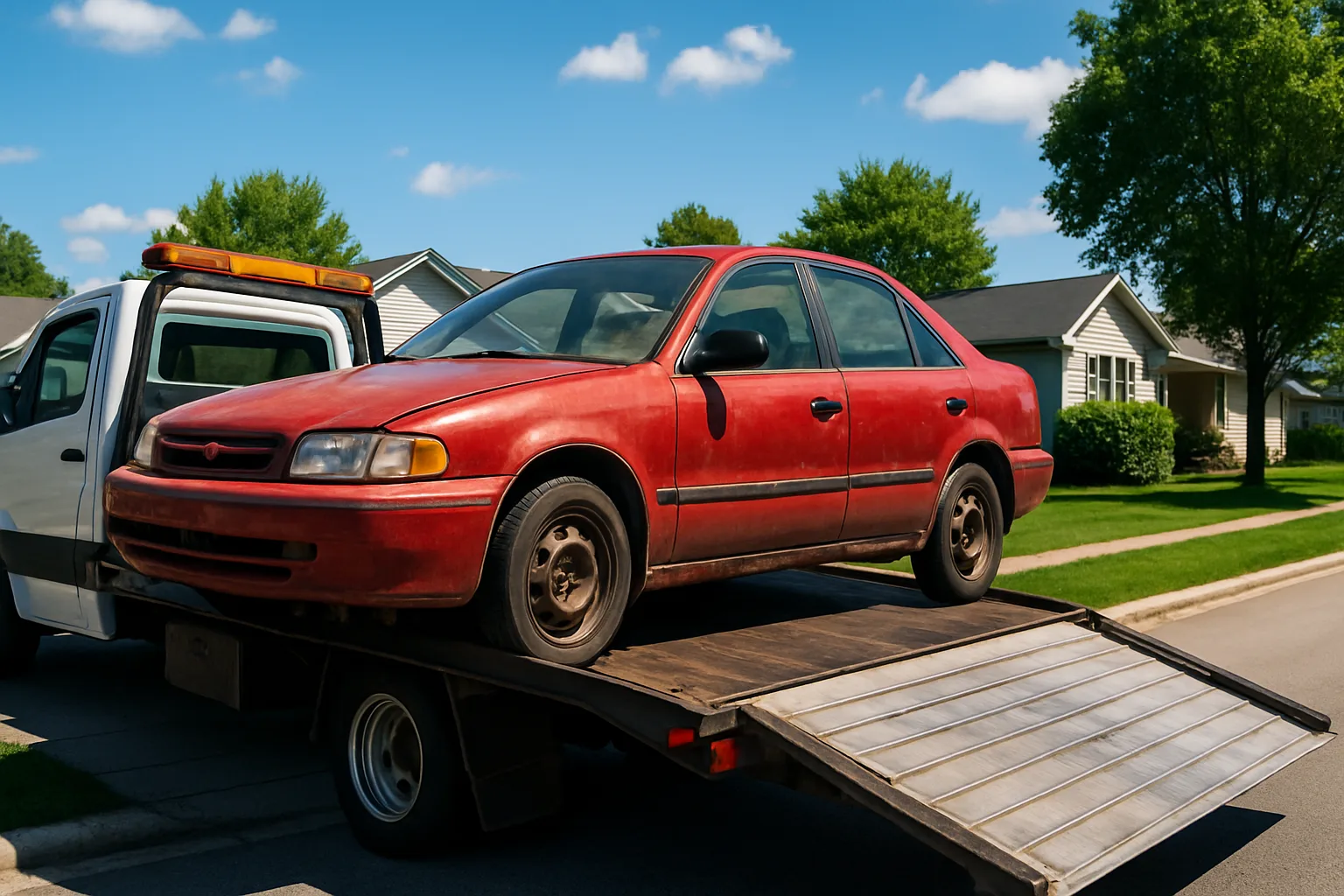
Car Donation in Canada: Feels Good, But Does It Pay Off?
Most Canadians assume donating their old car is the noble move — hand over the keys, feel good, get a tax receipt. But here's what the donation brochures don't tell you: in many cases, you could put hundreds or even thousands of dollars in your pocket by selling instead. If you're sitting on an unwanted vehicle in Corner Brook and wondering what to do with it, this article is for you.
We're not saying donation is always the wrong call. But before you sign anything over, you deserve the full picture. Let's break down how car donation actually works in Canada, what it's really worth, and when selling — including to scrap or salvage buyers — makes more financial sense.
How Car Donation Works in Canada
When you donate a vehicle to a registered Canadian charity, the charity typically doesn't keep the car. They sell it — usually at auction or directly to a scrap yard or salvage dealer. The proceeds go toward their programs. In return, you receive a charitable tax receipt for the fair market value of the vehicle, which you can use to reduce your federal and provincial tax owing.
That sounds straightforward. But a few things can complicate the picture:
- Fair market value isn't always what you'd hope. A 2009 Ford F-150 with 280,000 km might appraise for far less than you expect, especially if it's not running.
- Not every charity handles vehicle donations directly. Many use third-party processors who take a cut before the charity ever sees a dollar.
- The tax benefit depends on your income and tax bracket. If you're not a high earner, the receipt might not translate to significant savings.
- Only registered charities qualify. The organization must have a valid CRA charitable registration number for your receipt to count.
Newfoundland and Labrador residents should also note that provincial and federal tax rules interact differently depending on income level and filing status. Talk to a tax professional before assuming a donation receipt equals guaranteed savings.
What's Your Junk Car Actually Worth? Understanding Real Vehicle Value
Before you decide to donate, you need to know what the vehicle is actually worth — not what you hope it's worth. That's where a lot of people get tripped up. They hand over a car assuming it's nearly worthless, when in reality they could sell my junk car Corner Brook for a meaningful amount of cash.
Several factors determine your vehicle's real-world value:
- Weight and metal content — Steel scrap prices fluctuate, but a full-sized sedan or truck carries significant metal value by weight alone. Heavier vehicles typically return more at the scrap level.
- Usable parts — Even a non-running car may have a catalytic converter, alternator, starter, doors, rims, or seats that have resale value in the used parts market.
- Make and model demand — Some vehicles have strong parts demand even when wrecked. Certain trucks and SUVs hold value longer than others.
- Running condition — A car that drives onto a lot is worth more than one that needs to be towed. But don't assume a non-runner has no value — many buyers specialize in exactly that.
- Year — Older vehicles (pre-2005) often have fewer electronic components, making them simpler to part out.
If you want a quick ballpark, tools like a how much is my junk car worth calculator can give you a rough estimate based on make, model, year, and condition. These aren't guarantees, but they give you something to compare against what a charity's processor might actually pay. Knowing your floor number is always smarter than going in blind.
As a general reference point, how much is the average junk car worth in Canada depends on current scrap metal prices and the vehicle's condition — but many end-of-life vehicles return anywhere from a few hundred to over a thousand dollars in a competitive sale. Don't leave that on the table without checking first.
Donation vs. Selling: A Side-by-Side Comparison
Let's get practical. Here's how the two options stack up for a typical Corner Brook resident with an unwanted vehicle they want gone:
-
Car Donation
- You receive a tax receipt, not cash
- Benefit depends on your tax bracket and filing situation
- The charity often nets far less than the car's real value after processing fees
- You feel good — that's real, and it matters to some people
- Timeline varies; pickup may take days or weeks depending on the program
-
Selling Your Car (Including to Scrap or Salvage Buyers)
- You receive actual cash — same day in many cases
- No tax bracket math required; cash is cash
- Competitive offers mean you capture real market value
- Faster resolution — many buyers offer free pickup
- Works even without insurance, registration, or a safety inspection
If your vehicle has significant value and you're not in a high tax bracket, selling almost always puts more money in your pocket. If you're a high earner with a vehicle in decent shape and a cause you genuinely support, donation can make sense — but only with eyes open about what the charity actually receives.
For estate vehicles, accident-damaged cars, or anything uninsured, selling is typically the cleaner option. You can get a free car valuation in Canada without committing to anything — just to know where you stand.
Who Should Consider Selling Instead of Donating
Selling makes more sense than donating in most of these situations:
- You inherited a vehicle and need cash more than a tax receipt from an estate
- The car was in an accident and is a write-off or salvage title
- You can't insure it or registration has lapsed
- You upgraded and just want the old vehicle gone with money back
- You're not a high-income earner and the tax receipt won't meaningfully reduce your tax bill
- You want fast resolution — same-day or next-day cash is more certain than donation processing timelines
Residents in Corner Brook and across Newfoundland and Labrador deal with a particular challenge: remote geography means fewer buyers calling your door, which has historically pushed prices down. That's exactly why using a platform that brings multiple buyers to compete for your vehicle changes the equation. More competition means better price discovery. That's not a slogan — it's how auctions work.
Platforms like connect with trusted auto buyers in Canada through SMASH Cars are built for this. Instead of calling one buyer and accepting one number, you get vetted buyers competing for your vehicle. The difference can be significant, especially for trucks, SUVs, or vehicles with intact parts value.
What the Donation Industry Doesn't Advertise
Car donation programs in Canada vary widely in transparency. Some are run directly by large charities with efficient processing. Others outsource to for-profit intermediaries who take a substantial percentage before any funds reach the cause you care about.
Before you donate, ask:
- What percentage of the vehicle's proceeds actually reach the charity?
- Who handles the logistics, and do they take a fee?
- How is the fair market value determined for your receipt?
- How long does the process take from pickup to receipt?
If you can't get straight answers, that's a signal. The point isn't to discourage generosity — it's to make sure your generosity actually reaches the cause. In some cases, selling your car and writing a cash donation to the charity directly results in more money going to the cause than donating the vehicle through an intermediary program. That's worth knowing.
For those unsure which path makes sense, browse Canadian car selling tips on our blog — there's practical guidance on everything from inherited vehicles to accident write-offs.
How to Sell Your Unwanted Car in Corner Brook Without the Hassle
If you decide selling is the right move, the process is simpler than most people expect — especially for junk, damaged, or uninsured vehicles.
- Gather your documents. You'll need the vehicle registration and proof of ownership. If it's an estate vehicle, have the will or estate documentation ready.
- Know what you have. Year, make, model, approximate mileage, and condition. Photos help — especially of any damage.
- Get a valuation. Don't accept the first number you're offered. Use a calculator or platform to understand what your vehicle is actually worth before you commit.
- Compare offers. A single call to a single buyer is the old way. Put your vehicle in front of multiple buyers and let them compete.
- Confirm pickup logistics. Reputable buyers offer free pickup, including for non-running vehicles. Confirm this before agreeing to anything.
- Get paid. Cash or e-transfer at time of pickup. No chasing invoices.
If your vehicle needs to be hauled out of a driveway in Corner Brook — or anywhere else in Newfoundland and Labrador — Canadian scrap car removal from GetMyScrapCar is another resource worth checking for straightforward scrap-level pickup.
SMASH makes it easy to get competing offers without playing phone tag. If there's salvage or parts value in your vehicle, a competitive process is how you find it. Ready to find out what your car is actually worth? SMASH Cars connects you with trusted auto buyers across Canada — get your free offer at smash-cars.ca and know your number before you decide anything.
Frequently Asked Questions
Q: Is it better to donate my car or sell it for cash in Canada?
It depends on your tax situation and the vehicle's value. If you're in a high tax bracket and the car is in decent condition, a donation receipt can provide meaningful savings. For most people with older, damaged, or non-running vehicles, selling returns more money — often significantly more than the tax benefit would.
Q: Can I sell my car for cash in Corner Brook if it's not running?
Yes. Many buyers specifically purchase non-running, damaged, and end-of-life vehicles. You don't need the car to start, pass inspection, or have current insurance. Reputable buyers typically offer free towing from your location in Corner Brook or anywhere else in Newfoundland and Labrador.
Q: How much is my junk car worth in Canada?
It depends on the vehicle's weight, make, model, year, and condition — as well as current scrap metal prices, which fluctuate. A full-sized truck or SUV generally returns more than a compact car. Use a junk car worth calculator for a rough estimate, then get real offers from buyers to confirm. Prices vary and should always be verified with current market rates.
Q: What documents do I need to sell an unwanted car in Corner Brook?
You'll need the vehicle registration and proof of ownership (title). If you're selling an inherited or estate vehicle, supporting documentation like a will or executor authorization may be required. Contact the buyer in advance to confirm exactly what they need for your situation.
Q: How does SMASH Cars help me get more than scrap value for my vehicle?
SMASH Cars connects your vehicle with vetted buyers who compete for it — rather than you accepting the first offer from one local contact. More competition means better price discovery, which can result in offers that reflect the real parts, salvage, or resale value of your vehicle, not just scrap weight alone.
Stay current on scrap metal markets and auto industry news — follow SMASH on LinkedIn at linkedin.com/company/scrap-metal-auction-sales-hub for updates that matter to Canadian car sellers and recyclers.