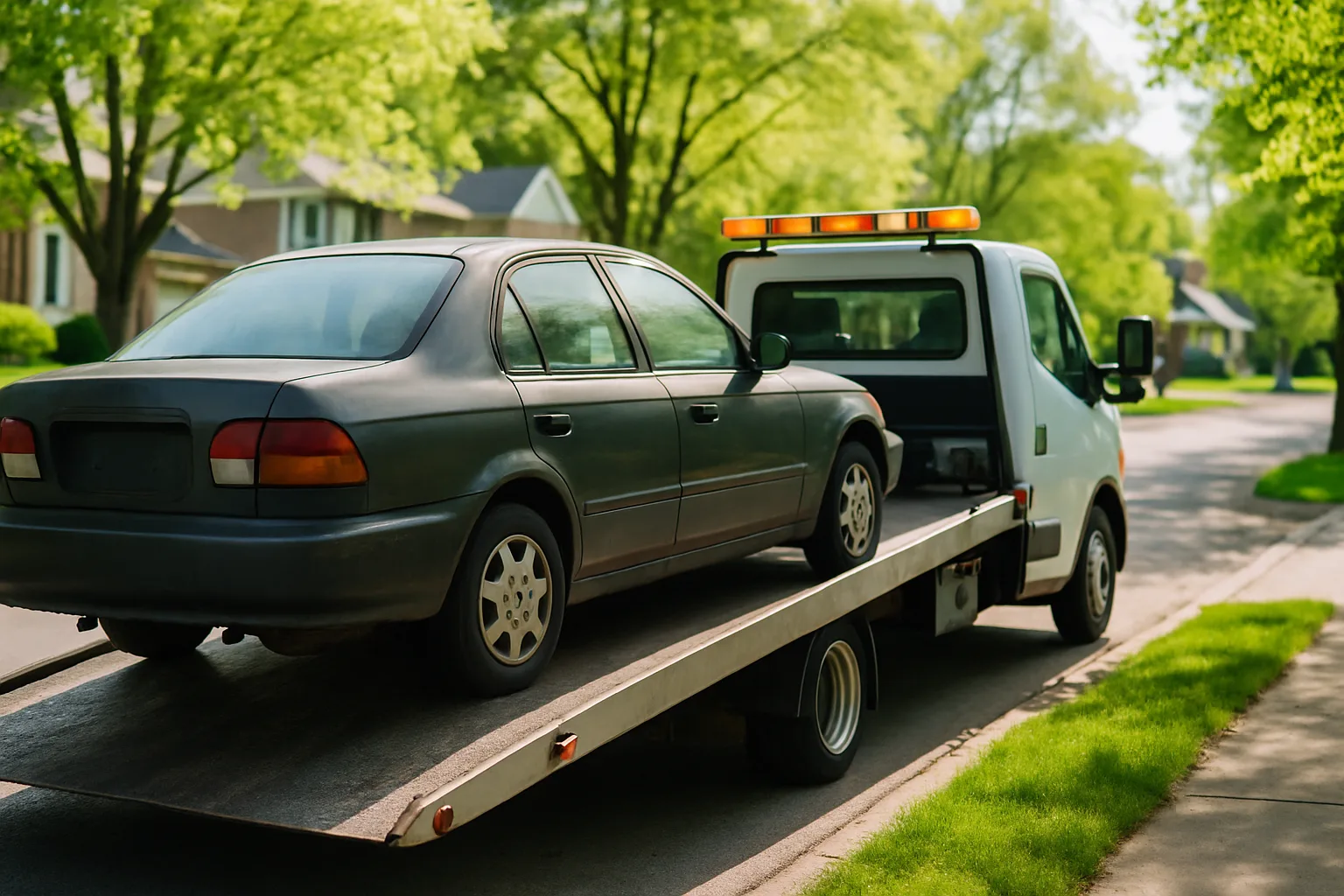
Settling an estate is hard enough without a car sitting in the driveway that nobody knows what to do with. Whether it's a 2009 Civic that hasn't moved in months or a truck that was your father's pride and joy, figuring out how to sell a deceased family member's vehicle in Canada takes paperwork, patience, and a clear understanding of what's actually required. This article breaks it down — step by step — with specific context for Quebec and the Gatineau area, where provincial rules add a layer most guides skip over entirely.
If you're searching for cash for cars Gatineau while also trying to figure out title transfers after a death, you're in the right place. We'll cover the legal side, the paperwork, and how to get fair value for the vehicle once everything is in order.
Why Selling an Inherited Vehicle Is Different From a Regular Car Sale
When you sell your own car, you hand over the registration, sign the back of the title, and that's mostly it. When you're selling a vehicle that belonged to someone who has passed away, the process requires proof that you have the legal authority to act on behalf of the estate. You can't just hand over keys and walk away — buyers, scrappers, and transfer offices all need documentation that protects everyone involved.
This matters especially in Quebec, where vehicle registration is handled through the Société de l'assurance automobile du Québec (SAAQ). Unlike some provinces where the title document itself transfers ownership, Quebec uses a registration system tied directly to the owner's identity. That creates a specific set of steps when the registered owner is deceased.
The good news: it's manageable. You don't need a lawyer for every situation. You do need to know what documents to gather before you try to sell.
Documents You'll Need to Transfer or Sell the Vehicle in Quebec
Regardless of where the estate car ends up — whether you're selling it privately, donating it, or arranging junk car removal — you'll need a core set of documents to prove your authority. Here's what to gather before you contact any buyer:
- Death certificate — An official copy, not a photocopy. You'll likely need more than one during estate administration.
- Proof of your authority — This is either a notarized will naming you as the executor (liquidator, in Quebec), or letters of administration if the estate went through the courts.
- The vehicle's registration certificate — Quebec uses registration documents, not a traditional "pink slip" title. Find this in the vehicle's glove box or the deceased's paperwork.
- Your own government-issued ID — As the person acting on behalf of the estate, you'll sign all documents.
- A bill of sale — Required for any transaction. In Quebec, this must reflect the actual sale price.
If the vehicle is jointly registered — say, it was in both spouses' names — the surviving co-owner may be able to handle the transfer without going through the full estate process. Visit a SAAQ service point in Gatineau or anywhere in Quebec to confirm what applies to your specific situation. The SAAQ has offices across the Outaouais region and their staff are accustomed to these questions.
The Quebec-Specific Steps for Transferring a Deceased Person's Vehicle
In Quebec, the liquidator (executor) of the estate has the legal authority to sell estate assets, including vehicles. If you've been named liquidator in the will, here's the general process for transferring or selling the vehicle:
- Confirm your role is legally recognized. A notarized will or court-issued letters of administration establishes this. In Quebec, many wills are notarized, which simplifies verification.
- Settle any outstanding liens. If the vehicle had financing on it, the lender has a registered claim. You'll need to pay off or negotiate that balance before the vehicle can be transferred clean.
- Cancel or transfer the insurance. Contact the insurer and let them know the registered owner has passed. Keep a record of this step.
- Visit the SAAQ with your documents. The SAAQ processes ownership transfers on estate vehicles. Bring the death certificate, proof of your authority, registration certificate, and your ID. They'll walk you through what's needed to complete the transfer into your name (if you're keeping it) or directly to a buyer.
- Complete a bill of sale. Even for scrap or junk car sales, document the transaction in writing with the buyer's name, vehicle details, VIN, sale price, and date.
If the estate is small and the vehicle's value is low, Quebec does have simplified processes for minor estates. A notary can advise whether a full probate process is required or whether an affidavit of small estate is sufficient. Don't assume — get confirmation before you sell.
What the Car Is Actually Worth — And How to Find Out
One of the most common mistakes families make is accepting the first offer they get, especially when they're grieving and just want the situation resolved. A vehicle that looks like junk on the outside might have a working engine, a catalytic converter with real non-ferrous value, or clean body panels worth money to a rebuilder.
Before you call anyone, get a realistic baseline. You can get a free car valuation in Canada through SMASH Cars to understand what your estate vehicle is actually worth — not just what a single buyer is willing to offer. That number makes every conversation that follows easier.
A few factors that affect value on an estate vehicle:
- Year, make, model, and mileage — A 2014 Honda Accord with 180,000 km is worth more than a 2004 version with 300,000 km, even in rough shape.
- Running condition — Does it start? Does it drive? Even partial functionality affects offers significantly.
- Body damage and rust — Especially relevant in Gatineau and across Quebec, where road salt accelerates corrosion. Heavy rust cuts into scrap and resale value.
- Catalytic converter — Older vehicles with original cats still in place carry extra value. Don't let anyone strip it before you understand what it's worth.
- Tires, battery, and recently replaced parts — New brakes, a fresh transmission, a newer battery — these all add real value to private buyers even if the car isn't running perfectly.
If you're unsure whether to scrap it or try to sell it for more than scrap value, that's exactly the scenario where connecting with trusted auto buyers in Canada through SMASH Cars pays off. SMASH works with vetted buyers who compete for vehicles — you're not stuck with one offer from one person.
We Buy Junk Cars Gatineau — What That Really Means
If you've searched we buy junk cars Gatineau, you've probably seen a range of listings — some legitimate, some less so. Here's what to know before you deal with any buyer in the area.
Legitimate junk car buyers in and around Gatineau will ask for proof that you have the right to sell the vehicle. If a buyer is willing to hand over cash without seeing any documentation, that's a red flag — not a convenience. It can leave you legally exposed if questions arise later about the vehicle's ownership.
A professional buyer will:
- Ask for the registration and proof of your legal authority as liquidator or estate administrator
- Run a VIN check to confirm the vehicle's history
- Provide a written bill of sale for their records and yours
- Arrange towing or pickup if the vehicle isn't drivable
- Pay in a traceable form — not always cash, often e-transfer or cheque
If the car is truly end-of-life — not worth repairing, not worth selling privately — you can also explore scrap car removal in Canada at GetMyScrapCar, which handles pickups and handles the paperwork process alongside you.
For vehicles that still have resale or parts value beyond straight scrap, don't default to the junk route automatically. Competition reveals real market value — that's the core idea behind how SMASH operates. One call to one buyer tells you very little about what the market will actually pay.
Timing, Taxes, and Practical Tips for Gatineau Families
There's no single deadline that forces you to sell an estate vehicle immediately, but carrying costs add up. If the vehicle is insured, you're paying premiums on something no one drives. If it's uninsured and sitting on a public road in Quebec, there's legal exposure. Storage, depreciation, and battery drain are also real concerns for vehicles that sit through a Quebec winter.
From a tax perspective, selling an estate vehicle in Quebec may have implications depending on the overall value of the estate and whether there are capital gains involved. This is a conversation for a notary or accountant — not a car buyer. What you should know is that the sale price on the bill of sale needs to be accurate. Quebec's provincial authorities take vehicle sale documentation seriously, and under-declaring the sale price creates problems for everyone.
A few practical tips for Gatineau families working through this process:
- Start gathering documents early — the SAAQ process moves faster when you arrive prepared.
- Take photos of the vehicle now, before anything is moved or changed. This protects you and helps buyers give accurate offers remotely.
- Check the glove box and trunk for any accessories, ownership documents, or items of personal value before the vehicle leaves.
- Don't sign anything until you've confirmed your authority to sell is legally established.
- Get more than one offer — even on an older vehicle, competition matters.
For more guidance on navigating vehicle sales in Canada, browse Canadian car selling tips on our blog — there's practical content covering everything from salvage titles to selling cars without insurance.
When you're ready to move forward, SMASH Cars connects estate executors with vetted buyers who make real offers — no pressure, no runaround. Get your free offer at smash-cars.ca and find out what the estate vehicle is actually worth in today's market.
Frequently Asked Questions
Q: Can I sell a deceased family member's car in Quebec without going through probate?
In some cases, yes. Quebec has provisions for small or simple estates where a full probate process isn't required. If the estate is straightforward and the vehicle's value is below certain thresholds, an affidavit or notarial declaration may be sufficient. Consult a notary to confirm what applies to your situation before attempting the SAAQ transfer.
Q: How do I get cash for cars in Gatineau for an estate vehicle?
Start by gathering the vehicle's registration, a copy of the will or letters of administration, and the official death certificate. Then get offers from vetted buyers — platforms like SMASH Cars connect you with buyers who compete for the vehicle, which tends to produce better outcomes than calling a single local scrapper. The SAAQ in Gatineau can assist with the transfer paperwork once a sale is agreed.
Q: What if the deceased person's car has no registration or paperwork?
Missing paperwork makes the sale significantly more complicated. You'll likely need to work with the SAAQ to establish the vehicle's history through the VIN and confirm ownership through estate documentation. A notary can advise on the path forward. Don't attempt to sell without establishing a legal paper trail — it creates liability for you and the buyer.
Q: Do I need insurance on the estate car while I'm arranging the sale?
If the vehicle is being driven — even once, even briefly — it needs to be insured in Quebec. If it's not being driven and is parked on private property, the immediate risk is lower, but you should still notify the insurer of the owner's passing and clarify coverage status. Selling an uninsured car is legal in Quebec; driving one is not.
Q: How long does it take to sell an estate car in Gatineau once paperwork is in order?
Once your documentation is in order — will or letters of administration, death certificate, registration — the actual sale can move quickly. Scrap and junk car buyers in the Gatineau area can often arrange pickup within a few business days. If you're selling for more than scrap value through a platform like SMASH Cars, timelines vary depending on buyer interest, but the process is straightforward once legal authority is confirmed.
Stay current on Canadian auto market trends and scrap vehicle insights by following SMASH on LinkedIn: linkedin.com/company/scrap-metal-auction-sales-hub.
```