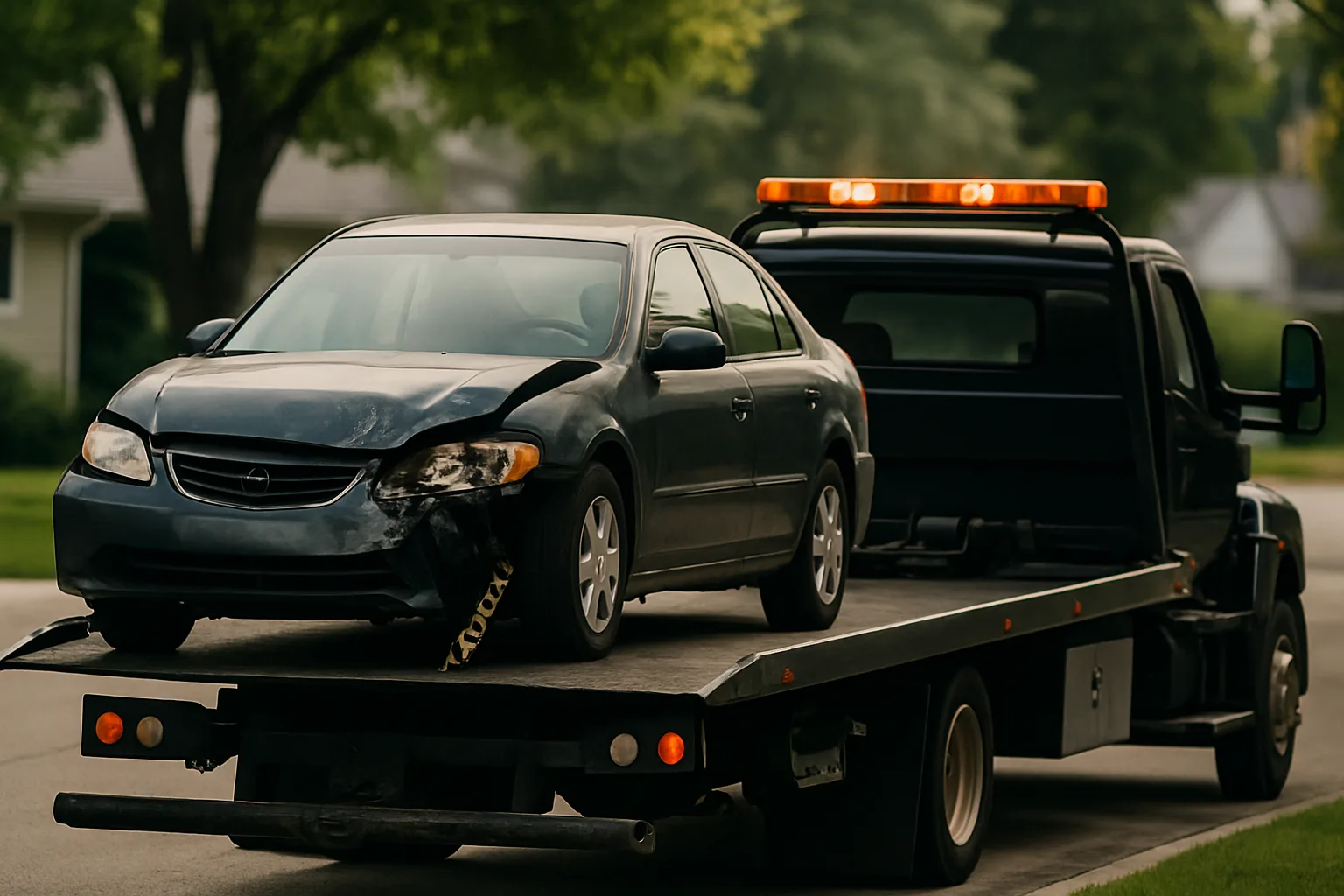
Your car got written off after an accident. The insurance company made their offer, you signed the paperwork — and now you're left with a damaged vehicle sitting in your driveway and no clear idea what to do next. Sound familiar? You're not alone. Thousands of Canadian drivers face this exact situation every year, and most of them leave money on the table because they don't know their options.
If you're trying to sell my junk car Yorkton after an accident, the good news is this: a totalled or damaged car still has real value. The key is knowing how to unlock it — and who to call.
This is the story of how damaged vehicle owners across Saskatchewan are discovering they can get more than a scrap yard's flat offer. And how platforms like SMASH are changing the game for sellers who thought their only option was a lowball cheque and a tow truck.
What "Total Loss" Actually Means for Your Car's Value
When an insurer declares your vehicle a total loss, they're making a financial calculation — not a statement about whether your car has any remaining value. Total loss simply means the cost to repair the vehicle exceeds a certain percentage of its pre-accident market value. In most Canadian provinces, that threshold sits somewhere between 70% and 80%. Your car crosses that line on paper, and suddenly it's "junk."
But here's what the insurance paperwork doesn't tell you: your car still has parts, metals, and components that buyers want. A 2019 Honda CR-V with a crushed front end still has a working engine, intact catalytic converter, usable non-ferrous metals, and potentially dozens of resalable parts. A vehicle that's "totalled" by insurance standards can still fetch well above basic scrap metal prices — if you sell it to the right buyer.
The mistake most people make? Calling the first number they find, accepting a single flat offer, and handing over the keys. One buyer. No competition. No transparency. That's the old way.
Your Real Options After an Accident: What Sellers in Yorkton Need to Know
If you're sitting in Yorkton with a damaged or written-off vehicle, you have more options than most people realize. Here's a practical breakdown:
- Sell to a scrap yard: Fast and simple, but you'll almost always get the base scrap metal price. No negotiation, no competition, no upside.
- Sell for parts privately: Higher potential return, but time-consuming. You'd need to list individual components, store the vehicle safely, and deal with multiple buyers — not realistic for most people.
- Sell to a salvage dealer: These buyers look for vehicles they can repair and resell or part out at volume. Pricing varies widely and is rarely transparent.
- Use a vetted buyer platform: Services like SMASH connect you with multiple qualified buyers who compete for your vehicle. More competition means better price discovery — and you get a documented offer without the guesswork.
- Donate your vehicle: Some car donation programs in Canada accept damaged vehicles. You lose the cash value but may qualify for a tax receipt — worth exploring if the vehicle has limited market value.
For most accident-damaged car owners who want to sell my car fast Yorkton without sacrificing value, the platform route has become the go-to. It skips the single-buyer bottleneck and puts real market forces to work on your behalf.
How One Saskatchewan Seller Got More Than Scrap for a Totalled SUV
Consider a scenario that plays out regularly across Saskatchewan: A driver in Yorkton gets rear-ended at highway speed. The SUV — a 2020 Ford Escape with just over 90,000 kilometres — is declared a total loss. The insurance settlement covers the majority of the vehicle's pre-accident value, but the owner is left holding the physical car and a salvage title.
The first call goes to a local scrap yard. The offer: a flat rate based on vehicle weight and current scrap metal prices. It's not nothing, but it doesn't feel right for a vehicle that still runs, still has a functional transmission, and has a catalytic converter worth real money on its own.
The second move? Listing the vehicle through a platform that brings vetted buyers to the table. Photos get uploaded. The VIN gets entered. Condition details — including the accident damage — get documented honestly. Within a short window, multiple buyers have reviewed the listing and submitted offers.
The result: a final sale price meaningfully above the initial scrap yard quote. Not a windfall, but a real difference — the kind that covers a few months of car payments on the replacement vehicle. That difference came entirely from competition and transparency, not from hiding damage or inflating claims.
That's exactly what connecting with trusted auto buyers in Canada through SMASH Cars is designed to produce. Not magic — market mechanics.
Documentation: The Detail That Changes Your Sale Price
Here's something most accident-damaged vehicle sellers overlook entirely: documentation is money. Buyers pay more for vehicles they understand. When a buyer can see exactly what they're getting — photos of the damage, the VIN, the service history, the accident report — they price more aggressively because their risk is lower.
When documentation is thin or missing, buyers pad their offers with a risk buffer. That buffer comes out of your pocket.
Before you list or contact any buyer for your damaged vehicle, gather the following:
- Photos — lots of them. All four sides, the interior, the engine bay, and close-ups of any damage. Don't hide anything. Transparency builds buyer confidence.
- The VIN. Buyers use this to pull history reports, confirm specs, and verify the vehicle's background. Have it ready.
- Insurance documentation. The total loss declaration, the settlement paperwork, and any accident report the insurer provided.
- Title or ownership documents. In Saskatchewan, you'll need to confirm how the title is registered, especially if the insurance company has taken a lien or the vehicle carries a salvage designation.
- Any repair estimates. Even if you're not repairing the car, a shop's written estimate helps buyers understand the scope of damage.
Platforms built for this process — like SMASH — have photo documentation and serial tracking built into the listing workflow. That structure does the heavy lifting for you and makes your listing more competitive from the start. When you get a free car valuation in Canada, having this documentation ready speeds up the process and strengthens your position.
Salvage Title Vehicles in Saskatchewan: What You Need to Know Before You Sell
Saskatchewan has specific rules around salvage-branded vehicles, and understanding them protects you legally and financially. When an insurer writes off a vehicle and pays out a claim, the vehicle's registration status typically changes. In Saskatchewan, the vehicle may be branded as "salvage" through SGI (Saskatchewan Government Insurance).
A salvage-branded vehicle can still be sold, but the buyer needs to understand what they're purchasing. You cannot legally sell a salvage-branded vehicle as if it's a clean-title car. Full disclosure is required — and it's the right thing to do regardless.
The practical impact on value: salvage-branded vehicles sell for less than clean-title equivalents, but they still have real market value, especially for buyers who intend to part them out, crush them for metal, or repair them for personal use (following Saskatchewan's rebuilt vehicle inspection process). The Yorkton scrap metal services market understands this distinction, and legitimate buyers will price accordingly.
Don't let the salvage brand scare you into taking the first offer. Informed buyers — especially those operating through vetted platforms — already factor that into their bids. What you want is multiple informed buyers competing, not one buyer using the salvage designation to justify a lowball price.
Selling Your Accident-Damaged Car Fast Without Leaving Money Behind
Speed and value don't have to be opposites. The process of getting a competitive offer on a damaged vehicle — even a written-off one — has gotten significantly faster as digital platforms have replaced the phone-call-and-handshake model. You don't have to choose between getting paid today and getting paid fairly.
Here's what a fast, value-focused sale looks like in practice for a Yorkton seller:
- Gather your documentation (photos, VIN, title, insurance paperwork)
- Submit your vehicle through a platform that surfaces vetted buyers
- Let competition do its job — multiple buyers reviewing the same listing drives better offers
- Review offers with full transparency, accept the best one
- Arrange pickup — most buyers handle logistics, including towing if the vehicle isn't driveable
The entire process can move quickly. Same-day or next-day offers are realistic. Pickup within a few business days is standard. And because the platform handles invoicing and documentation, you're not chasing paperwork after the fact.
If you've been putting off dealing with the damaged vehicle sitting in your driveway because the process felt overwhelming, the reality is simpler than you think. Browse Canadian car selling tips on our blog to see how other sellers across Saskatchewan and beyond have navigated the same situation. And if free removal is what you need first, free junk car removal across Canada is available to help you get started without the upfront logistics headache.
When you're ready to see what your accident-damaged vehicle is actually worth, get connected with trusted auto buyers in Canada through SMASH — get your free offer at smash-cars.ca. No subscription. No pressure. Just real buyers and real offers on your timeline.
Frequently Asked Questions
Q: Can I sell my junk car in Yorkton if it has a salvage title?
Yes. A salvage-branded vehicle can absolutely be sold in Saskatchewan. You must disclose the salvage designation to the buyer — legally and ethically. Buyers who specialize in damaged or written-off vehicles understand salvage titles and price their offers accordingly. Using a platform with vetted buyers ensures you're dealing with people who know what they're buying.
Q: How do I know if I'm getting a fair price for my accident-damaged car?
The most reliable way to know is to get more than one offer. A single offer from a single buyer gives you no reference point. When multiple vetted buyers compete for your vehicle, the market tells you what it's worth. Platforms like SMASH are built specifically to create that competitive dynamic for damaged and end-of-life vehicles.
Q: Does my car need to be driveable to sell it fast in Yorkton?
No. Many accident-damaged vehicles are not driveable, and that's fine. Most buyers who purchase damaged or written-off vehicles handle their own towing and logistics. Make sure you're upfront about the vehicle's condition — including whether it runs — so buyers can factor that into their offers accurately.
Q: What documents do I need to sell a car after an accident in Saskatchewan?
At minimum, you'll need the vehicle's ownership documents (title), your photo ID, and any insurance paperwork related to the total loss declaration. If SGI has issued a salvage brand on the vehicle, that documentation is important too. Having photos of the damage and any repair estimates makes the process faster and often results in stronger offers from buyers.
Q: Is it worth selling my totalled car for parts instead of as a whole vehicle?
Selling parts individually can theoretically yield more money, but it requires significant time, storage, and effort — and it can take weeks or months to move everything. For most sellers in Yorkton who want to sell my car fast in Saskatchewan without the hassle, selling the whole vehicle to a vetted buyer through a competitive platform delivers the best combination of speed and value.
Follow SMASH on LinkedIn for scrap metal market insights, industry updates, and practical tips for getting more out of your unwanted vehicles across Canada.