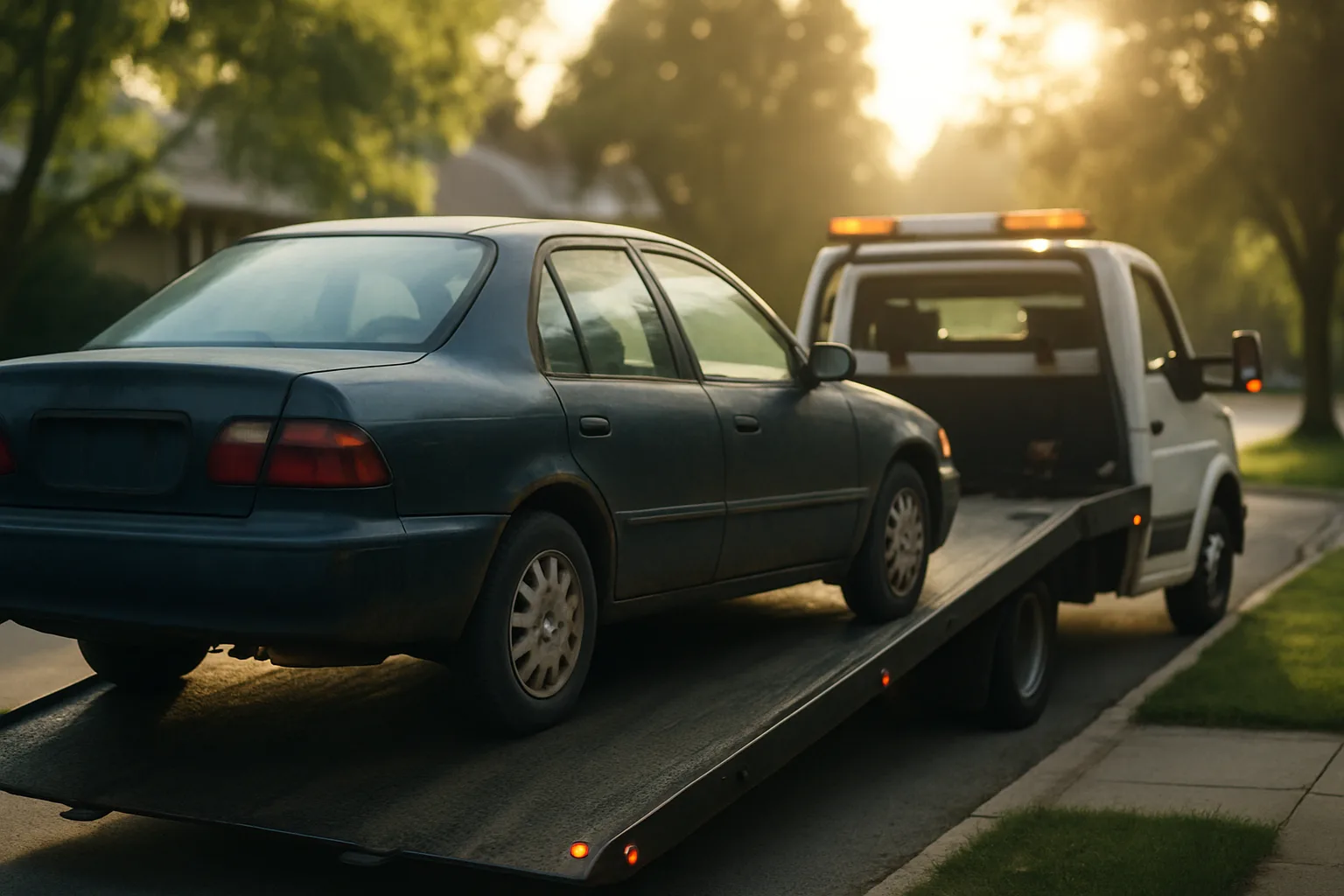
An estate vehicle sits in a driveway in Sherbrooke, Quebec. Nobody wants it. Nobody knows what it's worth. And nobody's sure what happens next. If you've recently dealt with a loss and inherited a car you don't need, you're not alone — and the decision is less complicated than it feels right now.
Whether the vehicle runs or not, whether it has a clean title or a salvage designation, whether it's a 2009 Civic with 280,000 km or a 2015 pickup that hasn't started in two years — there are real options beyond just leaving it in the driveway. The goal is to make a smart decision fast, without being taken advantage of.
This guide breaks down exactly what you can do with an estate vehicle you don't want to keep. We'll compare your options honestly, so you can move forward with clarity and, ideally, cash in your pocket.
Step One: Know What You're Actually Dealing With
Before you make any calls, take ten minutes to gather the basics. You'll need the vehicle identification number (VIN), the registration, and ideally the title or proof of ownership from the estate. In Quebec, estate executors typically have the legal authority to transfer or sell estate assets — but you'll want to confirm that with a notary if ownership is complex.
Check the vehicle's condition honestly:
- Does it start and drive?
- Is there visible collision damage?
- Has it been sitting uninsured for months?
- Are there any liens against it?
- Does it have a salvage or rebuilt title?
These details shape your options and your offer. A car that runs and is properly titled can sometimes sell for significantly more than scrap value — even if it's old. A written-off vehicle with no title documents is a different situation entirely. Knowing where you stand before you make a move saves time and keeps buyers honest.
You can also use a get a free car valuation in Canada tool to get a baseline number before you start shopping your options.
Your Options Compared: What to Do With an Estate Vehicle
There's no single right answer here. The best move depends on the car's condition, how fast you need to act, and whether maximizing cash value is the priority. Here's a side-by-side look at the most common paths people take.
Option 1: Sell It Privately
If the vehicle runs well and has a clean title, a private sale through platforms like Facebook Marketplace or Kijiji can return the highest dollar amount. You set the price, you negotiate, and you keep everything. The downside is time — a private sale can take weeks, involves test drives with strangers, and requires you to handle all the paperwork. For someone in the middle of managing an estate, this is often the last thing you want to deal with.
Option 2: Trade It In at a Dealership
Dealerships will take almost any vehicle as a trade-in, but they're not paying top dollar for a vehicle they didn't ask for. Expect trade-in offers to come in below market value — sometimes significantly. If you're also buying a replacement vehicle, the math can work out. If you're just trying to move an estate car, it's rarely the best option.
Option 3: Donate It
Car donation in Canada is a legitimate path, and some organizations will pick up the vehicle for free. You may receive a charitable tax receipt depending on the charity and vehicle condition. This works well if the estate has tax considerations and the vehicle's cash value is relatively low. It won't put money in your pocket, but it's a fast, clean way to handle an unwanted vehicle.
Option 4: Scrap It
If the vehicle is truly end-of-life — no title, heavy damage, not worth repairing — scrapping it for its metal value is the floor option. Scrap metal recycling in Canada is well-organized, and most yards will offer free pickup. The payout is based on weight and current metal prices, which fluctuate. A typical passenger car in Canada ranges from 1,000 to 1,800 kg, and scrap value varies with commodity markets. It's fast, but it's also the lowest-dollar option for vehicles that have more value than their metal.
You can schedule free scrap car pickup in Canada if this route makes sense for your situation.
Option 5: Sell It for More Than Scrap Value Through a Buyer Network
This is the option most people don't know exists. Platforms like SMASH connect sellers of used, unwanted, and damaged vehicles with vetted buyers who compete for the car — not just the metal. That competition matters. A 2012 Honda CRV with 220,000 km and a cracked bumper might be worth $800 to a scrap yard. It might be worth $2,400 to a parts reseller or an independent mechanic looking for a project. You only find out what it's actually worth when more than one buyer is at the table.
Connect with trusted auto buyers in Canada through SMASH Cars to see what your estate vehicle actually commands in a competitive market.
When the Vehicle Has a Salvage Title or Was Written Off
A lot of estate vehicles come with complications. Maybe the car was in an accident and the insurance company wrote it off years ago. Maybe it sat uninsured and unregistered for two or three years. Maybe it has a rebuilt title after previous damage. These situations feel like dead ends, but they're often not.
Salvage and rebuilt title vehicles still have buyers — parts buyers, rebuilders, export buyers, and auction resellers all operate in this space. The key is connecting with buyers who actually work with these vehicles, not a local dealership that will turn you away or lowball you because they don't want the liability.
In Quebec, the process for transferring a salvage vehicle through an estate involves specific SAAQ documentation. Getting the paperwork right upfront prevents delays and protects you legally. If the vehicle has zero paperwork, you may still be able to sell it — but you'll need to declare that clearly to any buyer from the start.
For a deeper look at how to navigate complicated vehicle situations, browse Canadian car selling tips on our blog for province-specific guidance.
Cash for Cars in Sherbrooke: What Local Sellers Should Know
If you're dealing with an estate vehicle in the Sherbrooke area, the local market has its own dynamics. Quebec's climate means rust is a real factor — vehicles that spent years on salted roads in the Eastern Townships depreciate faster in cosmetic and structural condition. Buyers in this market know that, and they price accordingly.
That said, Sherbrooke is a mid-size market with active buyers who regularly seek out salvage vehicles, older domestic trucks, and even non-running cars for parts. The cash for cars Sherbrooke market is competitive enough that you don't have to accept the first offer you get — especially if you use a platform that brings multiple buyers to the table.
Local Sherbrooke scrap metal services can handle end-of-life vehicles efficiently, but if your vehicle has more than scrap value left in it, a broader buyer network will almost always return a better number. Don't assume your only option is the closest scrap yard.
One more thing specific to Quebec: make sure you cancel the vehicle's registration and insurance through the SAAQ once the sale is complete. You're responsible for those fees until the transfer is official, and it's an easy step to miss when you're managing a larger estate.
How to Avoid Getting Lowballed on an Estate Car
Estate car sellers are a known target for lowball offers. Buyers know you're motivated, you may not know the vehicle's market value, and you probably just want the situation resolved. Here's how to protect yourself:
- Get at least three offers before accepting anything. One offer gives you a price. Three offers give you a market.
- Use a free valuation tool first. Even a rough estimate gives you a floor to negotiate from.
- Don't accept cash-in-hand deals with no documentation. Proper transfers protect you from future liability.
- Don't pay for towing upfront. Legitimate buyers in the cash for cars Sherbrooke market typically offer free pickup.
- Know the difference between scrap value and resale value. A vehicle worth $900 in scrap might be worth $2,500 to the right buyer. Find the right buyer.
- Avoid buyers who pressure you to decide immediately. Any legitimate offer will hold for at least 24-48 hours.
SMASH was built specifically to solve the one-offer problem. When buyers compete, you find out what the vehicle is actually worth — not what one buyer wants to pay for it.
The Bottom Line on Estate Vehicles
An estate vehicle doesn't have to be a burden. It's an asset — maybe a small one, maybe a surprisingly valuable one — and it deserves more than a rushed decision made under stress. Whether you're in Sherbrooke or anywhere else in Quebec, the right move is to know your options, get multiple offers, and choose the path that fits your timeline and your financial situation.
Scrap metal recycling in Canada is a legitimate last resort, but for most vehicles, there's a buyer willing to pay more than the weight of the metal. The question is whether you find that buyer before you settle for less.
If you want a fast, fair, no-pressure offer on an unwanted estate vehicle, connect with trusted auto buyers in Canada through SMASH Cars. Get your free offer at smash-cars.ca — no subscription, no obligation, and no guessing what your car is actually worth.
Frequently Asked Questions
Q: Can I sell an estate vehicle in Sherbrooke if I'm not the registered owner?
Yes, but you'll need to establish legal authority to sell — typically through the estate's notary or a court-issued authorization. In Quebec, the estate executor has the right to liquidate assets, including vehicles, but buyers will want documentation confirming your authority to sell. Getting this paperwork in order upfront prevents delays.
Q: How do I find cash for cars buyers in Sherbrooke?
You can contact local scrap yards, post on platforms like Kijiji, or use a service like SMASH that connects you with vetted buyers across Canada. The advantage of a buyer network is that multiple buyers see your vehicle and compete — which tends to produce better offers than a single local contact. Free pickup is standard with most cash for cars services in the Sherbrooke area.
Q: What's the difference between scrap value and market value for a junk car?
Scrap value is based purely on the vehicle's weight and current metal prices. Market value accounts for usable parts, the cost to repair and resell, and demand from rebuilders or exporters. A car worth $800 in scrap could be worth two or three times that to the right buyer. Always get both numbers before you commit to a sale.
Q: Does a non-running or uninsured car qualify for cash for cars in Sherbrooke?
Yes. Most cash for cars buyers in Canada specifically target non-running, uninsured, and damaged vehicles. You don't need the car to pass inspection or be currently insured to sell it. What matters is proof of ownership (or estate authority to sell) and an accurate description of the vehicle's condition.
Q: How long does it take to sell a junk car in Canada?
With the right buyer, it can happen within 24 to 48 hours. Most services that specialize in unwanted vehicle removal offer same-day or next-day pickup once an offer is accepted. The timeline typically depends on paperwork readiness — if you have the title or estate documentation in order, the process moves quickly.
Follow SMASH on LinkedIn for ongoing market insights, Canadian scrap metal price updates, and tips on getting the most out of your unwanted vehicles.
```