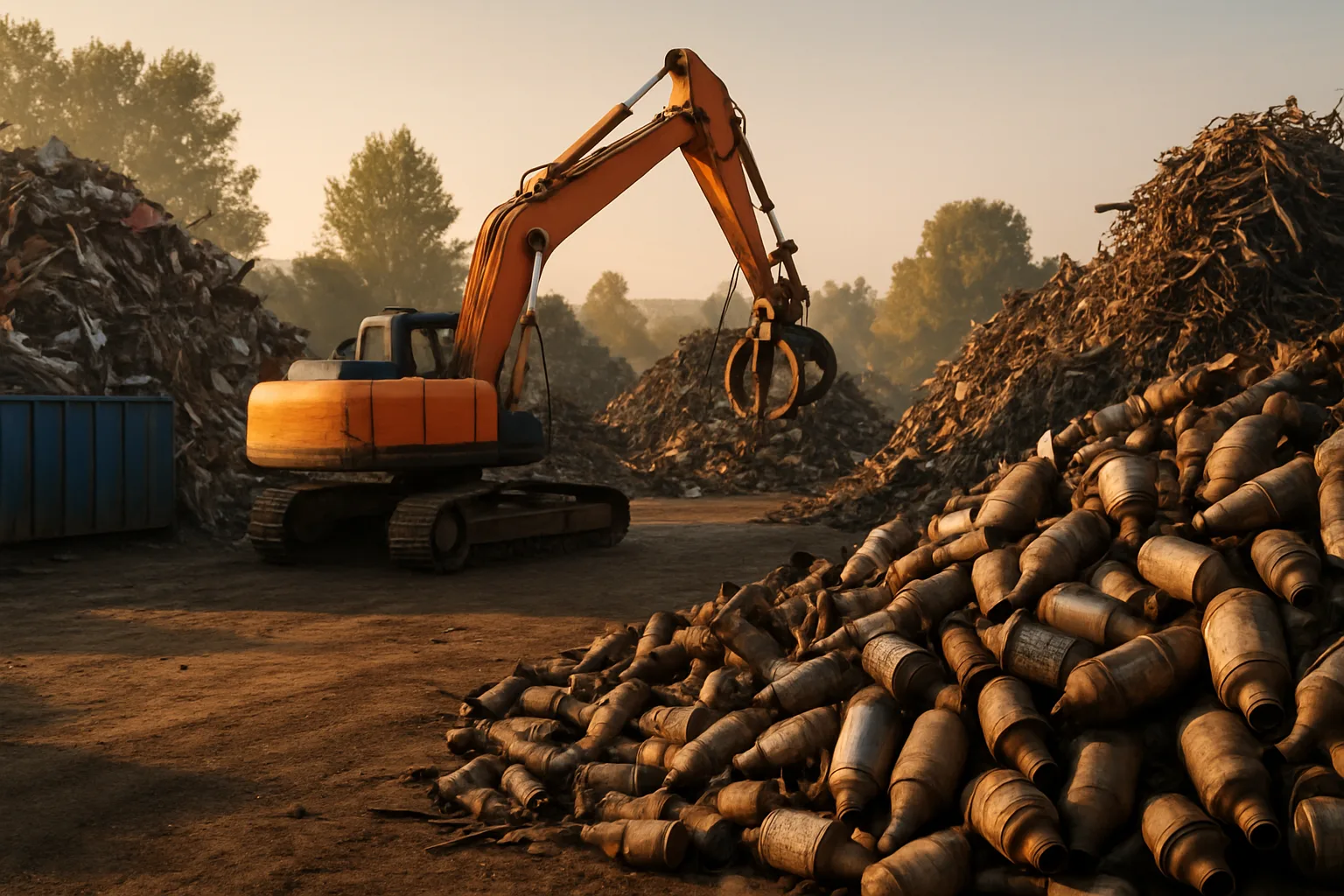
The Part Under Your Car Could Be Worth More Than You Think
Most people selling a junk car think the value is straightforward — it's just weight, right? Steel by the pound, aluminum by the pound, done. But there's a component sitting underneath your vehicle that can dramatically shift what a buyer is willing to pay: the catalytic converter. And if you're trying to sell my junk car Kamloops, understanding how "the cat" affects your car's scrap value could put significantly more money in your pocket.
This isn't a hypothetical. Catalytic converters contain platinum group metals (PGMs) — platinum, palladium, and rhodium — that have real commodity value on the global market. The cat on your 2009 Honda Accord sitting in the driveway isn't just a emissions part. It's a concentration of precious metals that recyclers and smelters actively compete to buy.
Here's the problem: most sellers don't know this. They accept a flat scrap price based on curb weight alone — and leave money behind they never knew existed.
How Catalytic Converters Drive Scrap Car Value in British Columbia
Not all catalytic converters are equal. The PGM content varies based on the vehicle's make, model, engine size, and even the year of manufacture. A full-size truck or SUV with a large displacement engine typically carries more converter material than a compact hatchback. Some hybrid vehicles carry multiple converters. A handful of older European and Japanese vehicles are known in the recycling industry for unusually high PGM concentrations.
When a recycler quotes your car, they're factoring in:
- Curb weight — the steel, aluminum, copper, and other ferrous and non-ferrous metals in the body and drivetrain
- The catalytic converter grade — which determines PGM yield after smelting
- Market conditions — commodity prices for platinum, palladium, and rhodium fluctuate constantly
- Whether the cat is still attached — a missing or stolen converter can reduce your car's offer substantially
In a market like Kamloops, where vehicle use trends toward trucks, SUVs, and 4x4s for the terrain and climate, the average cat value per vehicle skews higher than in urban markets dominated by small sedans. That matters. It means if you're selling an unwanted pickup or older SUV in the interior of British Columbia, the cat underneath it could be a meaningful part of the total offer — if you're dealing with buyers who actually price it correctly.
The Old Way of Selling a Junk Car — and Why It Costs You
The traditional path to selling a scrap car looks like this: you call one local wrecker, they quote you a number based on what they feel like paying that week, you either take it or waste time calling a second number and hoping for better. There's no transparency, no competition, and no way to know if the offer reflects what your car — including that catalytic converter — is actually worth on the open market.
Single-buyer transactions are the norm in the junk car world. And single-buyer transactions favor the buyer, not you. They know exactly what's under your hood. You don't. That information gap is where money gets lost.
Here's a real pattern that plays out constantly: a seller with a missing-cat disclosure gets a low offer, takes it, and later finds out the buyer still recovered significant value from the remaining drivetrain and metals. Conversely, a seller who doesn't disclose — or doesn't know — that their cat has been stolen (catalytic converter theft remains an issue across Canada in 2026) gets surprised when the offer comes in lower than expected and has no context for why.
Knowledge is leverage. And most sellers in the junk car space are operating without it.
What Buyers Actually Look for When Pricing a Salvage or End-of-Life Vehicle
If you want to sell my car fast Kamloops, understanding the buyer's checklist helps you prepare — and helps you spot when an offer doesn't add up.
A serious buyer evaluating a scrap or salvage title vehicle will look at:
- Catalytic converter presence and grade — is it intact? What vehicle is it from? Does the VIN confirm the original engine and exhaust configuration?
- Drivetrain condition — engines and transmissions from certain vehicles hold value as cores, not just scrap weight
- Non-ferrous content — aluminum wheels, copper wiring, radiators, and AC condensers all add to the non-ferrous yield
- Body condition and vehicle age — a 2014 model with repairable damage might sell for more than scrap value; a 2003 with a seized engine probably won't
- Title status — salvage title, rebuilt title, and clean title all affect resale pathways and therefore buyer appetite
The point is: junk car buyers are running a multi-variable calculation. You should be too. And the only way to ensure your car's value is fully reflected in the offer is to put it in front of more than one buyer. That's where a scrap metal auction platform changes the math entirely. Platforms like SMASH bring competitive buyer interest to the table — so the price reflects what the market will actually pay, not what one buyer decided on a Tuesday morning.
If you're ready to find out what your vehicle is actually worth, get a free car valuation in Canada without guessing.
Case Study: Selling a High-Cat Vehicle in a Single-Buyer vs. Competitive Market
Consider this scenario — it's not a specific customer story, but it reflects the structural reality of how catalytic converter pricing affects outcomes.
A Kamloops homeowner inherits an estate vehicle: a 2011 Toyota Tundra 5.7L V8. The truck runs rough, has body damage from a winter incident, and has a rebuilt title. The family wants it gone — they're not local, they're dealing with an estate, and they want a fast, clean transaction.
Option A: They call one local wrecker. The wrecker quotes them based on curb weight and a generic cat allowance. They accept. The truck is picked up the next day. Transaction done. They feel okay about it.
Option B: They connect with trusted auto buyers in Canada through SMASH Cars, provide the VIN, document the condition with photos, note the rebuilt title and the fact that the cat is intact. Multiple buyers review the listing. The 5.7L Tundra is known in the recycling industry as a high-yield cat vehicle. Buyers who specialize in non-ferrous recovery and core value bid competitively. The final offer reflects the actual market value of that specific vehicle — not a generic wrecker quote.
The difference in outcome? That depends on commodity prices, buyer competition, and market conditions at the time — none of which we'll fabricate here. But the structure of Option B is designed to surface value that Option A structurally cannot. Competition reveals price. That's not a sales pitch, it's market mechanics.
You can also browse Canadian car selling tips on our blog for more real-world guidance on getting the most from an estate or unwanted vehicle sale.
What to Do Before You Sell Your Scrap Car in British Columbia
Whether you're in Kamloops or anywhere else in the province, a few steps before you sell can protect the value of your vehicle — especially if you have a cat-bearing truck, SUV, or hybrid sitting in the yard.
- Confirm the cat is intact. Catalytic converter theft is real. Check that it's still there before you start the sale process — it affects your starting offer.
- Know your VIN. The VIN tells buyers the engine configuration, which determines the cat grade. Have it ready. SMASH uses VIN lookup to match vehicles to accurate converter data.
- Document the condition. Photos of the undercarriage, interior, engine bay, and body panels give buyers more confidence and reduce back-and-forth negotiation.
- Don't strip it yourself. Unless you know the market for cores and non-ferrous metals independently, stripping the vehicle before sale often nets less than selling it whole to the right buyer.
- Understand your title status. A salvage title or rebuilt title doesn't disqualify your vehicle — it just routes it to a different buyer pool. Know what you have before you list.
For vehicles that aren't worth more than scrap value, Canadian scrap car removal from GetMyScrapCar is a straightforward option to get the vehicle off your property fast.
And for Kamloops scrap metal services, local options exist — but knowing the difference between a flat scrap quote and a competitive market offer is what separates a quick sale from a smart one.
Getting More Than Scrap Value Starts With the Right Buyers
The junk car market in Canada isn't one market — it's a patchwork of local wreckers, national buyers, specialty recyclers, and commodity traders, each with different interests in your vehicle. A wrecker wants parts. A recycler wants metals. A buyer with a smelting relationship wants cats and cores. The right buyer for your specific vehicle depends on what's in it — and the only way to find that buyer efficiently is through a platform that brings all of them to the table.
SMASH was built for exactly this. No subscription fees. No guessing. No one buyer setting the price in a vacuum. You list your vehicle with documentation — VIN, photos, condition notes, title status — and vetted buyers compete for it. That's how price discovery is supposed to work. And that's how sellers in Kamloops and across Canada stop leaving money on the table when they unload a car they no longer need.
If you're ready to move an unwanted, damaged, uninsured, or end-of-life vehicle, get connected with trusted auto buyers in Canada through SMASH — your free offer is waiting at smash-cars.ca.
Frequently Asked Questions
Q: How much does a catalytic converter affect the scrap value of my car?
It depends heavily on the vehicle make, model, and engine size. Larger vehicles with high-displacement engines — especially trucks and SUVs common in Kamloops — tend to carry converters with higher PGM content, which can meaningfully increase the total offer above basic curb weight pricing. The exact amount varies with live commodity prices for platinum, palladium, and rhodium.
Q: Can I sell my junk car in Kamloops if it doesn't have a catalytic converter?
Yes, absolutely. A missing converter affects the offer, but it doesn't prevent a sale. Buyers will factor it into their pricing. Be upfront about it — buyers who discover a missing cat after the fact are far less cooperative than those who priced it in from the start. Transparency gets you a faster, cleaner transaction.
Q: How do I sell my car fast in Kamloops without getting lowballed?
The single most effective strategy is to create competition among buyers rather than accepting the first quote you receive. Document your vehicle properly — VIN, photos, title status, converter condition — and put it in front of multiple vetted buyers. Platforms designed for competitive offers, like SMASH, are built to do exactly this.
Q: Does a salvage title affect how my car's catalytic converter is priced?
Not directly — the converter's value is based on the vehicle it came from and the PGM content, not the title status. However, a salvage title does affect the buyer pool for the overall vehicle. Recyclers and scrap buyers who deal in metals and parts aren't deterred by a salvage title the way a retail buyer would be. Know your audience and list accordingly.
Q: Is it worth getting multiple quotes before I sell my scrap car in British Columbia?
Yes — consistently. A single quote gives you a data point. Multiple quotes give you the market. In British Columbia's interior, where vehicle profiles tend to run heavier and the cat values can be higher than average, the spread between a low single-buyer offer and a competitive market offer can be substantial. The few extra minutes to document and list your vehicle properly are almost always worth it.
Follow SMASH on LinkedIn for industry updates, scrap metal market insights, and tips on getting the most value from your unwanted vehicles across Canada.