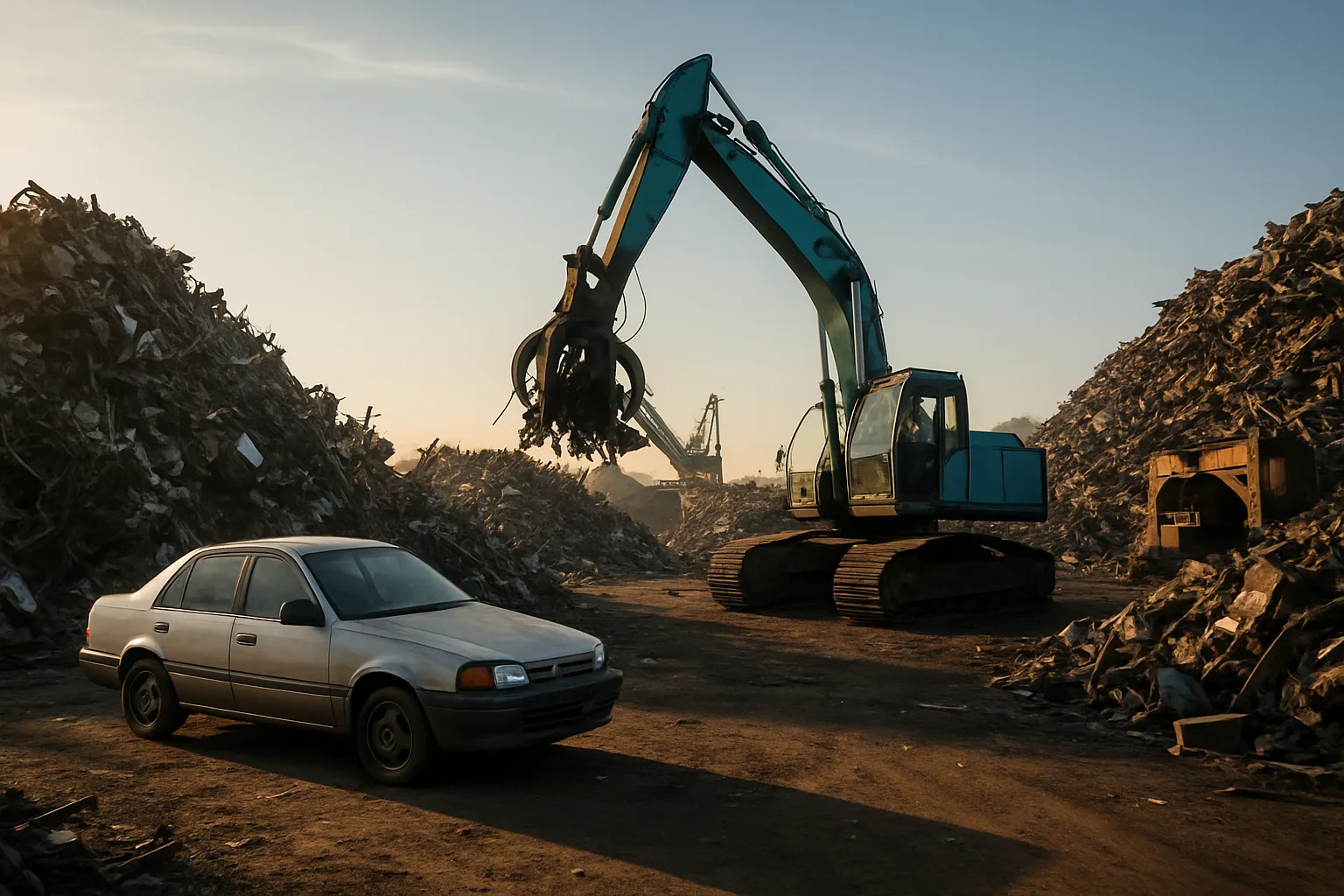
Most Halifax car owners leave money on the table — not because they made the wrong decision, but because they never compared their options before acting. You've got a vehicle you need to move. Maybe it was in an accident. Maybe it sat in a driveway all winter with no insurance. Maybe you're settling an estate and the car has to go. The question isn't just "how do I get rid of this?" It's "which path actually pays me the most?"
Scrapping, selling, and trading in are not interchangeable. Each one fits a specific situation. Pick the wrong one and you could walk away with hundreds — sometimes thousands — less than the vehicle was worth. This breakdown cuts through the noise so you can make the right call, fast.
Whether you're looking to sell my car fast Halifax or simply figure out what your damaged vehicle is worth, here's exactly what you need to know.
The Three Paths: What Each Option Actually Means
Before comparing, let's define what we're actually talking about. These three options are not the same thing, and the terminology gets blurred constantly.
Scrapping means selling your vehicle to a scrap yard or metal recycler based primarily on its weight and metal content. The car gets crushed and processed. You get paid for the metal — nothing more. In Nova Scotia, scrap car values are tied to steel commodity prices, which fluctuate based on global demand. The vehicle's make, model, mileage, or condition rarely matters beyond its weight category.
Selling means finding a private buyer, a dealer, or a platform that evaluates the vehicle for more than just its metal content — for its parts, its salvage value, its repairable potential, or its actual road use. This is where you can extract real value above scrap rates, even on a damaged or non-running car.
Trading in means handing your vehicle to a dealership as part of a new purchase transaction. The dealer applies the trade-in value to your next vehicle's price. It sounds convenient. And sometimes it is. But it's almost never the highest-value option — dealers build their margin into the trade-in number.
When Scrapping Makes Sense — And When It Doesn't
Scrapping is the right call in a narrow set of circumstances. If your vehicle is crushed, burned, structurally compromised beyond any reasonable repair, or so stripped of usable parts that no buyer would touch it — scrap might be your only practical option. The same goes for extremely high-mileage vehicles with no resale demand and deteriorating bodies that have lost all non-ferrous value beyond the steel frame.
Here's the catch: most cars that owners think are "only worth scrap" are actually worth more. A non-running 2012 pickup in Halifax still has a working transmission, catalytic converters, an engine block, seats, glass, and copper wiring — all of which a buyer will pay above scrap weight for. Scrapping that vehicle means surrendering all of that value to the yard.
- Scrap it if: The vehicle is structurally destroyed, the body is rotted through entirely, it's been in a catastrophic fire, or it's an ancient vehicle with zero parts demand.
- Don't scrap it if: The vehicle runs (even poorly), has intact drivetrain components, or has any resale demand for parts or salvage.
- Check getmyscrapcar.ca before committing to a scrap yard — you may be sitting on more value than a crusher price reflects.
Understanding scrap metal prices today is useful context, but those commodity rates are the floor — not the ceiling — of what your car can earn.
When Selling Privately or Through a Platform Beats Everything Else
Private selling gets you the highest dollar amount — in theory. In practice, it comes with real friction: listings, tire-kickers, lowball offers, safety concerns with strangers, title transfer headaches, and no guarantee of a sale. For a clean, newer vehicle with full documentation, private sale often wins on price. For anything older, damaged, uninsured, or inherited, it becomes a time sink with uncertain results.
This is where platforms designed for cash for junk cars Halifax and unwanted vehicle removal change the math. Instead of chasing one buyer and guessing at your price, you get competitive interest from vetted buyers who deal in exactly this type of vehicle — salvage, non-runners, estate vehicles, written-off cars, accident-damaged units. The buyer competition is what drives the number up above what a single yard or a single cold call would offer.
SMASH Cars operates exactly this way. Rather than accepting one lowball quote and hoping for the best, you connect with buyers who are actively looking for vehicles like yours. More demand means better price discovery — and you don't need to manage the back-and-forth yourself. You can get a free car valuation in Canada without committing to anything upfront.
Selling through a platform makes the most sense when:
- Your vehicle doesn't run but has intact components.
- You're dealing with an estate vehicle and need a straightforward, documented process.
- The car has a salvage or rebuilt title and private buyers won't touch it.
- You need to sell without a safety inspection (common with uninsured or damaged vehicles).
- You want same-day or next-day resolution without managing listings.
The Trade-In Trap: Convenience Has a Price
Trading in your vehicle at a dealership is the most convenient option and almost always the worst-paying one. Dealers in Halifax and across Nova Scotia are not in the business of maximizing your old car's value — they're in the business of moving new inventory. Your trade-in is a negotiating chip, and the dealer controls both sides of the math.
A vehicle that could sell for $4,500 through a competitive process might get appraised at $2,800 as a trade-in. The dealer makes up the difference when they flip it on their lot or send it to auction. You get the convenience of a one-stop transaction — but you're paying for that convenience with real dollars out of your pocket.
There are narrow exceptions. If a dealer is running aggressive trade-in promotions, or if your vehicle is in excellent condition with high demand in their specific inventory, the gap can narrow. But for damaged vehicles, high-mileage units, non-runners, or anything with a salvage title, trade-in is almost never the right call. Dealers will lowball those aggressively or refuse them outright.
Before you step into a showroom, connect with trusted auto buyers in Canada through SMASH Cars — get an actual number on your vehicle first. Walk into that dealership knowing what your car is worth. Or skip the dealership altogether.
Special Situations: Estate Vehicles, Accident Cars, and Uninsured Units
Some vehicle situations don't fit neatly into the standard scrap-sell-trade framework. These are the scenarios where most owners make the most costly mistakes — because they assume their options are limited when they aren't.
Estate and inherited vehicles are common in Halifax and across Nova Scotia. A family member passes, there's a car in the driveway, and no one in the estate wants it or knows what it's worth. Private sale takes time and effort the estate often can't spare. Scrapping leaves value behind. The right move is a buyer who specializes in estate vehicle purchases — fast transaction, clean paperwork, fair value.
Accident-damaged vehicles — including written-off and salvage title cars — have a real market among rebuilders, parts buyers, and export buyers. The assumption that a written-off car is worth scrap weight only is wrong. Depending on the damage type and the vehicle's make and model, significant value can still be extracted.
Uninsured vehicles can't legally be driven to a dealership for a trade-in and are difficult to sell privately without a safety certificate. But they're not worthless. Buyers who deal in scrap car removal in Canada handle these transactions regularly — no insurance required, no safety needed, free pickup included in many cases.
For any of these situations, browse Canadian car selling tips on our blog for scenario-specific guidance before making a move. And if you're in Halifax, our Halifax scrap metal services page has local context on how these transactions work in your area.
The SMASH Approach: Getting Above Scrap Value in Halifax
The entire premise of SMASH Cars is this: your vehicle — whatever its condition — deserves more than one buyer's opinion of what it's worth. Scrap yards make offers based on metal prices. Dealers make offers based on their inventory needs. Neither of them is trying to maximize your return.
SMASH puts your vehicle in front of multiple vetted buyers — people who bid based on the vehicle's actual value to them, whether that's for parts, for salvage, for export, or for repair. That competition is what pushes the number up. It's not magic — it's just how markets work when you have real competition instead of a single take-it-or-leave-it offer.
For Halifax car owners looking to move a vehicle fast without getting shortchanged, this model changes the equation. You don't need to know what your car is worth. You don't need to manage negotiations. You don't need to drive anywhere or deal with strangers showing up at your house. The process is documented, the pickup is handled, and the offer reflects what the market will actually pay — not what one buyer wants to pay.
If you've been searching for scrap car buyers near me or trying to figure out the right move for a vehicle you need gone, the answer is usually not the first quote you receive. Get connected with trusted auto buyers in Canada through SMASH — get your free offer at smash-cars.ca and find out what your vehicle is actually worth before you make any decision.
Frequently Asked Questions
Q: How do I know if my car is worth more than scrap value in Halifax?
If your vehicle has a working engine, transmission, catalytic converters, intact body panels, usable interior components, or is a make and model with strong parts demand, it's almost certainly worth more than scrap weight. Get a valuation from a buyer who evaluates the full vehicle — not just the steel — before committing to a scrap yard.
Q: Can I sell my car fast in Halifax without a safety inspection?
Yes. Buyers who specialize in damaged, unwanted, and end-of-life vehicles don't require a safety certificate. This is standard for non-runners, accident vehicles, and uninsured cars. SMASH Cars connects you with buyers who handle exactly these situations — no inspection required, free pickup included.
Q: What's the difference between cash for junk cars Halifax and a regular scrap yard?
A scrap yard pays you based on metal weight and current commodity prices — that's their entire valuation model. Cash-for-cars buyers evaluate the vehicle more holistically, including parts value, salvage potential, and buyer demand. The result is often a higher offer, especially for vehicles that run or have intact components.
Q: Is it worth trading in a damaged car at a dealership in Nova Scotia?
Rarely. Dealers in Nova Scotia will lowball damaged, high-mileage, or non-standard vehicles because those units don't fit their retail inventory model. You'll almost always get a better number through a platform that connects you with buyers who specifically want that type of vehicle.
Q: How do I sell an inherited car in Halifax if I don't have all the paperwork?
Estate vehicle sales can involve incomplete documentation, but experienced buyers handle this regularly. You'll typically need proof of your authority to sell (such as a letter of administration or probate documents) along with whatever ownership documentation exists. Reach out to SMASH Cars early — they can walk you through what's needed for your specific situation in Nova Scotia.
Disclaimer: Vehicle values and scrap metal prices fluctuate based on market conditions, vehicle condition, and regional demand. Always check current rates before making a decision. The figures and ranges referenced in this article are general guidance only.
Stay current on scrap metal market trends and car selling tips by following SMASH on LinkedIn — we share regular updates on pricing, industry news, and how to get the most from your unwanted vehicle.
```