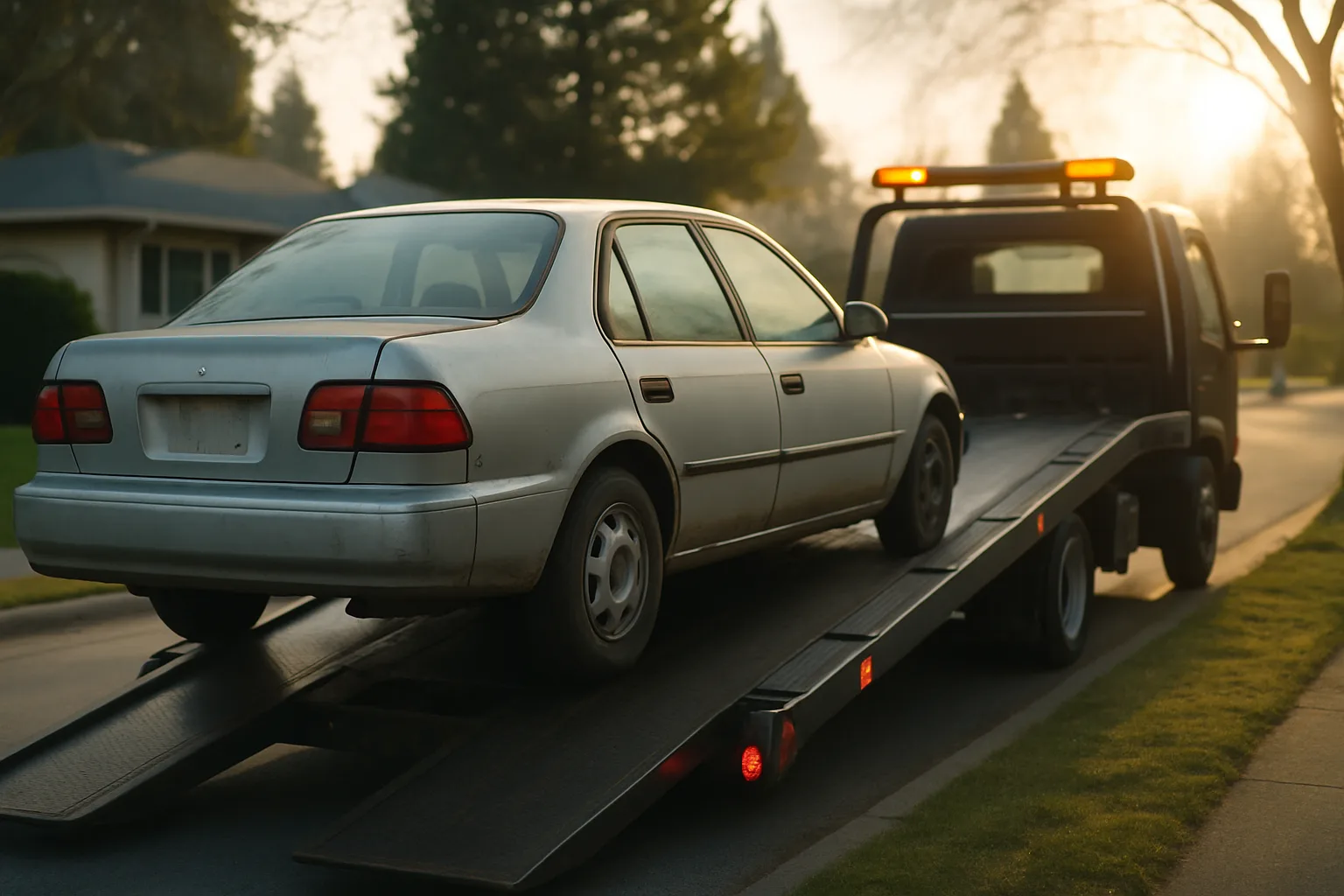
Most people think scrap car prices are flat year-round. They're not — and if you're trying to get cash for junk cars in Coquitlam, timing your sale wrong could cost you.
The Canadian used car and scrap car market moves in cycles. Buyer demand shifts. Metal prices climb and dip. The volume of vehicles hitting the market spikes at predictable times every year. If you treat your unwanted car like a static asset with a fixed value, you're leaving money on the table.
This isn't theory. It's what happens every year across British Columbia and the rest of Canada — a rhythm driven by weather, consumer behaviour, insurance cycles, and global commodity demand. Understanding it puts you in control of the sale.
Whether you're sitting on an estate vehicle, a car you stopped insuring, a post-accident write-off, or just an old truck taking up space in your driveway — knowing when and how to sell matters as much as who you sell to. Platforms like connect with trusted auto buyers in Canada through SMASH Cars to help you find real competition for your vehicle, not just the first offer that shows up.
Why the Canadian Car Market Has Seasonal Peaks — and What Drives Them
Canada's car market is genuinely seasonal. Winter weather, tax season refunds, spring optimism, and end-of-year estate settlements all push activity up and down in predictable patterns. If you've ever wondered why your neighbour seemed to get more for their junker than you did for yours, the timing of the sale is often part of the answer.
Here's how the cycle typically plays out:
- Late winter / early spring (February–April): One of the strongest selling windows of the year. Tax refunds hit. People start thinking about upgrading vehicles or clearing out the driveway. Buyer demand for used cars — including higher-quality salvage units — picks up. If your car has parts, components, or a working drivetrain, buyers are actively competing for inventory right now.
- Spring (May–June): A strong secondary peak. Buyers want vehicles ready to move before summer road trips. Scrap metal prices often firm up as industrial demand increases heading into construction season. This is typically a good window to sell my car for cash in Coquitlam and surrounding Lower Mainland communities.
- Summer (July–August): Activity stays relatively steady, but the composition of buyers shifts. More private party buyers. Slightly less pressure from institutional scrap buyers. Catalytic converter values — always driven by platinum group metal prices — can fluctuate significantly during this period based on global PGM demand.
- Fall (September–October): Another reliable selling window. Dealers restock for end-of-year. Insurance companies close out files. Estates settled over summer come to market. If you're dealing with a vehicle from an estate and haven't moved it yet, fall is a good push point.
- Winter (November–January): Typically the slowest window for vehicle transactions. Fewer buyers are actively shopping. Transport and logistics for vehicle pickup can slow in extreme weather. That said, scrap metal commodity prices can spike in winter depending on demand from Asian markets — so pure scrap value isn't necessarily lower, but competition for the vehicle as a whole unit tends to dip.
The key takeaway: selling in spring or fall, with proper documentation and photos, consistently generates better outcomes than selling in the dead of winter with no prep.
Scrap Metal and Catalytic Converter Prices in 2026 — What's Actually Moving the Market
Scrap steel, aluminum, copper, and platinum group metals (the elements inside catalytic converters) are all globally traded commodities. What happens in manufacturing hubs in Asia, what tariffs look like at the border, and what demand looks like from North American steel mills — all of it feeds back into what a scrapper in Coquitlam is willing to pay for your vehicle today.
In 2026, a few factors are shaping the market:
- Catalytic converter values remain significant. Rhodium, palladium, and platinum prices fluctuate — sometimes dramatically — based on supply chain conditions and automotive industry demand. If your vehicle has an intact, undamaged catalytic converter, that component alone can meaningfully affect what you're offered. If you want to sell catalytic converters online separately or understand their contribution to your vehicle's overall value, platforms like SMASH can help you understand what you're actually working with.
- Steel scrap is driven by mill demand. When North American steel mills are running hot, scrap prices firm up. When they're curtailing production, scrap values soften. This directly affects what your vehicle is worth as a pure scrap unit — which is why the difference between scrap value and market value matters so much. A vehicle sold to a single scrap buyer at the lowest bid versus one sold through a competitive process can represent a real dollar difference.
- Currency and cross-border dynamics affect Canadian scrap pricing. CAD/USD fluctuations affect what Canadian scrap exporters can bid for material. This is background noise most sellers never think about — but it's real, and it's part of why your neighbour got a different price in a different month.
Disclaimer: Scrap metal and vehicle prices fluctuate constantly. Always check current rates before making a decision — the figures and conditions described here reflect general market dynamics and are not guaranteed pricing for your specific vehicle.
What Your Junk Car Is Actually Worth — Beyond Scrap Value
Here's what most sellers in Coquitlam and across British Columbia don't realize: a damaged, uninsured, or end-of-life car is rarely worth just its weight in scrap steel. The vehicle has parts. It has components. It may have a clean title, a repairable body, or a drivetrain someone wants for a project.
Getting cash for cars in British Columbia that reflects the true value of the vehicle — not just the base scrap rate — requires access to multiple buyers with different interests. A scrap yard wants metal. A parts dealer wants components. A salvage rebuilder wants a platform. When only one of those buyers knows your car exists, you get one price: theirs.
That's the core problem with the old one-call, one-offer model. And it's exactly why competitive processes consistently produce better outcomes than single-buyer negotiations.
If you're ready to get a free car valuation in Canada, the first step is understanding that your vehicle has more than one potential buyer — and those buyers should be competing, not negotiating in isolation.
A few things that meaningfully affect what your car is worth above scrap:
- Year, make, and model — popular vehicles have stronger parts demand
- Condition of the catalytic converter (intact vs. missing)
- Engine and transmission condition
- Whether you have the title (or can access registration documentation)
- Mileage — lower mileage on a damaged vehicle often means higher component value
- Photo documentation — more photos, more buyer confidence, better offers
Selling Without a Title, Without Insurance, or After an Accident — What You Need to Know in 2026
One of the most common questions from Coquitlam sellers: "Can I sell my junk car without a title?" Or: "The car isn't insured — does that matter?" Or: "It was written off after an accident. What are my options?"
The short answers: yes, sometimes; no, not in the way you think; and quite a few options, depending on the vehicle.
Selling without a title: Requirements vary by province. In British Columbia, ICBC maintains vehicle registration records, which can sometimes substitute for a physical title in certain transactions. If you're dealing with an estate vehicle and the original owner has passed, the process involves executor documentation. This is navigable — but it takes the right buyer who understands the paperwork. If you want to sell my junk car without a title, be upfront about the situation from the start and work with buyers experienced in these transactions.
Selling an uninsured vehicle: Having no active insurance on a car doesn't prevent you from selling it. It just means the vehicle can't be driven on public roads. A pickup can still be arranged — many buyers handle transport themselves, and free junk car removal across Canada is available through platforms set up specifically for this kind of situation.
Selling a written-off or post-accident vehicle: Salvage buyers actively seek these. A vehicle written off by insurance isn't necessarily worthless — it may be worth significantly more than scrap if it has repairable damage, valuable components, or strong parts demand. Don't assume the insurance settlement is the ceiling on your vehicle's value.
How to Get More Than Scrap Value for Your Car — Practical Steps for Coquitlam Sellers
If you want to sell my junk car for cash today and actually get a fair price, here's the practical approach:
- Document the vehicle thoroughly. Take photos of all four sides, the engine bay, the interior, the catalytic converter location, and any damage. More documentation means more buyer confidence — and more buyer confidence means better offers.
- Know your vehicle. Year, make, model, trim, mileage, VIN. Have it ready before you contact anyone. A VIN lookup can reveal whether your vehicle has features or a history that affects value.
- Don't accept the first offer. The first offer is almost always a floor, not a ceiling. Competition changes the dynamic.
- Understand your title situation upfront. If you have the title, say so — it increases your vehicle's appeal to buyers who need clean documentation. If you don't, know what you do have and work with buyers who can navigate it.
- Time your sale if you can. Spring and fall are generally stronger windows. If you're not in a rush, waiting until February or March can put you ahead of the winter slowdown.
- Use a platform that creates competition. One call, one buyer, one price is the old model. Listing your vehicle where multiple vetted buyers can see it — and compete — is how you find out what the market actually thinks your car is worth.
For sellers in the Lower Mainland and beyond, you can browse Canadian car selling tips on our blog for more guidance on navigating the process from first photo to final payment.
Don't Wait for the Market to Come to You
The Canadian used car and scrap car market in 2026 is active, competitive, and moving. If you're sitting on an unwanted vehicle in Coquitlam — whether it's a post-accident write-off, an estate car, a vehicle you stopped insuring, or just something you want gone — the market has buyers for it right now. The question is whether those buyers are competing for your vehicle or picking it up at a default price because you only talked to one of them.
Seasonal timing matters. Documentation matters. The process you use to sell matters. And getting the right buyers in front of your vehicle — not just the first one who picks up the phone — is how you get more than scrap value.
When you're ready to find out what your vehicle is actually worth, SMASH connects you with trusted auto buyers across Canada who are actively looking for inventory like yours. Get your free offer at smash-cars.ca — no subscription, no obligation, just real competition for your vehicle.
Frequently Asked Questions
Q: What is the best time of year to get cash for junk cars in Coquitlam?
Late winter through spring (February to May) and early fall (September to October) are typically the strongest windows. Buyer demand picks up, and competition for inventory increases — which generally translates to better offers for sellers. Summer and mid-winter tend to be slower, though scrap metal commodity prices can move independently of these trends.
Q: Can I sell my car for cash in Coquitlam if I don't have the title?
In many cases, yes. British Columbia's ICBC registration system provides documentation that can sometimes support a vehicle sale without the physical title. If you're handling an estate vehicle or a situation where the title is unavailable, work with buyers experienced in these transactions and be transparent about your documentation from the start.
Q: How do I know if my junk car is worth more than scrap value?
Most vehicles are worth more than their base scrap value if they have an intact catalytic converter, a working engine or transmission, or parts in demand. The only reliable way to find out is to get offers from multiple buyers with different interests — not just scrap yards. A competitive process reveals the real market value of your vehicle.
Q: Does my car need to be insured to sell it for cash in British Columbia?
No. You don't need active insurance to sell a vehicle. The vehicle simply can't be driven on public roads without insurance — but that doesn't prevent a sale. Many buyers arrange their own transport, and free removal services are widely available for junk and unwanted vehicles across British Columbia.
Q: How do catalytic converter prices affect what I'm offered for my junk car?
Significantly. Catalytic converters contain platinum group metals — rhodium, palladium, and platinum — that are globally traded commodities. An intact converter on a popular vehicle can be worth a meaningful amount on its own. If yours is missing or damaged, buyers will factor that into their offer. If you're curious about current values, ask buyers specifically about the converter when you're getting quotes.
Stay current on scrap metal market movements, vehicle pricing trends, and Canadian car selling insights by following SMASH on LinkedIn.
```