Your Car Won't Start — That Doesn't Mean It's Worthless
Here's something most car owners in Sydney don't realize: a vehicle that won't turn over, won't move, and hasn't run in years still has real value. Scrap metal, salvageable parts, catalytic converters, and working components all carry market value — whether your car runs or not. The mistake people make is assuming a dead car equals zero dollars. It doesn't.
If you're sitting on a non-runner in your driveway, an inherited vehicle that's been sitting since an estate was settled, or a car written off after an accident, this guide is for you. We'll walk you through exactly how to sell a car that doesn't run or start — including how free scrap car pickup in Sydney works and what you can realistically expect to get for it.
Why Non-Running Cars Still Have Real Scrap and Parts Value
A car that doesn't start is still made of metal, rubber, fluids, and components that buyers want. The scrap metal alone — steel, aluminum, copper wiring — adds up. A typical passenger vehicle weighs between 3,000 and 4,500 pounds. Even at modest scrap metal prices, that's meaningful money sitting in your driveway doing nothing.
Beyond raw metal, certain parts hold serious value regardless of whether the engine turns over. Catalytic converters contain platinum, palladium, and rhodium — precious metals that are priced independently of vehicle condition. Transmissions, alternators, starters, doors, hoods, and even functional seats get resold through auto parts channels. Buyers who specialize in junk car removal in Sydney know exactly what they're looking at when they assess a non-runner.
- Scrap metal value: Based on vehicle weight and current commodity prices for steel and aluminum
- Catalytic converter: Can range significantly in value depending on the make, model, and year
- Salvageable parts: Doors, hoods, transmissions, alternators, electronics
- Tires and wheels: If they're in decent shape, they add to your offer
- Battery: Even a dead battery has scrap value as a core
The point is this: don't let someone lowball you by framing your car as trash. Get informed before you accept any offer. A scrap car value calculator Canada can give you a starting benchmark before you talk to any buyer — and platforms like SMASH Cars let you get a free car valuation in Canada without any pressure or obligation.
The Problem With Calling One Buyer and Taking Their Word For It
The old way of selling a junk car goes like this: you call a local wrecker, they come out, they kick the tires, and they quote you a number. You have nothing to compare it to. You take it or you walk — but walking means finding someone else and starting over. Most people just take the first number.
That's exactly how sellers leave money on the table. A single buyer has zero incentive to offer you fair market value. They're there to buy low. Without competition, there's no pressure to move their number up. This is true in every market, including Nova Scotia, where the number of active local buyers for non-running vehicles can be thin.
The better approach is to let multiple vetted buyers compete for your vehicle — even if it doesn't run. That competition is what produces actual price discovery. It's not about being greedy. It's about knowing what your car is actually worth and getting paid accordingly. Platforms that connect you with multiple buyers, like SMASH Cars, exist specifically to fix this problem. More buyers means better price discovery — full stop.
How Free Scrap Car Pickup in Sydney Actually Works
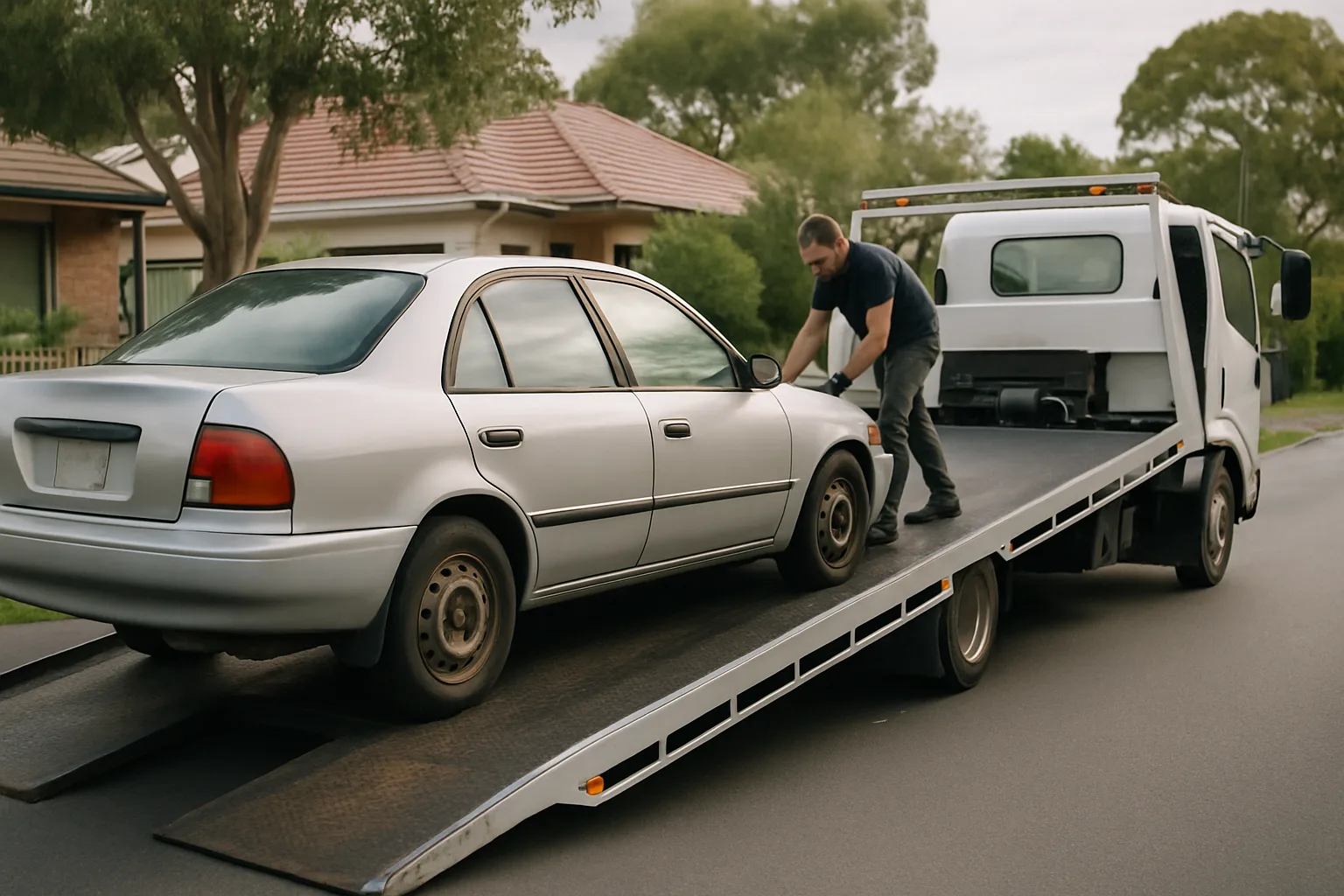
One of the first questions people ask is: how do they even come get it if it can't be driven? The answer is simple — tow trucks. Legitimate buyers handle pickup logistics entirely. You don't need to arrange anything. You don't need to push the car to the curb or have it in neutral at the end of your driveway. Buyers send a flatbed or a tow and deal with it.
Free scrap car pickup in Sydney typically works like this:
- Submit your vehicle details — year, make, model, condition, what's missing or damaged, whether it runs
- Get your offer or offers — through a platform or directly from a buyer
- Confirm the pickup date and time — usually within a few business days, sometimes same day
- Sign over the title and hand over the keys — the buyer handles the rest
- Get paid — cash, e-transfer, or cheque depending on the buyer
The process is straightforward. What varies is how much you get paid — and that depends entirely on who's buying and whether you've let competition work in your favour. For vehicles that aren't going to be resold as-is, you can also look at Canadian scrap car removal from GetMyScrapCar as another option for end-of-life vehicles.
One thing to note: have your ownership documents ready. In Nova Scotia, you'll need your vehicle registration and proof of ownership to sign the car over legally. If it's an estate vehicle, you may need additional documentation — talk to the buyer ahead of time so there are no surprises on pickup day.
Situations Where Selling a Non-Runner Makes the Most Sense
Not every non-running car landed in the driveway the same way. The situation you're in affects your options — and sometimes your urgency. Here are the most common scenarios we see:
Estate or inherited vehicle: Someone passed away and left a vehicle behind. It may have sat for months or years. The family just wants it gone — but "gone" doesn't have to mean donated for nothing or given to the first person who shows up. Connecting with trusted auto buyers in Canada through SMASH Cars gives estates a fair, documented process that's easy to explain to other family members.
After an accident: Your car was written off by insurance. The insurer paid out, you kept the salvage title, and now you have a damaged vehicle sitting there. Salvage vehicles still have parts value and scrap value — don't walk away from money that's yours.
Uninsured or unplated vehicle: You let the insurance lapse, it can't be driven legally, and now you want it gone. Buyers don't care whether it's currently insured. They care about its condition and components.
Upgrade situation: You bought a new vehicle and the old one — the one that started getting rough — is now just sitting. It ran when you parked it but hasn't turned over since. These often get better offers than true non-runners because the mechanical issue may be minor.
Long-term storage: The car has been in a garage or field for years. Rust, rodent damage, flat tires. Still has scrap value. Still worth a call.
What Affects the Value of Your Non-Running Car in Sydney
Scrap metal prices today fluctuate with commodity markets — steel, aluminum, and precious metals all move. That means what your car was worth six months ago isn't necessarily what it's worth right now. Always check current rates before accepting an offer, and use a scrap car value calculator Canada as a starting point.
Beyond live market prices, these factors affect your specific offer:
- Vehicle age and make: Older vehicles generally have less parts value. Certain makes (Toyota, Honda, Ford trucks) hold parts value longer.
- Weight: Heavier vehicles — trucks, SUVs, vans — yield more in raw scrap metal.
- Completeness: Is the catalytic converter still there? Are the wheels on it? Is the engine intact? Missing components reduce the offer.
- Condition of the body: Rust affects value. A solid-bodied car in Sydney's coastal climate is worth more than one that's fully rusted through.
- What's wrong with it: Dead battery vs. seized engine vs. blown transmission are very different situations. Be honest — buyers will find out anyway.
Providing accurate information upfront gets you a more reliable offer. If you misrepresent the car, the buyer adjusts on arrival and you've wasted everyone's time. Give the real picture and let the offer reflect the actual vehicle.
Disclaimer: Scrap metal prices and vehicle values fluctuate based on commodity markets and regional demand. Always check current rates before making decisions. The figures discussed here are general in nature and not a guarantee of any specific offer.
Don't Leave Sydney With Less Than Your Car Is Worth
Selling a non-running car shouldn't mean settling for the first number someone throws at you. Sydney has real buyers — and those buyers compete when you give them the chance to. The vehicle in your driveway has weight, it has parts, and it has value. Your job is to make sure that value lands in your pocket, not someone else's margin.
You can browse Canadian car selling tips on our blog for more guides on specific situations — from estate vehicles to accident write-offs to cars with salvage titles. Knowledge is leverage when it comes to selling.
When you're ready to move, get connected with trusted auto buyers in Canada through SMASH — get your free offer at smash-cars.ca. No subscription, no runaround, no pressure. Just a fair process that works in your favour.
Frequently Asked Questions
Q: Can I get free scrap car pickup in Sydney if my car has been sitting for years?
Yes. Buyers who specialize in non-running and end-of-life vehicles handle pickups regardless of how long the car has been sitting. As long as you have ownership documentation, the logistics are the buyer's problem — not yours. A flatbed tow can retrieve a car from most driveways, garages, and rural properties.
Q: How do I know if I'm getting a fair price for junk car removal in Sydney?
The best way to know is to get more than one offer. A single buyer quote tells you nothing about what your car is actually worth — it tells you what that one buyer wants to pay. Use a scrap car value calculator as a benchmark, then let multiple buyers compete. That's how you find the real market value.
Q: Do scrap metal prices today affect what I get for my non-running car in Nova Scotia?
Absolutely. Your car's base scrap value is tied to the current price of steel and, in some cases, aluminum and copper. When commodity prices are higher, scrap offers go up. When they dip, offers follow. Timing matters — and checking current rates before you sell is worth doing. Prices can shift week to week.
Q: What documents do I need to sell a car that doesn't run in Nova Scotia?
You'll need your vehicle registration and proof of ownership — typically the ownership certificate (vehicle permit). If the car belongs to an estate, you may need letters of probate or executor documentation. Contact your buyer before pickup day so you know exactly what's required and nothing delays the transaction.
Q: Can I sell an inherited car that doesn't run if I'm not sure about the paperwork?
Yes, but you'll need to sort out the title situation first. Most buyers can walk you through what they need from an estate vehicle sale. The key documents depend on whether probate was filed and who has authority to sign over the vehicle. Get that sorted early — it's usually simpler than people expect.
Stay connected with the scrap and recycling industry — follow SMASH on LinkedIn for market updates, scrap metal price insights, and tips for getting the most from your unwanted vehicles.