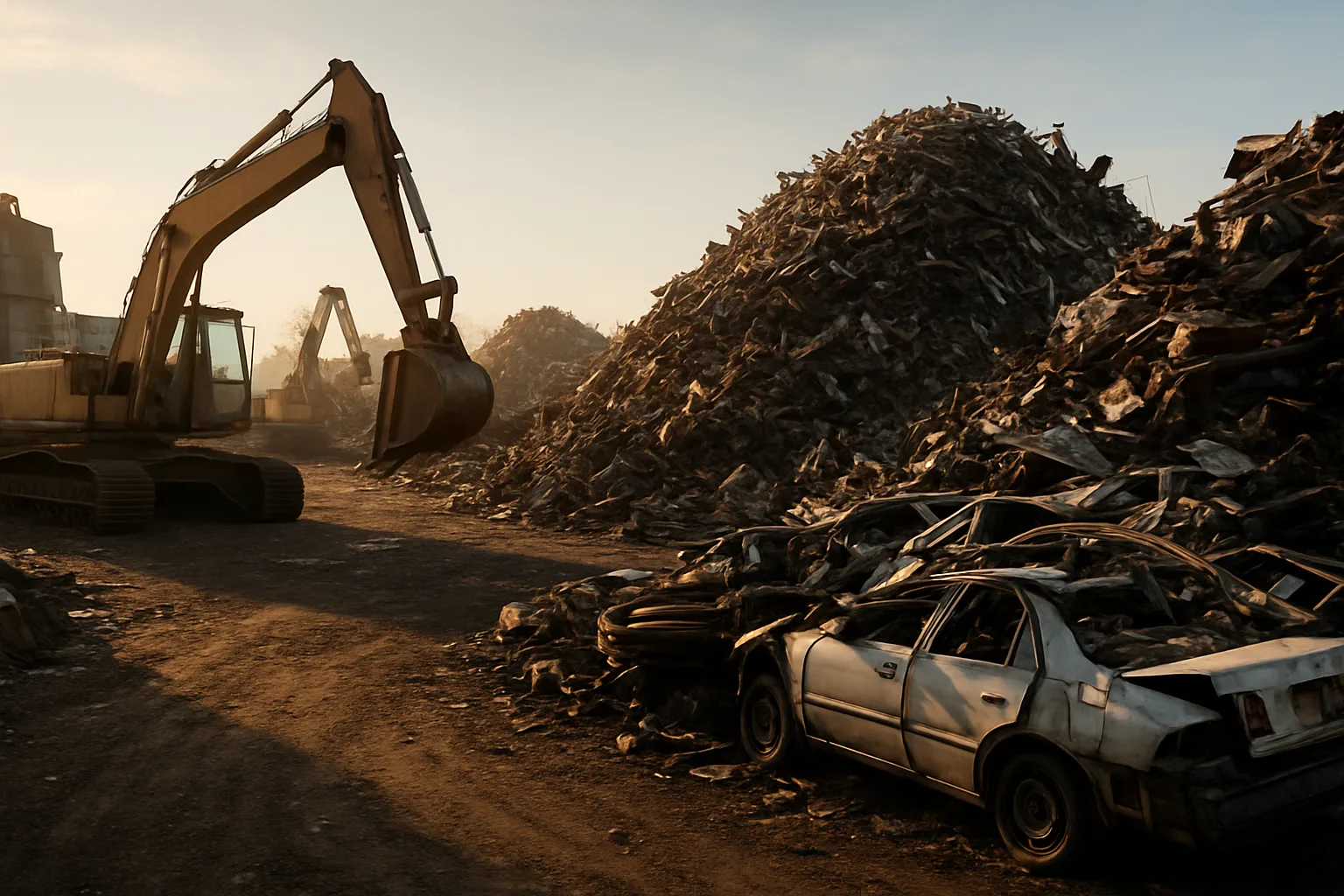
Most people think a junk car is a junk car. One price, one fate — the crusher. But walk through any busy salvage yard in Dartmouth or anywhere across Nova Scotia, and you'll see something more deliberate happening. Some vehicles get stripped clean before they're crushed. Others go straight to the baler. The decision isn't random, and understanding it could mean the difference between getting scrap weight and getting real money for your car.
If you're sitting on an unwanted vehicle — whether it came from an estate, an accident, a lapse in insurance, or just an upgrade you're ready to make — knowing how yards think can help you get a better offer. This is how salvage operators actually decide what to do with the cars that come through their gates.
Strip or Crush: The First Question Every Yard Asks
When a vehicle arrives at a salvage operation, the first evaluation isn't about the metal. It's about parts. A skilled dismantler looks at the car and mentally calculates two numbers: what this vehicle is worth parted out over time versus what it's worth by weight today. If the parts value beats the scrap value by enough margin to cover storage, labour, and risk — the car gets stripped. If it doesn't, it goes to the crusher fast.
This calculation depends on a handful of factors that shift constantly with supply and demand. A make or model that's still common on the road has a deep pool of people looking for affordable replacement parts. A rare or discontinued vehicle might have valuable components, but the market for them is thin. Yards are running a business, not a museum — they need parts that sell within a reasonable window.
Here's what typically tips the scale toward stripping:
- The vehicle is a popular model with high registration numbers still on the road
- It has low kilometres relative to its age
- The drivetrain — engine, transmission, transfer case — is intact and functional
- Body panels are undamaged or lightly damaged
- The interior is clean and has salvageable components (seats, dash, airbag modules)
- Electronic modules and sensors are undamaged and in demand
And here's what usually pushes a vehicle straight to the crusher:
- Severe structural damage — frame rails twisted, pillars collapsed
- Fire damage, particularly to the wiring harness or cabin
- High mileage with a worn or seized drivetrain
- Flood damage with extensive corrosion or compromised electronics
- Models that are old enough that few of them remain on the road and demand for parts has dried up
- Vehicles that have already been previously stripped at another facility
High-Value Parts That Change the Math for Cash for Junk Cars in Dartmouth
Not all parts carry equal weight in this equation. Certain components can single-handedly justify keeping a vehicle in the strip yard for weeks. Understanding this is useful if you're trying to get more than scrap value — because the parts your car still has intact directly influence what a buyer will offer you.
Catalytic converters remain one of the highest-value components on almost any vehicle. They contain platinum, palladium, and rhodium — all precious metals with significant market value. Even a damaged car with a functional cat will command more attention from buyers. Engines and transmissions in known-good condition are also significant. A yard that can test, pull, and resell a working powertrain recovers far more than the scrap weight of the same assembly.
Other components that consistently drive strip decisions include:
- Airbag modules and seatbelt pretensioners — high demand, regulated replacement parts that buyers seek used to reduce repair costs
- Alloy wheels — both for resale as wheels and for non-ferrous metal value
- Alternators, starters, and power steering pumps — reliable rebuild or resale market
- Fuel injectors and throttle bodies — especially on newer direct-injection engines
- Intact windshields and rear glass — glass has its own resale channel separate from scrap
- Body panels on collision-free vehicles — doors, hoods, fenders for late-model vehicles in matching colours
If you're trying to sell my car for cash in Dartmouth and your vehicle still has most of these components intact, that matters. A platform that connects you to multiple vetted buyers — rather than one yard calling the shots — gives you access to buyers who specifically value what your car still has. More competition means better price discovery. That's the difference between being told your car is worth scrap weight and being told what it's actually worth to someone who needs what it has.
How Market Conditions Shape What Gets Stripped in 2026
The strip-versus-crush decision isn't static. It moves with the market. In 2026, several conditions are shaping what salvage yards prioritize when a vehicle rolls in off the flatbed.
New vehicle prices and parts supply chain pressures have kept demand for quality used OEM parts elevated. When new parts are expensive or backordered, repair shops and insurance companies look harder at used alternatives. That keeps salvage demand healthy for certain categories — particularly late-model domestic trucks and SUVs, which remain some of the most common vehicles on Canadian roads.
At the same time, scrap metal prices fluctuate based on global commodity markets. When ferrous scrap prices climb, the math on crushing vehicles shifts — a heavier vehicle going straight to the baler becomes more attractive. When scrap prices soften, yards lean harder into parts recovery to compensate. This is why junk car prices per ton aren't fixed — what you're quoted today reflects today's market, not last month's.
Environmental regulations around fluid removal and depollution also factor in. Before any vehicle gets crushed in Nova Scotia or anywhere in Canada, it has to be depolluted — fluids drained, mercury switches removed, refrigerants recovered. That's a labour cost that applies regardless of whether the car is stripped or crushed. Yards that already have the car on the lift for depollution often complete a partial strip at the same time to maximize recovery.
If you want to understand how current scrap metal commodity shifts might affect what your car is worth, browse Canadian car selling tips on our blog for updated market context and practical selling advice.
Why Selling Through Competition Gets You More Than One Yard's Opinion
Here's the problem with calling one yard and accepting their offer: you're getting one person's assessment of your car's value, on that day, based on what they need in their inventory. If they're already long on 2018 F-150 parts, they'll offer you less — even if your truck is in great shape. If another buyer across town desperately needs that truck's transmission, they'd offer you significantly more. You'd never know.
That's exactly the problem that platforms like SMASH Cars solve. When you get a free car valuation in Canada, your vehicle information goes in front of multiple vetted buyers who compete for it. The same car — same condition, same parts intact — gets evaluated by buyers with different inventory needs and different appetites for it that week. Competition does what it always does: it reveals the market.
This matters especially in a market like Dartmouth, where you might have a handful of local yards but a much larger network of buyers across Nova Scotia and beyond who could want what you have. Limiting yourself to whoever answers the phone first is leaving money on the table. Whether you're dealing with an estate vehicle, a car that's been sitting uninsured, a written-off vehicle, or just an old daily driver you're done with — the number of buyers competing for your car directly affects what you walk away with.
You can also connect with trusted auto buyers in Canada through SMASH Cars if you're ready to move a vehicle and want to skip the guesswork entirely.
What You Can Do Before You Sell to Maximize Your Offer
You don't need to become a dismantler to get a better deal. But a few simple steps before you call anyone can improve your position.
Know what's on your car. Check whether the catalytic converter is still on the vehicle. Note whether the engine runs or not — that distinction matters. If you have service records, mention them. A documented maintenance history adds confidence for parts buyers who resell components with some warranty.
Document the condition honestly. Take photos of the exterior, interior, engine bay, and undercarriage if you can access it. Buyers who can see what they're bidding on are more likely to bid competitively. Vague descriptions get conservative offers. Documented vehicles give buyers more confidence to bid higher.
Don't strip it yourself unless you know what you're doing. Removing parts before selling — especially if done incorrectly — can lower your offer more than the parts were worth. Let the professionals assess it intact.
Get multiple offers. This is the single most effective thing you can do. One offer is not a market — it's one person's opinion. Multiple buyers competing is a market. Platforms that aggregate buyer interest across Canada exist specifically to give sellers this advantage. If you want to sell scrap metal online or sell a full vehicle for more than crusher weight, competitive offers are how you find the real number.
For a broader look at your options — including scrap-focused removal services if your vehicle is truly at end of life — explore scrap car removal in Canada at GetMyScrapCar for a straightforward removal path.
The Bottom Line on Strip vs. Crush — and What It Means for Your Payout
Salvage yards aren't making emotional decisions about your car. They're running a fast, practical calculation: parts value versus scrap weight, offset by labour and time. When that math favours stripping, they strip. When it doesn't, they crush. Your job as a seller isn't to influence their internal process — it's to make sure the right buyers are seeing your vehicle before anyone decides its fate.
If you're ready to find out what your car is actually worth — whether it's a fleet of estate vehicles, a post-accident write-off, a car you can no longer insure, or just an old truck taking up space in Dartmouth — get it in front of buyers who compete for it. That's how you find out what the market will actually pay, not just what one yard happened to offer on a Tuesday afternoon.
SMASH connects sellers across Canada with vetted, serious buyers who want what you have. No subscription, no guessing, no single-buyer pricing. Get your free offer at smash-cars.ca and let the market speak for itself.
Stay ahead of scrap market shifts and industry updates — follow SMASH on LinkedIn for regular insights on scrap metal pricing and the Canadian auto recycling market.
Frequently Asked Questions
Q: How do salvage yards in Dartmouth decide what a junk car is worth?
Yards evaluate a combination of parts value and scrap weight. A vehicle with a working drivetrain, intact catalytic converter, and undamaged body panels may be worth significantly more than its crush weight. The condition of high-demand components — engines, transmissions, catalytic converters — drives the assessment more than overall cosmetic appearance.
Q: Can I get cash for junk cars in Dartmouth even if my car doesn't run?
Yes. Non-running vehicles still have value — both in parts and in scrap metal weight. Whether a car runs or not affects what a buyer will offer, but it doesn't disqualify it from sale. Be upfront about the condition so buyers can quote accurately and competitively.
Q: What's the best way to sell my car for cash in Dartmouth without getting lowballed?
The most effective approach is to get multiple offers from vetted buyers rather than accepting the first quote you receive. Platforms like SMASH Cars allow multiple buyers to compete for your vehicle, which reveals the actual market value instead of one yard's offer on a given day. Document your vehicle's condition with photos before reaching out — buyers who can see what they're buying tend to offer more.
Q: Does it matter if my car has a salvage title when I'm trying to sell it in Nova Scotia?
A salvage title affects the resale value for consumers, but for buyers purchasing vehicles for parts or scrap, it matters less than the condition of the components. A written-off vehicle with an intact engine and undamaged catalytic converters can still command a solid offer. Disclose the title status upfront — experienced buyers in Nova Scotia and across Canada factor it in and still bid on vehicles with salvage history.
Q: How long does it take to sell a junk car and get paid?
Timelines vary depending on the buyer and the process. With a competitive platform, you can often have offers in hand within 24–48 hours and arrange pickup shortly after. Same-day offers are possible in some cases. Payment is typically issued at the time of pickup or via direct transfer, depending on the buyer's process. Having your ownership documentation ready speeds things up significantly.
```