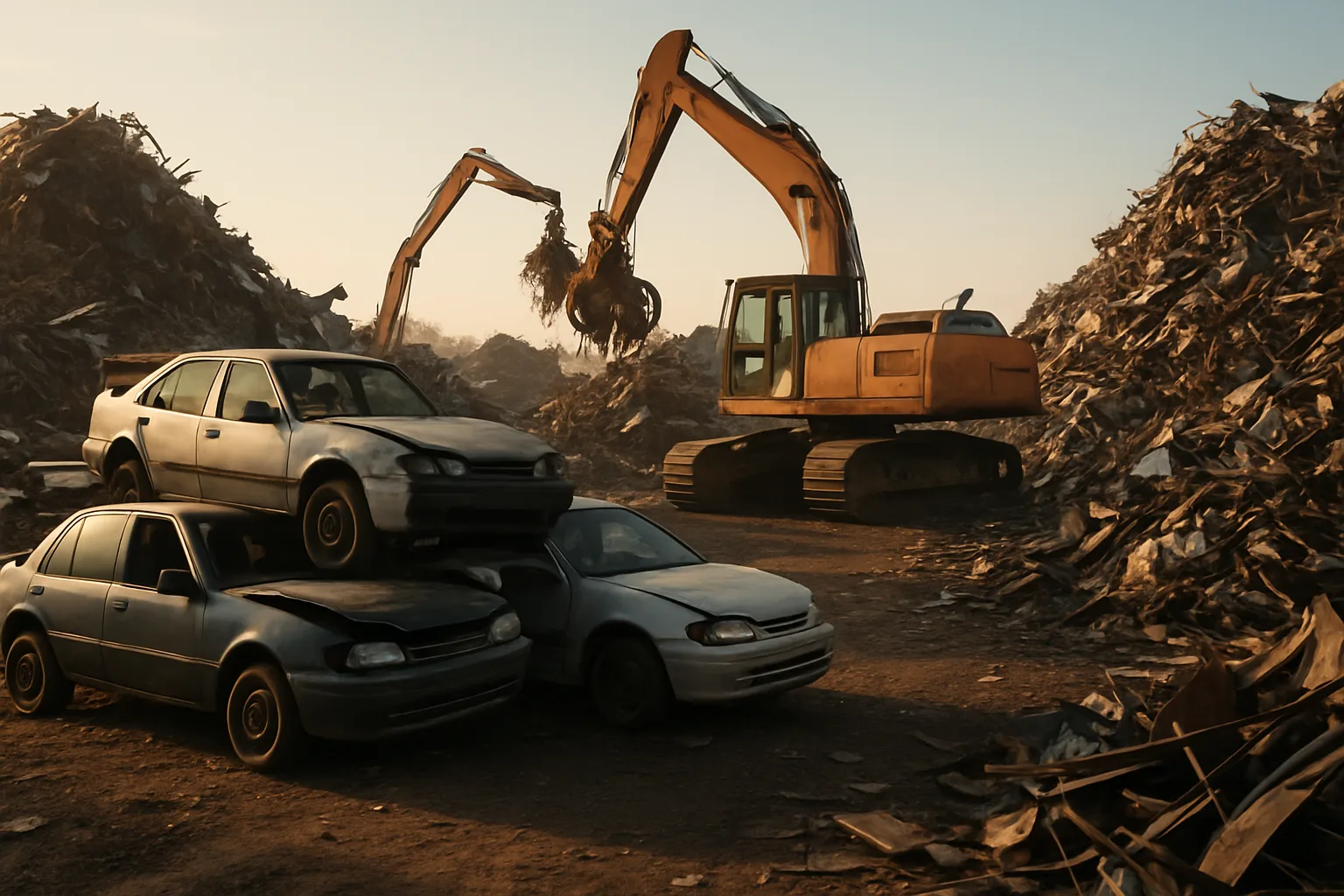
What Really Happens to Your Old Car — And Why It Matters More Than You Think
Most people just want the car gone. It's sitting in the driveway, it hasn't moved in months, and it's costing you money just to insure — or you've already dropped the insurance and it's just taking up space. But here's something most sellers never consider: how your vehicle gets processed after you sell it has a real environmental impact.
If you're searching for cash for junk cars Fredericton, you're probably focused on the money — which is fair. But responsible vehicle recycling isn't just good for the planet. It can actually affect what your car is worth and who's willing to pay for it. Understanding the process helps you sell smarter.
This week's roundup covers the environmental side of end-of-life vehicles, why the recycling chain matters, and how sellers in Fredericton and across New Brunswick can make sure their unwanted vehicle ends up in the right hands — and gets them a fair return in the process.
The Environmental Cost of Ignoring an End-of-Life Vehicle
A vehicle sitting unused isn't neutral. It's a slow-release environmental liability. The average car contains between 5 and 10 liters of fluids — engine oil, transmission fluid, brake fluid, coolant, power steering fluid, and refrigerant. Left in a deteriorating vehicle, those fluids eventually leak. Into your driveway. Into the soil. Into storm drains.
In a place like Fredericton, where the Saint John River watershed runs through the region, that kind of contamination isn't abstract. It's real, local, and preventable. The good news is that a properly processed vehicle doesn't just avoid those harms — it actively recovers materials that displace the need to mine or manufacture new ones.
- Steel and iron make up roughly 65–70% of a vehicle's weight. Recycled steel uses significantly less energy than producing steel from raw ore.
- Aluminum components — engine blocks, wheels, heat shields — are highly recoverable and energy-intensive to produce from scratch.
- Copper wiring and harnesses throughout the vehicle have strong non-ferrous value and high recyclability.
- Catalytic converters contain platinum group metals — palladium, platinum, and rhodium — that are recovered and reused in new converters and industrial applications.
- Rubber, glass, and plastics are increasingly being recovered as recycling infrastructure improves.
None of this happens automatically. It depends on where your vehicle ends up and who handles it. That's where your choice of buyer matters — more than most sellers realize.
How Responsible Vehicle Recycling Actually Works
The vehicle recycling process, done right, follows a clear sequence. Understanding it helps you ask the right questions when you get a quote — and recognize the difference between a legitimate buyer and someone who'll strip what's valuable and abandon the rest.
- Depollution — All fluids are drained and collected before any dismantling. This includes refrigerants, which require certified recovery equipment to handle legally.
- Parts harvesting — Usable components like engines, transmissions, doors, and electronics are removed and resold as remanufactured or used parts. This extends the life of functioning components and keeps them out of the shredder.
- Flattening and shredding — The remaining vehicle shell is crushed and shredded. Ferrous metals go to steel mills. Non-ferrous metals are separated and sold by grade.
- Shredder residue processing — Modern facilities recover materials from what's left after shredding, reducing landfill waste from the process.
When this chain works properly, over 80% of a vehicle's weight is recovered and recycled. The problem is that not every buyer operates at this standard. If you're trying to sell my car for cash Fredericton and you're dealing with someone who just wants the catalytic converter and scrap shell, you're probably not getting full value — and the rest of the vehicle may not be handled responsibly.
Working with vetted buyers who operate within regulated processes protects you, and it protects the environment. Platforms like SMASH Cars connect sellers with buyers who are in this business properly — not just flipping scrap on the side.
Why Your Scrap Car Value Per Ton Is Only Part of the Story
A lot of sellers approach this purely on scrap car value per ton — which makes sense as a starting point. Ferrous scrap pricing gives you a floor. But end-of-life vehicles often have value well above that floor, and getting that value requires buyers who are looking at the whole picture.
Here's what can push your vehicle's value above bare scrap pricing:
- Catalytic converter content — Depending on the make, model, and year, a single cat can be worth anywhere from modest to significant amounts. Larger engines and certain brands carry higher-value converters.
- Functioning or rebuildable parts — An engine with reasonable mileage, a transmission in working order, or even intact body panels all have resale value in the used parts market.
- Non-ferrous metal content — Aluminum-heavy vehicles, or those with significant copper or brass components, return more per ton than basic steel-heavy units.
- Complete vs. stripped — A complete vehicle is worth more than one that's already been picked over. If someone has already pulled the catalytic converter or battery, expect that reflected in the offer.
The lesson here: sell car for scrap quote requests should come with context. Give buyers accurate information about what's on the car, what's missing, and the vehicle's condition. You'll get a more accurate number — and fewer surprises on pickup day.
If you want to get a free car valuation in Canada, the process works best when you're upfront about what you have. Honest information leads to honest offers.
Fredericton Sellers: What the Local Market Looks Like Right Now
The cash for cars New Brunswick market in mid-2026 reflects broader trends in the recycled metals industry. Ferrous scrap pricing has moved through a corrective period over the past year, with some stabilization returning in Q2 2026. Non-ferrous values — particularly aluminum and copper — have remained relatively firm, driven by ongoing demand from manufacturing and infrastructure projects.
What this means for Fredericton sellers is that the spread between a low-ball offer and a competitive one can be significant. A single buyer with no competition has every reason to low-ball. That's not a criticism of individual buyers — it's just how any market without competition works. The solution is simple: get more than one offer.
If you're dealing with an estate vehicle, a car that's been sitting since an accident, an uninsured vehicle you need removed, or simply an older car you've upgraded away from — the principle is the same. More buyers competing for your vehicle means better price discovery. That's not a theory. It's how markets work.
You can also explore our Canadian car selling tips on our blog if you're not sure where to start. Whether it's your first time selling a scrap car or you're handling an estate situation, the information there is practical and direct.
For a broader look at how the vehicle recycling and scrap market connects, getmyscrapcar.ca is another resource worth bookmarking.
Selling Responsibly: What to Do Before You Hand Over the Keys
Whether you're in Fredericton or anywhere else in New Brunswick, a few steps before the sale protect you and help ensure the vehicle gets handled properly.
- Remove your personal belongings — Check under seats, in the trunk, in door pockets. This sounds obvious until someone finds their passport in a crushed car.
- Cancel your insurance — But not until after pickup is confirmed and the vehicle is off your property. In New Brunswick, you're responsible for the vehicle until title transfers.
- Transfer the title — A legitimate buyer will handle this properly. If a buyer doesn't want paperwork, that's a red flag.
- Retrieve your plates — In New Brunswick, plates stay with the owner, not the vehicle. Remove them before pickup.
- Get a receipt or bill of sale — Document the transaction. This protects you if any issues come up after the vehicle leaves your possession.
- Note what's on the car — A quick photo log of the vehicle's condition before pickup gives you a record if there are any disputes about what was present at time of sale.
These aren't bureaucratic hoops. They're practical protections that take about 20 minutes and can save you a significant headache. A buyer using proper Fredericton scrap metal services will expect this documentation and won't push back on it.
The Bigger Picture: Every Recycled Vehicle Is a Resource Recovery Win
It's easy to think of a junk car as purely a disposal problem. But the materials in even a basic sedan represent real recovered value — steel back into the supply chain, aluminum back into manufacturing, platinum group metals back into catalytic converter production. Every vehicle recycled responsibly is a small but real offset against virgin material extraction.
For sellers, the connection is direct: vehicles that go through legitimate, documented recycling channels tend to return better value because the buyers in those channels are accounting for all recoverable material — not just the easiest stuff to pull. That alignment of incentives is why working with a platform like SMASH Cars makes sense. You get buyers who are serious about what they're buying, because they know what a properly recycled vehicle is actually worth.
If you're ready to find out what your unwanted vehicle is worth — whether it's a written-off car, an inherited vehicle, a post-accident wreck, or just something that's done its job — get your free offer at smash-cars.ca. No subscription fees. No runaround. Just a direct connection to buyers who want what you have.
Frequently Asked Questions
Q: How do I get cash for junk cars in Fredericton?
Start by getting a valuation based on your vehicle's year, make, model, and condition. Platforms like SMASH Cars connect you with vetted buyers across Canada, including in Fredericton, who will make offers based on actual market value — not a single buyer's floor price. Once you accept an offer, pickup is typically arranged within a few business days.
Q: What documents do I need to sell my car for cash in Fredericton?
You'll need your vehicle registration and proof of ownership (title). In New Brunswick, you'll also want to remove your license plates before the vehicle leaves, as plates stay with the owner, not the car. A bill of sale or receipt from the buyer is important to have for your records.
Q: Does the condition of my car affect how much cash I get in Fredericton?
Yes — but not always in the way you'd expect. A non-running car can still have significant value based on its metal content, catalytic converter, and any intact parts. Be honest about what's present and what's missing. Full disclosure leads to accurate offers and fewer issues at pickup.
Q: Is there free scrap car pickup available in Fredericton or New Brunswick?
Many buyers offering cash for cars include pickup in the deal — it's typically built into the offer rather than charged separately. Confirm pickup terms before accepting any offer. Legitimate buyers in New Brunswick will be clear about whether removal is included.
Q: Can I sell an uninsured or written-off car in New Brunswick?
Yes. You don't need active insurance to sell a vehicle for scrap or recycling. A salvage or written-off title is common in this market, and buyers who deal in end-of-life vehicles are familiar with the paperwork involved. Just make sure the title is in your name or you have proper authority to sell (as in an estate situation).
Follow SMASH on LinkedIn for weekly market updates, scrap pricing trends, and insights from across the North American recycling industry.