Most people hand over their keys, pocket the cash, and never think about it again. But what actually happens to your vehicle after it leaves your driveway? If you're weighing cash for cars Windsor options right now — or sitting on an estate vehicle, a written-off car, or something you stopped insuring two years ago — understanding the scrapping process can help you make a smarter decision. And it might change how much you expect to get paid.
This isn't a generic explainer. It's a practical walkthrough of what happens from the moment your car gets picked up to the moment it becomes something else entirely — and where the real value gets extracted along the way.
Step One: The Vehicle Gets Assessed Before a Single Bolt Is Removed
The moment your car arrives at a licensed salvage yard or auto recycler in Ontario, it doesn't go straight to the crusher. Trained staff walk the vehicle and look for parts that can be resold before anything is dismantled. This is where the gap between scrap value and actual value starts to show.
Usable parts — doors, engines, transmissions, alternators, infotainment screens — can be worth significantly more individually than the raw steel they're made of. A salvageable transmission from a mid-2010s pickup, for example, might sell for hundreds of dollars to a mechanic or DIY repairer. That's money that flows upstream. If the buyer you sold to knows how to extract that value, they priced it into their offer. If they didn't, you may have left money behind.
This is exactly why sellers who use platforms like connect with trusted auto buyers in Canada through SMASH Cars often get more competitive offers — multiple buyers bid, and buyers who specialize in parts recovery tend to outbid pure scrappers because they see more value in what you're selling.
Hazardous Fluids, Catalytic Converters, and the Non-Ferrous Metals That Drive Real Value
Before anything structural happens, licensed recyclers drain all hazardous fluids. This is non-negotiable under Ontario environmental regulations. Engine oil, transmission fluid, antifreeze, brake fluid, power steering fluid, and refrigerants all get removed and processed separately. A single car can contain several liters of fluid that require controlled handling — it's not glamorous, but it keeps those materials out of soil and groundwater.
Then comes the part that surprises most vehicle owners: the catalytic converter. If your car has one — and most vehicles built after 1975 do — it contains platinum group metals (PGMs) including platinum, palladium, and rhodium. These are genuinely precious metals. Depending on the vehicle and the current market, a single catalytic converter can be worth anywhere from a modest amount to several hundred dollars on its own. Diesel cats and those from hybrid vehicles often sit at the higher end.
Other non-ferrous metals get separated too — aluminum from the engine block, copper from wiring harnesses, brass fittings. Non-ferrous material is worth far more per pound than the structural steel in your car's frame and body panels. A knowledgeable buyer prices all of this in. An uninformed one might not.
If you're in Windsor and curious how Windsor scrap metal services handle this process locally, it's worth asking what your buyer is doing with the non-ferrous content — because that's where a lot of the negotiating room actually lives.
The Dismantling Stage: Usable Parts Go to Market, the Shell Moves Toward the Shredder
Once hazardous materials are removed and high-value components are catalogued, dismantling begins. Experienced salvage operators pull parts with resale potential — engines, transmissions, axles, doors, hoods, seats, mirrors, and electronics. These go into inventory, often listed online for mechanics and private buyers across Canada and the U.S.
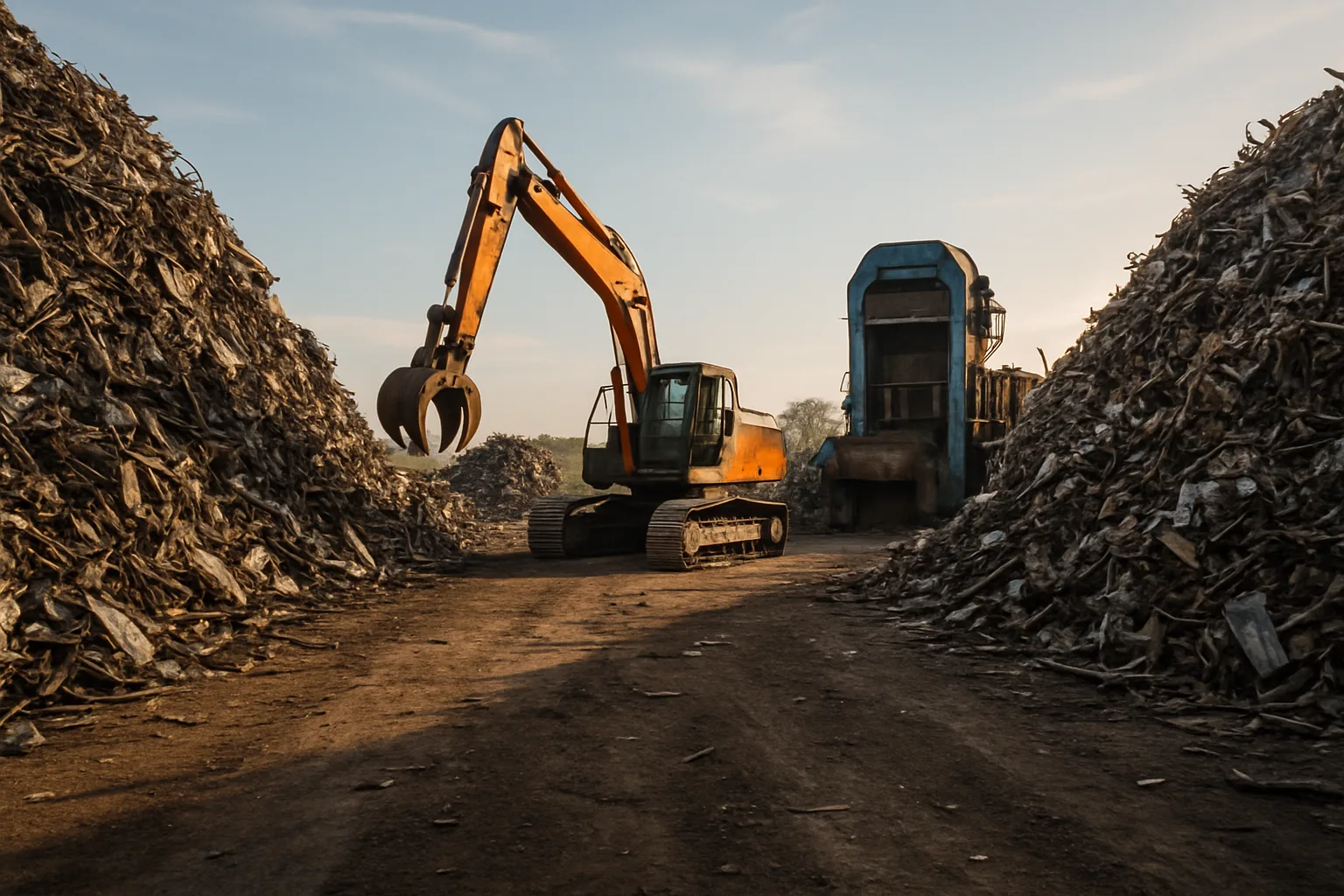
What's left is the shell — body panels, the frame, the floorpan. This gets compressed into a cube or sheared into manageable pieces before going to a metal shredder. Industrial shredders reduce a vehicle shell to fist-sized fragments in minutes. Those fragments then go through separation equipment: magnets pull ferrous steel, eddy current separators isolate aluminum and other non-ferrous metals, and the remaining material (foam, plastic, glass, rubber) gets managed as auto shredder residue.
The steel fragments become scrap steel bales or bundles, which get sold to steel mills and foundries. From there, the metal gets melted down and recast into new steel — potentially for new vehicles, construction materials, or appliances. It's a genuine circular economy when it's done right.
Understanding this chain matters when you're trying to get a free car valuation in Canada — because the offer you receive reflects where in this chain your buyer operates and how efficiently they can extract value from your specific vehicle.
What Determines How Much Your Scrapped Car Was Actually Worth
Here's the part most sellers only understand in hindsight. Your car's scrap value is not one number. It's a combination of factors that different buyers weigh differently:
- Curb weight and steel content: Heavier vehicles yield more ferrous metal. A full-size SUV or pickup will outperform a compact sedan on raw weight alone. Scrap metal prices today fluctuate with global steel demand, so timing matters.
- Non-ferrous components: Aluminum, copper, and catalytic converter value are separate from steel pricing and often more volatile.
- Usable parts inventory: Popular makes and models — especially those still on the road in large numbers — have strong parts demand. Obscure or discontinued vehicles may have limited parts buyers.
- Vehicle condition: A car that starts and drives is easier to move, assess, and partially resell than one that's been sitting for five years in a backyard. But even a non-runner has value — don't assume otherwise.
- Title status: A clear title speeds up the transaction and gives buyers more flexibility. That said, if you're searching "sell my junk car without title near me," you're not alone — many situations involving inherited vehicles, estate cars, or long-parked vehicles involve missing paperwork, and experienced buyers know how to navigate that.
- Location and logistics: In markets like Windsor, proximity to both Canadian and U.S. buyers creates competitive dynamics that can work in your favour. Southern Ontario has dense recycling infrastructure and cross-border buyer access.
If you've been searching we buy junk cars Windsor and getting wildly different quotes, this list explains why. The buyer offering the lowest number may only be thinking about steel weight. The one offering more may be factoring in what they can recover from the drivetrain, the cats, and the usable parts.
Case in Point: Why Competitive Offers Reveal the Real Market
Consider a scenario that plays out regularly. A vehicle owner in Windsor, Ontario inherits a 2012 pickup truck from an estate. The truck hasn't been driven in two years, has a cracked windshield, and the title paperwork is in the deceased's name. The owner calls one local buyer and gets a number. It doesn't feel right, but there's no comparison point.
When that same owner reaches out through a platform that puts the vehicle in front of multiple vetted buyers, something different happens. One buyer sees a truck with a high-demand engine. Another sees a valuable catalytic converter and solid aluminum content. A third sees a parts-rich make with a strong reseller market. They don't all bid the same number — and competition between them pushes the offer up.
That's the mechanics of price discovery. It doesn't require any tricks or negotiation tactics from the seller. It just requires that more than one buyer is looking at the same vehicle at the same time. Platforms like SMASH are built specifically for this. You describe the vehicle, upload photos, and let vetted buyers compete. No cold calls to single recyclers. No wondering whether you got a fair number.
For anyone selling a damaged car, an uninsured vehicle, an estate car, or something written off after an accident — the same principle applies. Browse Canadian car selling tips on our blog for more detail on how to position specific vehicle types before you sell.
What Happens to the Paperwork — And Why It Matters for You
Selling a vehicle in Ontario requires a transfer of ownership. Even for end-of-life vehicles, the provincial registration needs to be updated so you're no longer liable for the vehicle. Licensed buyers handle this — but you should confirm it's being done correctly, especially with estate vehicles or inherited cars where the title may be in someone else's name.
A legitimate buyer will walk you through the required documentation. If a buyer is telling you they'll "deal with the paperwork later" or asking you to sign blank forms, that's a flag. Scrap car removal across Canada through properly licensed operators means proper documentation every time. You should receive a receipt confirming the vehicle transfer, and ideally a certificate of destruction once the vehicle has been processed.
If paperwork is your primary concern — lost title, estate vehicle, salvage title — that's a conversation worth having upfront. Many experienced buyers, especially those operating through free junk car removal across Canada, are well-versed in resolving these situations without putting the burden entirely on the seller.
Frequently Asked Questions
Q: How long does the scrapping process take after I sell my car in Windsor?
Most vehicles get picked up within 24 to 72 hours of accepting an offer — sometimes the same day. The dismantling and processing timeline at the yard varies, but from your perspective as the seller, the transaction is typically complete at pickup. You hand over the keys and paperwork, receive payment, and the buyer handles everything after that.
Q: Do I need a title to get cash for cars in Windsor?
Ideally yes, but a missing title doesn't automatically kill the deal. Estate vehicles, inherited cars, and long-parked vehicles frequently have title complications. Experienced buyers know how to navigate this — the process varies by situation, but it's worth having the conversation rather than assuming you can't sell. Be upfront about the paperwork situation when you request a quote.
Q: How are scrap metal prices today affecting what I'll get for my car in Ontario?
Steel and non-ferrous metal prices fluctuate based on global commodity markets, and those fluctuations do affect scrap car offers. A vehicle's value isn't purely tied to metal pricing — parts demand and non-ferrous content matter too — but the steel market creates a baseline. Getting multiple offers at the same time gives you the most accurate picture of current market value. Disclaimer: Scrap metal prices change frequently. Check current rates before making decisions based on quoted numbers.
Q: Can I sell a car with no insurance in Windsor?
Yes. An uninsured vehicle can be sold for scrap or to a buyer who will dismantle or resell it — you just can't drive it to the buyer yourself. Licensed buyers come to you, so the lack of insurance doesn't affect the transaction. You're selling the vehicle, not operating it. Make sure to cancel your insurance formally once the transfer is complete.
Q: Will I get more than scrap metal value for my junk car?
Possibly — and it depends on what's in the car. Vehicles with working mechanical components, strong parts demand, or valuable catalytic converters can fetch more than the raw metal value alone. The best way to find out is to get offers from buyers who specialize in different parts of the recovery chain, not just one recycler focused on steel weight. Competition between buyers is the fastest way to surface the real number.
If you've got a vehicle in Windsor or anywhere across Ontario that you're ready to move — estate car, accident vehicle, old daily driver, or something you just stopped needing — don't guess at the number. SMASH connects you with vetted buyers who compete for your vehicle, so you see what the market actually says it's worth. Get your free offer at smash-cars.ca and find out what you're actually sitting on.
Stay current on scrap metal market trends and auto recycling insights by following SMASH on LinkedIn.
```