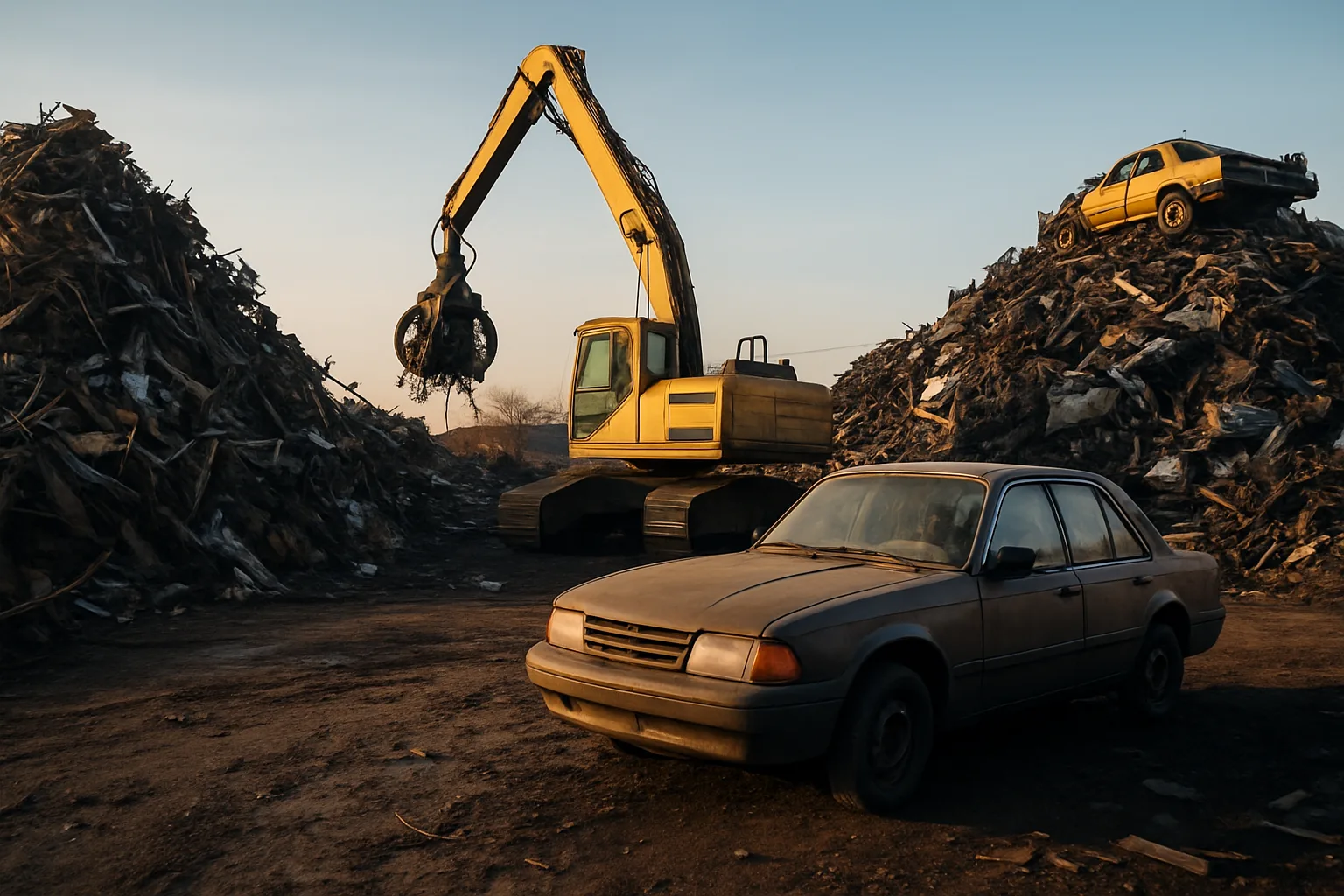
Your car sits in the driveway not starting for the third week in a row. Maybe it was written off after an accident. Maybe it came from an estate and you have no idea what it's worth. Maybe you just upgraded and the old one is costing you insurance money every month it sits there. Whatever the situation — the question is the same: do you scrap it, sell it, or trade it in?
That decision costs people real money every day in Saskatoon. Make the wrong call and you might hand a dealer hundreds of dollars in trade-in margin they didn't earn, or crush a car a private buyer would have paid good money for. This guide helps you make the right call — fast.
If you're searching for junk car buyers near me Saskatoon, keep reading. We'll walk through exactly when each option makes sense, what affects your vehicle's value, and how to get the most out of whatever you're driving (or not driving).
The Three Options — What They Actually Mean
Most people treat these as interchangeable. They're not. Each option suits a different vehicle condition, timeline, and financial goal.
Scrapping means selling the vehicle based on its weight and metal content. A standard passenger car in Saskatchewan weighs roughly 1,400 to 1,800 kilograms, and the scrap price you receive is based on current steel and non-ferrous metal rates at the time of sale. The car typically gets crushed or dismantled for parts after pickup.
Selling — privately or through a platform — means finding a buyer who values the whole vehicle, its usable parts, its make and model, and potentially its running condition. A damaged but repairable car can sell for far more than scrap value if the right buyer sees it. This is where most people leave money on the table.
Trading in means selling your old vehicle to a dealership as part credit toward a new purchase. It's fast and convenient, but you almost never get top dollar. Dealers buy low on trade-ins to protect their margin. That's not a criticism — it's just how the math works for them.
When Scrapping Actually Makes Sense
Scrapping is the right call in specific situations. Knowing when to pull the trigger saves you wasted time chasing buyers for a car nobody wants to drive.
Here are the clearest signals that scrapping is your best move:
- Repair costs exceed the vehicle's running value. If fixing it costs more than a buyer would pay to drive it, the math doesn't work. Parts, labour, and the hassle of selling a freshly repaired older car rarely pencil out.
- The frame or structure is compromised. A car with significant structural damage from a collision or rust-through has limited resale appeal outside of parts buyers. Scrapping or selling to a dismantler often makes more sense.
- It hasn't moved in years. Sitting vehicles deteriorate fast in Saskatchewan winters. Seals dry out, brakes seize, fuel systems gum up. Every season it sits, value drops.
- The vehicle has a salvage title and you can't find a buyer. Salvage title cars are harder to insure and finance. Your buyer pool shrinks dramatically.
- It's an end-of-life vehicle with no meaningful parts demand. High-mileage econoboxes from the early 2000s, for example, often have limited parts value.
Even if scrapping is the right path, you have options in how you do it. A traditional scrap yard gives you one price. A scrap metal auction platform puts your vehicle or its metals in front of multiple vetted buyers — which means more competition and better price discovery. More on that below.
If you want free junk car removal across Canada, that's a real option too — and worth exploring before you accept the first number you're offered.
When Selling Beats Scrapping — Even for Damaged Cars
This is where most vehicle owners miss out. A damaged, uninsured, or written-off car is not automatically a scrap car. The gap between scrap value and private sale value can be significant — sometimes several hundred dollars, sometimes more depending on the make, model, year, and what parts are intact.
Consider these situations where selling (not scrapping) gets you more:
- Popular truck and SUV platforms — If you have a high-demand pickup or SUV with engine and drivetrain intact, parts buyers and rebuilders will pay a premium over scrap weight pricing.
- Vehicles with low kilometres but cosmetic damage — A hailstorm car or a rear-end collision with a clean engine and interior has real value to buyers who can repair it cheaply.
- Estate vehicles — Inherited cars often sit unused for months. They may be older but low-mileage, well-maintained, and worth far more than scrap. Don't crush them without checking first.
- Uninsured cars — Lack of insurance doesn't mean lack of value. You can sell an uninsured car to a private buyer or a platform without needing active coverage on the vehicle.
- Accident-damaged vehicles with airbags undeployed or engine untouched — These attract rebuilders and parts resellers who know what they're worth.
The problem most sellers face is reach. Posting to Kijiji or Facebook Marketplace in Saskatoon limits you to local buyers. Platforms like SMASH expand that reach — putting your vehicle or its components in front of vetted buyers across a much wider network. When you sell my junk car online through a competitive platform, you get price discovery instead of a single take-it-or-leave-it number.
You can get a free car valuation in Canada before making any decision. That number tells you immediately whether selling makes more sense than scrapping.
When to Trade In — and When Not To
Trade-ins have one real advantage: convenience. You hand over the keys, sign some papers, and the value gets rolled into your new purchase. If time and simplicity matter more than maximizing every dollar, a trade-in is a legitimate choice.
But here's when a trade-in works against you:
- When the car is in rough condition. Dealers discount heavily for anything that needs work. They factor in reconditioning, potential liability, and lot appeal. You'll rarely get fair market value on a rough trade.
- When you're not buying from that dealer anyway. Trade-in value only makes sense in context of the purchase deal. Dealers can adjust numbers across both sides of the transaction. Separating the sale from the purchase — and shopping your car independently — usually puts more cash in your pocket overall.
- When the vehicle is older or has high mileage. Most dealers won't offer retail value on a 15-year-old vehicle with 250,000 kilometres. They'll offer wholesale — or less. Selling privately or through SMASH often beats that number.
If the dealer's trade-in number feels low, trust that instinct. Get a second opinion from a platform that exposes your vehicle to competitive bidding. You might be surprised what the actual market will pay.
For Saskatoon drivers navigating this decision, Saskatoon scrap metal services through SMASH give you a real alternative to the trade-in desk.
How to Decide: A Simple Framework
Cut through the noise with this straightforward decision tree. It won't take long, and it'll point you in the right direction before you talk to anyone.
- Can the car be driven or economically repaired? If yes, selling privately or through a platform likely beats scrapping. If no, continue.
- Does it have in-demand parts intact? Think engine, transmission, catalytic converter, intact body panels on popular models. If yes, selling to a dismantler or parts buyer beats straight scrap weight pricing.
- Is the vehicle completely stripped or crushed beyond use? Now you're in scrap territory. Get multiple quotes. Use a platform that creates competition between buyers.
- Are you buying a new vehicle soon? Consider whether the trade-in offer beats what you'd net selling independently. Do the math before you decide.
- Do you need it gone fast? Speed has a cost. If same-day removal matters more than maximum value, services offering free junk car removal near me get it done without negotiation.
The right answer depends on your vehicle, your timeline, and your priorities. There's no universal correct move — but there is usually a clearly better one once you know what you're working with.
For anyone in Saskatchewan dealing with an estate vehicle, a written-off car, or something that's just been sitting too long — connect with trusted auto buyers in Canada through SMASH Cars before making any final decision. You might be sitting on more value than you think.
What Affects Your Vehicle's Value in 2026
Whether you scrap, sell, or trade — understanding what moves the needle on your vehicle's value helps you negotiate smarter and choose the right path.
Key value drivers right now:
- Make, model, and year — Popular platforms (especially trucks and SUVs) hold value well even in damaged condition. Rare models with active enthusiast communities can surprise you.
- Catalytic converter value — Non-ferrous metals inside a cat — platinum, palladium, rhodium — fluctuate with commodity markets. A working cat on a late-model vehicle adds real dollars to a scrap or parts sale.
- Current steel and ferrous metal prices — Scrap metal prices change constantly. What you're quoted today may differ from next month. This is why timing and competition matter.
- Condition of core components — Engine, transmission, and drivetrain condition dramatically affect whether you're selling a parts car or dead weight.
- Documentation — Title, service records, and VIN history all affect buyer confidence. Documented vehicles sell faster and often for more. Platforms like SMASH support photo documentation and serial tracking to help here.
Disclaimer: Vehicle and scrap metal prices fluctuate based on market conditions. Always check current rates and get multiple quotes before making a final decision.
For more guidance on making smart vehicle selling decisions, browse Canadian car selling tips on our blog — practical, no-fluff advice for car owners across the country.
Whatever path you choose — scrap, sell, or trade — the worst move is waiting. Vehicles depreciate. Metal prices move. Buyers come and go. Get your free offer through SMASH Cars at smash-cars.ca and find out what your vehicle is actually worth before you commit to anything.
Frequently Asked Questions
Q: How do I find junk car buyers near me in Saskatoon?
The fastest way is to use an online platform that connects you with vetted buyers in your area rather than calling around individually. SMASH Cars (smash-cars.ca) connects Saskatoon vehicle owners with competitive buyers across Canada, often delivering better offers than a single local yard. You can get a free valuation without committing to a sale.
Q: What's the difference between scrap value and market value for a car in Saskatchewan?
Scrap value is based purely on the weight and metal content of your vehicle — it's the floor price. Market value accounts for usable parts, running condition, make and model demand, and what buyers are willing to pay for the whole vehicle. Many cars — including damaged or uninsured ones — sell for meaningfully more than straight scrap value when exposed to the right buyers.
Q: Can I sell a car with no insurance or registration in Saskatoon?
Yes. You don't need active insurance or current registration to sell a vehicle privately or to a buyer through a platform. You do need to hold the title (or have legal authority over the vehicle, such as in an estate situation). The buyer handles the transfer process after purchase.
Q: How long does it take to get cash for a car in Saskatoon?
Timelines vary by method. A trade-in at a dealership is same-day but often at a lower number. Private sales can take days to weeks. Platforms like SMASH can move quickly once a buyer is matched — in many cases, pickup and payment happen within a day or two of accepting an offer.
Q: Is free junk car removal in Saskatoon actually free?
Yes — legitimate services offering free removal cover the towing cost and deduct nothing from your offer for pickup. The offer you accept is what you receive. Always confirm before agreeing whether the quoted price is before or after towing fees. Reputable services are transparent about this upfront.
Stay connected with SMASH for the latest scrap metal market insights and vehicle selling tips across Canada. Follow us on LinkedIn to keep up with industry updates that actually affect what your vehicle is worth.