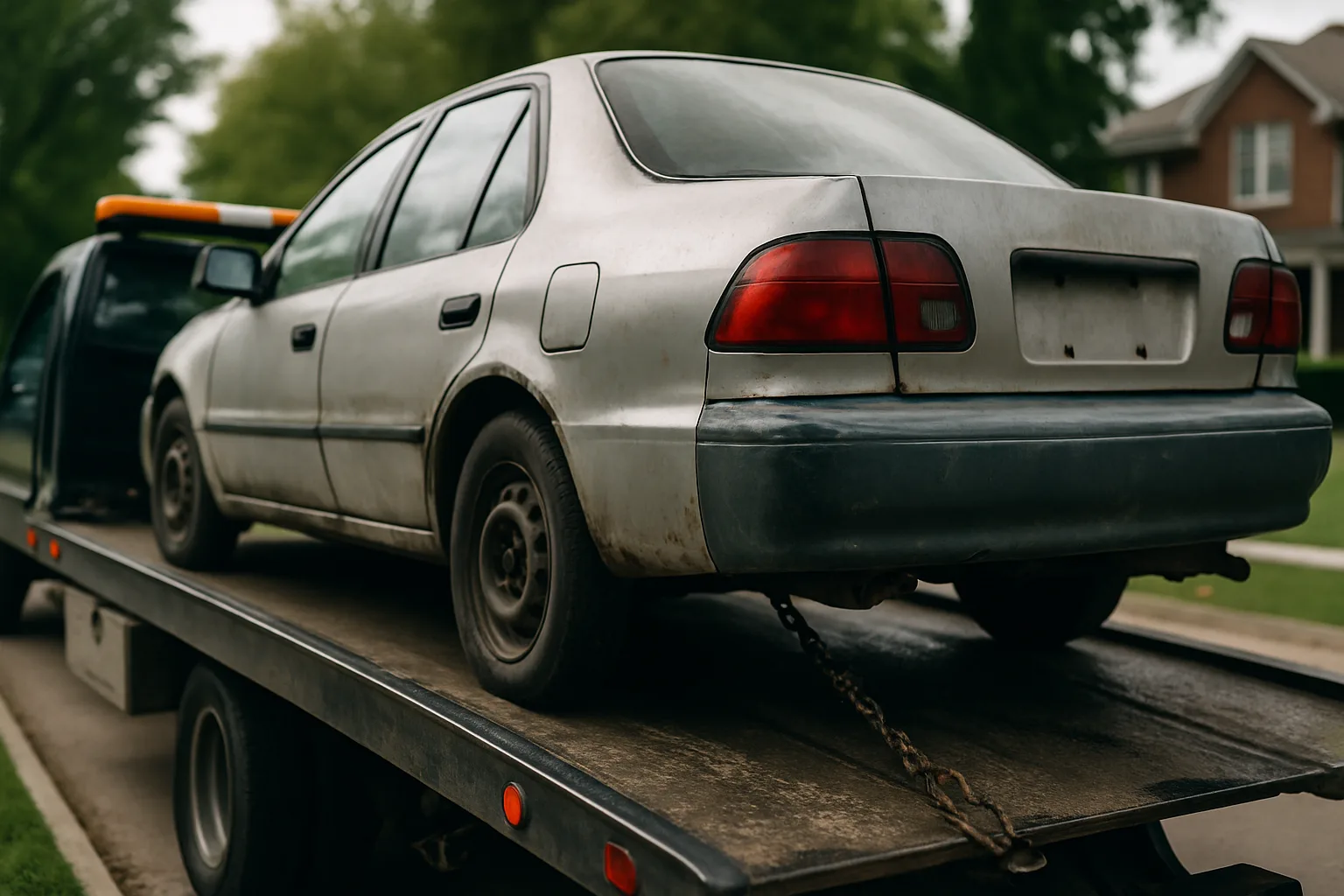
Most car sellers in Mississauga leave money on the table — not because their car is too damaged, but because they don't understand what actually drives the number. Rust, mileage, and collision damage all affect your offer, but not always in the way you'd expect. Knowing the difference between a car that's worth $800 and one that's worth $3,500 comes down to a few key factors — and most of them are already baked into your vehicle right now.
Whether you're clearing out an estate vehicle, finally dealing with that accident-damaged SUV sitting in your driveway, or upgrading and wondering what your old car is actually worth, this guide breaks it down plainly. No guesswork. No runaround.
If you're looking for cash for cars in Mississauga, understanding these three variables — rust, mileage, and damage — puts you in a far stronger position before you ever talk to a buyer.
Why Rust Is One of the Biggest Value Killers in Ontario
Ontario winters are brutal on vehicles. Road salt, freeze-thaw cycles, and wet springs accelerate rust in ways that drivers in drier provinces simply don't deal with. If your car has spent several winters on Mississauga roads, there's a good chance rust has worked its way into places that aren't immediately visible.
Buyers and recyclers assess rust in two categories: surface rust and structural rust. Surface rust on body panels, wheel wells, or trim reduces aesthetics and resale value — but it's manageable. Structural rust is the deal-breaker. When rust eats into the frame, subframe, floor pans, or suspension mounting points, the vehicle becomes unsafe to repair and significantly harder to resell for anything above scrap value.
- Surface rust: Cosmetic issue. Reduces sale price, but the car can still attract buyers looking for parts or a project.
- Frame rust: Structural issue. Often means the car is worth its weight in scrap metal — literally.
- Underbody rust: Common in Ontario vehicles. Affects fuel lines, brake lines, and exhaust components. Adds up fast for any buyer doing a repair estimate.
- Rust in the cab or trunk floor: Signals water intrusion. Makes buyers walk away from private sales quickly.
The good news? Even a heavily rusted vehicle has value in scrap metal recycling in Canada. Steel is steel. A car that nobody wants to drive is still worth hundreds of dollars at the right facility — and platforms like SMASH connect you with buyers who will give you a real number based on actual market conditions, not a low-ball guess from someone who knows you have no other options.
What High Mileage Actually Means for Your Cash Offer
There's a common misconception that mileage is the single biggest factor in what a car is worth. It matters — but it's more complicated than a number on an odometer. A well-maintained 280,000 km Honda CR-V can fetch significantly more than a neglected 180,000 km vehicle with a blown head gasket and no service records. Context is everything.
That said, mileage does affect value in predictable ways when all else is equal. Most private buyers in Ontario start losing interest in vehicles north of 200,000 km. For dealers and wholesalers, that number is often lower. But for junk car buyers, scrappers, and auto recyclers, mileage matters far less — what they're buying is parts inventory, core components, and raw material.
Here's how high mileage typically plays out across different buyer types:
- Private buyers: Most cautious about mileage. Expect the lowest offers or no interest above 250,000 km.
- Used car dealers: Will often pass or flip to auction. Margins shrink fast with older, high-mileage inventory.
- Parts buyers and auto wreckers: Mileage matters less than the condition of individual components — engine, transmission, catalytic converter, alternator.
- Scrap metal buyers: Mileage is essentially irrelevant. They're pricing the car by weight and metal composition.
If your car has high mileage but a newer-model catalytic converter, a recently replaced transmission, or intact interior components, those parts add real value beyond scrap weight. A buyer who knows what they're looking at will price those in. That's exactly why connecting with trusted auto buyers in Canada through SMASH Cars makes a difference — you're not just getting a flat scrap quote, you're getting an offer based on what your car is actually worth to the right buyer.
How Accident Damage and Write-Offs Affect Your Offer
Collision damage is where the pricing conversation gets the most complicated — and where sellers are most likely to get lowballed if they don't know what they're dealing with. There's a wide spectrum between "minor fender bender" and "total structural compromise," and every point on that spectrum affects your cash offer differently.
Insurance write-offs — vehicles declared a total loss — aren't automatically worthless. A car with a salvage title or a rebuilt designation still has value, sometimes significant value, depending on what's actually damaged versus what's intact. A rear-end collision that crushes a trunk and damages a bumper assembly might leave the drivetrain, interior, and front end completely untouched. Parts buyers will price that accordingly.
Here's what damage assessment typically looks at:
- Airbag deployment: Deployed airbags are expensive to replace. Buyers factor this in immediately.
- Frame damage vs. panel damage: Bent A-pillars or crumpled frame rails push a car toward parts-only or scrap. Damaged quarter panels are a different story.
- Mechanical damage: Did the accident affect the engine, transmission, or drivetrain? Or just exterior components?
- Flood damage: One of the hardest categories. Electrical corrosion and mold make flood vehicles difficult to sell for anything meaningful above scrap.
- Fire damage: Similar story. Heat warps metals and destroys wiring. Primarily a scrap play.
If your vehicle has been in an accident and you're not sure where it falls on this spectrum, get a realistic assessment before you talk to buyers. You can get a free car valuation in Canada and find out what your specific vehicle is worth in its current condition — without committing to anything.
Also worth noting: selling a car after an accident in Ontario doesn't require it to be driveable. Many buyers, including those accessible through platforms like getmyscrapcar.ca, offer free pickup on non-running and damaged vehicles. You don't need to tow it anywhere.
The Combination Effect: When Rust, Mileage, and Damage Stack Up
Here's where it gets real. Most junk cars and end-of-life vehicles don't have just one problem — they have all three. High mileage, significant rust, and some level of accident or mechanical damage are the classic combination that sends sellers scrambling for options.
When these factors stack, private sale becomes nearly impossible. Dealers won't touch it. But that doesn't mean the car has no value. It means the value has shifted — from resale to parts and materials. And that's a legitimate market with real buyers who pay real money.
The key is understanding what your car is worth in that market, not comparing it to what it would fetch at a dealer lot in perfect condition. A 2009 pickup truck with 310,000 km, a rusted frame, and front-end damage from a collision isn't a $12,000 vehicle. But it's also probably not a $400 vehicle. The engine block, the catalytic converter, the aluminum wheels, the intact interior, the rear axle — all of that has a buyer somewhere.
Scrap metal recycling in Canada is a real industry with active buyers competing for inventory. More competition means better price discovery. That's the mechanic that makes cash for cars in Mississauga through a competitive platform fundamentally different from calling one yard and accepting whatever they tell you.
What You Can Do Right Now to Get the Best Offer
You don't need to fix anything. You don't need to clean it up or tow it somewhere. But there are a few things you can do before you call anyone that will put you in a better position.
- Know your VIN. Buyers use it to pull the vehicle history, check for prior write-offs, and identify the exact make, model, and trim. Having it ready speeds up the process.
- Document what's intact. If the engine runs, if the transmission shifts, if the interior is clean — say so. Buyers price what they can confirm.
- Photograph the damage honestly. Front, rear, underbody if possible. Accurate photos lead to accurate offers. Surprises on pickup lower your offer or kill the deal.
- Know if you have a lien. A vehicle with an outstanding loan requires the lienholder to release the title. Sort this out before you start the process.
- Check your ownership documents. In Ontario, having your vehicle permit (ownership) ready makes the transfer process straightforward.
If you're dealing with an inherited vehicle or estate car, the process has a few extra steps — but it's still very doable. Browse Canadian car selling tips on our blog for guidance on estate sales, donated vehicles, and cars with title complications.
Whether you're in Mississauga, Brampton, Hamilton, or anywhere else in Ontario, the process of getting a real offer on a real vehicle shouldn't require three phone calls and a tow bill. Get connected with trusted auto buyers in Canada through SMASH — get your free offer at smash-cars.ca and find out what your car is actually worth today.
Frequently Asked Questions
Q: Does rust automatically mean my car is only worth scrap value in Mississauga?
Not necessarily. Surface rust and cosmetic rust don't eliminate resale or parts value. Structural rust — particularly in the frame or subframe — is the bigger concern. Even heavily rusted vehicles can attract parts buyers for intact mechanical components. Get a proper assessment before assuming the worst.
Q: How much does high mileage reduce my cash for cars offer in Mississauga?
It depends on the buyer type. Private buyers and dealers discount heavily for high mileage. Parts buyers and scrap buyers care more about component condition than odometer readings. A 300,000 km car with a working engine and good cats can still generate a competitive offer from the right buyer.
Q: Can I sell a written-off or salvage title car for cash in Ontario?
Yes. A write-off designation doesn't eliminate value — it shifts where that value comes from. Salvage and rebuilt-title vehicles are regularly purchased by parts buyers and recyclers in Ontario. The offer reflects what's damaged versus what's intact, not just the insurance designation.
Q: Do junk car dealers near me offer free pickup in Mississauga?
Many do, especially for non-running or heavily damaged vehicles. Buyers who specialize in end-of-life vehicles typically include towing in their offer rather than deducting it separately. Confirm this before you accept any offer to make sure you're comparing apples to apples.
Q: How do I know if I'm getting a fair offer for my junk car in Mississauga?
The best way is to get more than one offer. Single-buyer transactions with no competition often result in lowball pricing — the buyer knows you have limited options. Platforms that connect you with multiple vetted buyers create competition, which leads to better price discovery and a more accurate reflection of what your car is actually worth in the current market.
Follow SMASH on LinkedIn for industry updates, scrap metal market insights, and tips on getting the most out of your unwanted vehicle.
```