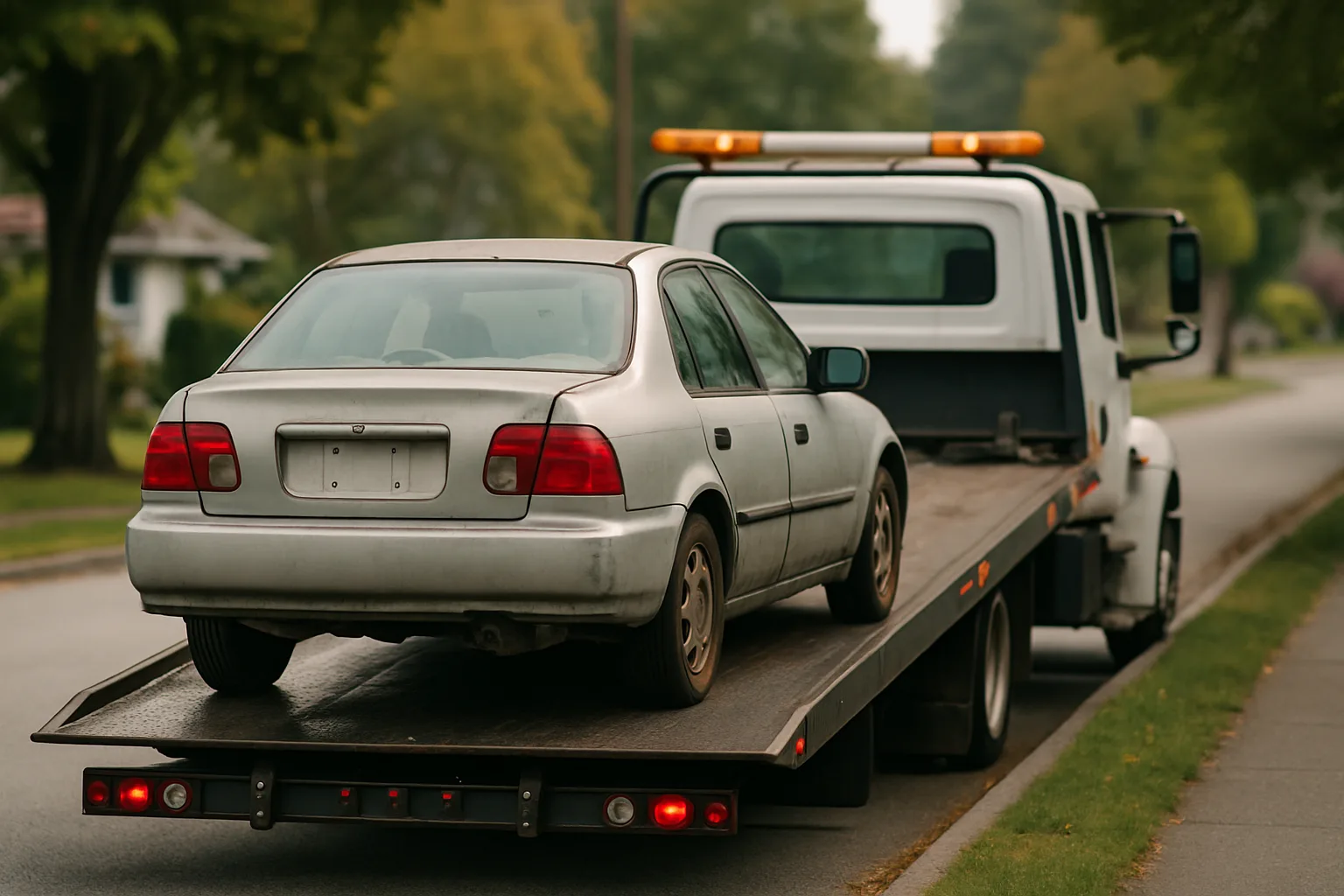
That rusting sedan in your driveway isn't just an eyesore. It's costing you money every single month — and most Vancouver homeowners have no idea how much.
Whether it came from an accident, a failed repair, an estate, or just a life upgrade that left an old car behind, a junk vehicle sitting idle is a liability disguised as a future project. The longer it sits, the worse the math gets. And if you've been putting off scrap car removal in Vancouver, this article will show you exactly what that delay is costing you — and what you can do about it today.
The Hidden Costs of a Sitting Junk Car Add Up Fast
Most people think a parked car costs nothing. No gas, no insurance (sometimes), no registration fees — what's the harm? The harm is slow, steady, and measurable.
First, there's depreciation. A vehicle that sits unused degrades faster than one driven regularly. Seals dry out. Rodents nest in engine bays. Tires crack and flatten under static weight. Brake rotors rust through. That car you think is "still worth something" is losing recoverable value every season it sits on your property in British Columbia's wet climate — and Vancouver winters are particularly brutal on exposed metal and rubber.
- Fluid contamination: Old oil and coolant break down and can leak into soil, creating environmental liability on your property.
- Battery death: A dead battery can trigger a cascade of electrical system failures that reduce resale and scrap value.
- Rodent damage: Rats and mice chew through wiring harnesses, insulation, and even fuel lines — damage that can cost thousands if you ever try to revive the vehicle.
- Rust progression: Once surface rust hits structural panels, the vehicle loses value rapidly. Frame rust can make it unsaleable even to a salvage yard.
- Tire dry rot: Tires that sit deflated on a stationary car degrade faster and become a disposal cost rather than an asset.
None of this is dramatic. It's just physics and time working against you. Every week that passes without action is a week you're letting recoverable cash evaporate.
What Junk Car Buyers Near Me in Vancouver Are Actually Looking At
When a buyer assesses your vehicle — whether it's a wreck, an estate car, an uninsured vehicle, or something that failed its last inspection — they're looking at a specific set of factors. Understanding these helps you see why timing matters and why the car sitting in your driveway may still be worth more than scrap value right now, but not necessarily in six months.
Buyers evaluate: the year, make, and model (some vehicles have strong parts demand even when wrecked); the condition of the catalytic converter and other non-ferrous components; the drivability or towability of the vehicle; the completeness of the car (are parts missing or stripped?); and the overall scrap weight if the vehicle is headed for recycling.
Here's what most sellers don't realize: junk car buyers near me in Vancouver aren't just paying for metal weight. They're paying for usable parts, fluids, tires, rims, electronics, and in some cases the full vehicle for resale or auction. A car that's been sitting deteriorates across all of these value categories simultaneously. The parts that made it worth more than scrap weight today may be damaged, corroded, or missing six months from now.
If your car has a working catalytic converter, intact interior, usable tires, or a rebuildable engine, you have leverage — but only while those components are still viable. To understand what that's worth, get a free car valuation in Canada before another rainy season does the work for you.
The Real Regulatory and Environmental Risk in British Columbia
This part doesn't get talked about enough. In British Columbia, municipalities have bylaws that govern inoperable or abandoned vehicles on private property. In Vancouver specifically, a vehicle that is not roadworthy, not licensed, or deemed a nuisance can trigger bylaw complaints from neighbors — and enforcement that results in fines or forced removal at the owner's cost.
That cost can be significant. City-contracted towing and impound fees in British Columbia are not cheap. If you're assessed a fine for an inoperable vehicle and you don't act, those fines compound. Compare that to the alternative: connecting with a reputable buyer who comes to you, removes the vehicle at no charge, and pays you for it. That's not a hypothetical — that's what platforms like SMASH make possible for Vancouver car owners right now.
There's also an environmental dimension. A leaking vehicle on your property — oil, coolant, transmission fluid, brake fluid — creates potential soil contamination. Depending on the extent, this can become a property issue that outlasts the car itself. Getting the vehicle removed promptly isn't just about the money. It's about protecting the property underneath it.
Why Waiting to Sell Your Scrap Car in Vancouver Costs More Than You Think
Let's put some structure around this. If you have a vehicle worth, say, $800 in its current condition — whether that's a post-accident write-off, an estate vehicle, an uninsured car, or a high-mileage vehicle past its useful life — here's what inaction looks like over time:
- Month 1-2: Vehicle still has full parts value. Catalytic converter intact. Tires usable. Fluids present.
- Month 3-6: Tires begin deteriorating. Battery is dead. Moisture is working into seams. Rodents may have entered the cabin or engine bay.
- Month 6-12: Surface rust is progressing. Fluids are leaking or have evaporated. Wiring may be compromised. Parts buyers have fewer usable components to work with.
- Month 12+: The vehicle is increasingly headed toward pure scrap weight value — a much lower number than what you could have captured earlier.
Scrap metal prices fluctuate with global commodity markets. A car that is pure scrap weight is subject entirely to whatever the market is doing that week. A car with parts value has a floor that's higher and more stable. Waiting moves you from the latter category toward the former — and that's a one-way door.
If you're not sure what category your vehicle falls into, connect with trusted auto buyers in Canada through SMASH Cars and get clarity before the window closes.
Who Should Be Selling Right Now — and Why They're Holding Back
There's a specific group of people this situation applies to. If any of these describe you, the cost of waiting is real and it's happening right now:
- Estate vehicles: A family member passed and left a vehicle behind. It sits in the driveway while the estate is sorted. Meanwhile, it deteriorates. You don't need to be the registered owner to start the conversation — you just need to know what the vehicle is worth.
- Post-accident write-offs: Insurance paid out and you kept the salvage. But you haven't done anything with it. The vehicle that was worth $2,000 in salvage at the time of the accident may be worth considerably less now.
- Uninsured cars: You let the insurance lapse because you stopped driving it. Now it's not legally operable, and you're not sure what to do with it. You can sell an uninsured vehicle — and you should, sooner rather than later.
- Vehicles after an upgrade: You bought a new truck or SUV and the old one is just sitting. It's not wrecked, not failing — just unwanted. This is often a vehicle with real parts value, and it's worth more to a buyer today than in a year of sitting.
- Donated or gifted vehicles: You were given a car you don't want. Car donation in Canada is an option, but so is selling — and getting cash while also freeing up the space.
The common thread in all of these: inaction is a decision. And it's usually the most expensive one. To avoid common mistakes when making that decision, browse Canadian car selling tips on our blog before you commit to any buyer.
How to Actually Get More Than Scrap Value for Your Junk Car in Vancouver
The difference between getting scrap weight value and getting above-scrap value comes down to one thing: competition. A single buyer making a single offer has no incentive to pay you more than the minimum. That's been the default in this industry for decades — one call, one number, take it or leave it.
SMASH changes that dynamic. Instead of settling for one offer from one buyer, you get exposure to a network of vetted buyers who compete for your vehicle. More buyers means better price discovery. That's not a promise of the highest possible price every time — markets are markets. But it's a fundamentally fairer process than the old way.
SMASH also handles the logistics. No subscription fees. No guesswork on paperwork. And for Vancouver residents, Vancouver scrap metal services are available through the platform — connecting you with local buyers who know the market and can move quickly. You can also check out getmyscrapcar.ca for additional options if you want to compare.
The vehicle sitting in your driveway isn't going to fix itself. And the longer it sits, the more of your money stays trapped in depreciating metal instead of your pocket.
Frequently Asked Questions
Q: How much is my junk car worth in Vancouver?
It depends on the year, make, model, condition, and current scrap metal prices — which fluctuate regularly. A vehicle with an intact catalytic converter, working parts, and minimal rust will be worth more than pure scrap weight. Getting multiple offers is the best way to find out where your vehicle sits. Prices can vary significantly from week to week, so check current rates before committing.
Q: Can I sell a car without insurance in Vancouver, British Columbia?
Yes. You don't need active insurance to sell a vehicle for scrap or to a private buyer in British Columbia. You will need to handle the title transfer properly and notify ICBC. A reputable buyer will walk you through the paperwork — it's straightforward when you're working with someone who does this regularly.
Q: How does scrap car removal in Vancouver actually work?
Once you connect with a buyer and agree on a price, they arrange pickup — usually at no cost to you. They come to your location, handle the tow or drive-away, pay you on the spot or via e-transfer, and take care of the vehicle from there. The whole process can often happen within 24 to 48 hours of first contact.
Q: Will I get more than scrap weight value for my damaged car?
Possibly, yes — and often significantly more. Buyers look at usable parts, the catalytic converter, tires, rims, fluids, and the overall condition of the vehicle, not just its weight in steel. The earlier you sell, the more of those value components are intact. Waiting degrades each of those categories.
Q: What happens to my junk car after it's removed?
Depending on the buyer, your vehicle may be resold as a project car, parted out for individual components, or sent to a recycling facility where the metal is processed and returned to the supply chain. Reputable buyers in Vancouver operate within British Columbia's environmental regulations — fluid capture, battery disposal, and recycling standards are part of the process.
If a car you no longer need is sitting on your property and losing value by the month, the best move is a simple one: find out what it's worth right now. SMASH connects Vancouver car owners with serious, vetted buyers who compete for your vehicle — no subscription fees, no runaround. Get your free offer at smash-cars.ca and turn that driveway liability into cash before another season of depreciation makes that decision for you.
Stay ahead of the scrap metal market — follow SMASH on LinkedIn for industry updates, pricing trends, and practical advice for Canadian car sellers.
```