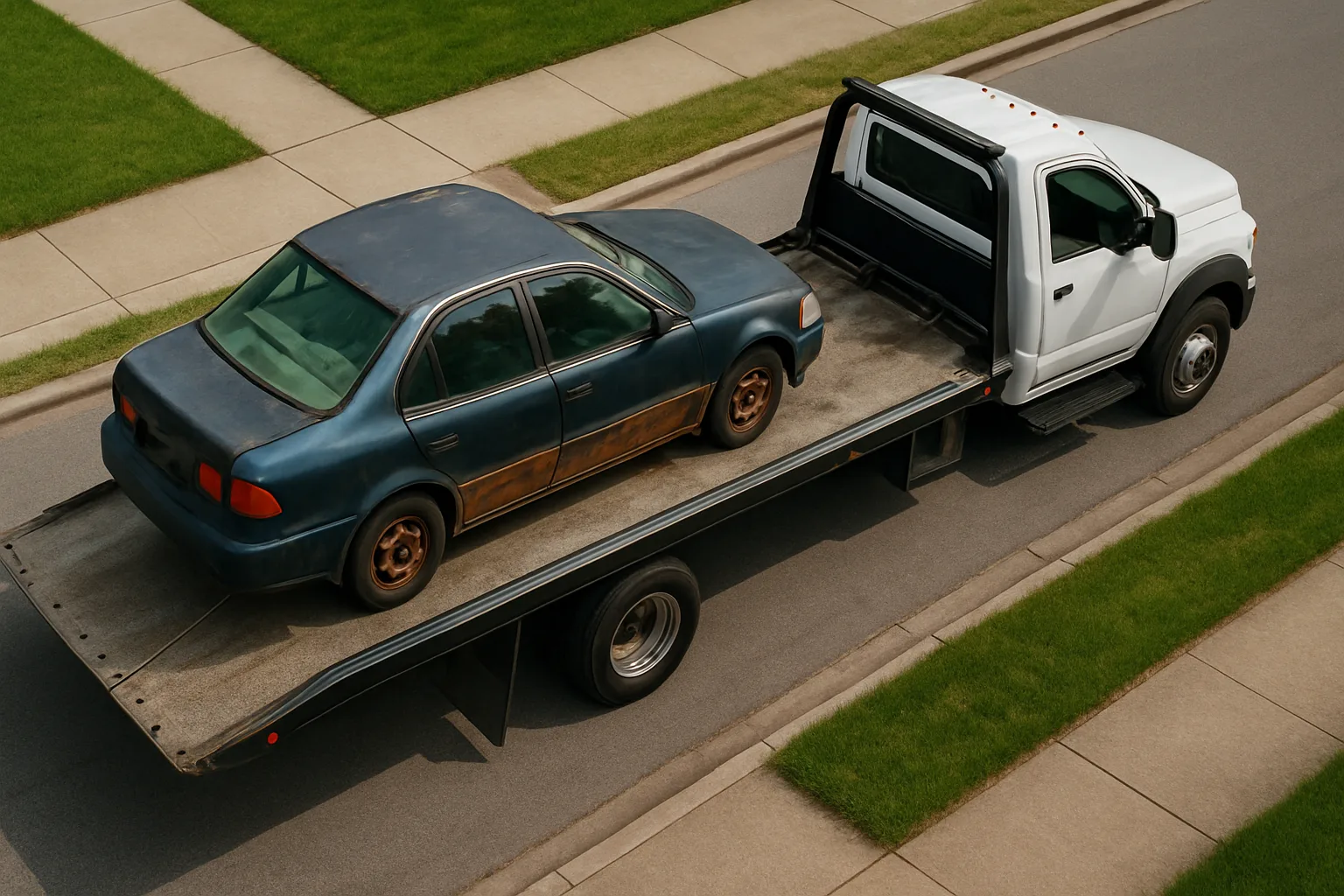
Rust, Mileage, and Damage: What They Actually Do to Your Car's Value
Most people selling an unwanted vehicle in Canada get lowballed — not because the market is bad, but because they walk in blind. You don't know what your car is actually worth, so someone else sets the number. Understanding how rust, mileage, and damage affect your car's value puts that power back in your hands, whether you're chasing free scrap car pickup in Ottawa or trying to squeeze every dollar out of a written-off sedan sitting in your driveway.
This isn't a guide for pristine trade-ins. This is for the estate car you inherited, the accident victim with a bent frame, the high-mileage daily driver that finally gave up. These vehicles still have value — but how much depends on specific factors most sellers never think to ask about.
How Rust Changes Everything About What Your Car Is Worth
Rust isn't just cosmetic. Surface rust on a quarter panel is annoying. Structural rust eating through floor pans, frame rails, or subframe mounting points is a different problem entirely — it changes how buyers classify your vehicle and what they'll pay for it.
Here's the practical breakdown of what rust does to your car's value:
- Surface rust (cosmetic): Minor oxidation on body panels or wheel wells. Minimal impact on scrap or resale value. A buyer can still consider the car for parts or resale.
- Scale rust (moderate): Paint is bubbling, metal is flaking. Body panels may be unsalvageable. This starts to push a car toward scrap-only territory, especially if the damage is widespread.
- Penetrating rust (structural): Holes in the floor, compromised frame rails, rotted rocker panels. At this stage, the car is typically valued by weight — meaning scrap metal price per ton becomes the baseline.
Ottawa and Ontario drivers know this well. Road salt is a fact of life from November through April. A 10-year-old car driven through six Ottawa winters and never undercoated can have severe frame rust while the engine still runs clean. That car may not be driveable or insurable, but it still has metal value — and possibly parts value if the drivetrain is intact.
The key is getting it in front of buyers who understand the difference. Connect with trusted auto buyers in Canada through SMASH Cars — buyers who can actually assess what your rusted-out vehicle is worth rather than defaulting to the lowest possible number.
Mileage: The Number That Tells Buyers How Much Life Is Left
High mileage doesn't automatically kill your car's value — but it does shift how buyers think about it. A 2012 Honda Civic with 380,000 km and a full service history is a different conversation than the same car with no records and a slipping transmission. The mileage is the same. The value isn't.
Here's how mileage typically affects what you can expect:
- Under 200,000 km: Still in consideration for private resale or certified used programs, depending on condition. Parts buyers also pay more because components are less worn.
- 200,000–300,000 km: Resale to end users gets harder. Wholesale buyers, parts yards, and export buyers enter the picture. Value drops but doesn't disappear.
- 300,000 km and above: The car is typically moving toward scrap or parts-only territory unless it's a known high-mileage platform (diesel trucks, certain Japanese makes). Scrap metal recycling in Canada prices the remaining weight.
What most sellers miss: mileage only tells part of the story. Engine condition, transmission health, and whether the car runs at all matter just as much. A non-running car at 180,000 km might fetch less than a running car at 310,000 km, depending on what's wrong. Buyers with access to full auction competition — like those on SMASH — are more likely to parse those details rather than just penalize you for the odometer reading.
If you're curious about general ranges before you reach out, you can get a free car valuation in Canada and see what real buyers are actually willing to offer for your specific vehicle.
Accident Damage, Write-Offs, and Salvage Titles: How Serious Is It?
Accident damage comes in a spectrum, and where your car falls on that spectrum changes your options significantly. A fender bender that bent a bumper is not the same as a T-bone that compromised the A-pillar and triggered an insurance write-off.
Here's how buyers typically categorize accident-damaged vehicles:
- Repairable damage: Cosmetic collision damage with no structural involvement. These cars can still be sold for resale or parts. Competition among buyers drives up the offer.
- Insurance write-off (repairable): The insurer totalled it, but the car could technically be repaired. Often bought by rebuilders or export buyers. Value is real — don't give it away.
- Insurance write-off (non-repairable / salvage): Structural damage, airbag deployment, flood, fire. These move toward parts and scrap. But individual parts — engines, transmissions, catalytic converters — can still be worth pulling before it goes to the crusher.
- Fire or flood damage: Most buyers treat this as scrap-weight value unless specific components survived intact.
In Ontario, a salvage title affects your ability to insure or re-register the vehicle. If you're sitting on a written-off car that you can't insure and can't sell privately, you still have options. Platforms like SMASH connect you with buyers who specifically deal in these vehicles — you don't need to post it on Kijiji and field lowball offers from flippers.
For Ottawa sellers dealing with junk car removal after an accident, the process should be straightforward: describe the damage accurately, let buyers compete, get your offer, and arrange pickup. That's it.
Scrap Metal Value vs. Parts Value: Knowing Which One Applies to Your Car
This is the distinction most sellers miss entirely — and it's the one that costs them money.
Scrap metal value is based on weight. A typical mid-size sedan weighs roughly 1,400–1,600 kg. At current scrap steel prices in Canada (which fluctuate — always check current rates before making decisions), that raw weight gives you a baseline. That baseline is the floor. Not the ceiling.
Parts value can exceed scrap value significantly depending on:
- Catalytic converter: Contains platinum, palladium, and rhodium. High-demand vehicles can have cats worth hundreds of dollars on their own.
- Engine and transmission: Running drivetrains from popular platforms sell fast. Even seized engines have core value.
- Wheels and tires: Factory alloys in good condition add real money.
- Body panels: Low-rust panels from common vehicles are always in demand at body shops.
- Electronics: ECUs, infotainment systems, and instrument clusters from newer vehicles have parts buyers actively hunting them.
The challenge is that most individual sellers can't easily access parts buyers. You'd have to pull the parts yourself, list them individually, and spend weeks waiting. The better move is to get in front of buyers who already know what those parts are worth and will factor them into their offer — rather than offering you scrap weight and pocketing the margin themselves.
For Ottawa and Ontario sellers who want real competition on their vehicle — not just one quote from one buyer — Ottawa scrap metal services through SMASH Cars put your vehicle in front of multiple vetted buyers at once.
If your vehicle is truly end-of-life with no salvageable parts, Canadian scrap car removal from GetMyScrapCar is a straightforward option to get it off your hands quickly.
Estate Cars, Uninsured Vehicles, and Inherited Cars: Special Cases That Still Have Value
Not every car being sold comes from a driver who just decided to upgrade. A large portion of unwanted vehicle sales in Canada involve:
- Estate vehicles — cars left behind after a family member's passing
- Cars that have been sitting uninsured for months or years
- Vehicles inherited from out-of-province family members
- Cars that haven't passed an emissions or safety inspection
These situations add complexity, but they don't eliminate value. What they do require is a buyer who can handle the paperwork and logistics without putting everything back on the seller. If you're dealing with an estate vehicle in Ottawa, for example, you may not know the full maintenance history, you may not have the original ownership documents in hand, and the car may have been sitting for two or three years. A legitimate buyer works through those details. A lowballer uses them as leverage to drive your price down.
SMASH was built specifically to cut out the information asymmetry that makes these situations exploitable. When multiple buyers compete for your vehicle — even a sitting estate car with rust and unknown mileage — you get a clearer picture of what it's actually worth. Browse Canadian car selling tips on our blog for more practical guidance on handling these types of sales.
Note: Vehicle values and scrap metal prices fluctuate based on market conditions, metal commodity prices, and regional demand. Always check current rates and get multiple offers before making a final decision.
Frequently Asked Questions
Q: How do I get free scrap car pickup in Ottawa?
Start by getting an offer through a platform like SMASH Cars, which connects you with vetted buyers who include pickup in their offer. Most legitimate buyers serving Ottawa will arrange towing at no cost to the seller once an offer is accepted. Avoid any buyer who charges a pickup fee upfront.
Q: How much is my junk car worth for scrap in Ottawa?
It depends on your vehicle's weight, condition, and what parts are still salvageable. A typical passenger car in Ontario ranges from a few hundred to over a thousand dollars depending on those factors — but scrap metal prices fluctuate, so always get current quotes. Getting multiple offers is the only way to know you're not leaving money on the table.
Q: Can I sell a car without insurance or a safety certificate in Ontario?
Yes. If you're selling to a scrap buyer or a salvage buyer rather than a private end user, you don't need the car to be insured or safety-certified. Buyers who deal in junk and end-of-life vehicles in Ottawa handle these situations regularly — it's the norm, not the exception.
Q: Does rust make my car worthless for scrap?
No. Heavy rust reduces what a resale or parts buyer will pay, but it doesn't eliminate scrap metal value. A structurally rusted car is still steel, aluminum, and copper — and those metals have real market value. The question is whether you're being paid for parts and materials, or just being given the scrap floor price by a buyer who profits on the difference.
Q: What happens to junk cars after pickup in Canada?
Most end-of-life vehicles go through a dismantling process: valuable parts are pulled and resold, fluids are drained and disposed of according to provincial environmental regulations, and the remaining hulk is crushed and sent to a scrap metal recycling facility in Canada for processing into raw material. It's a legitimate recycling chain — your old car becomes new steel.
If you're sitting on a rusted-out, high-mileage, or damaged vehicle in Ottawa and you want to know what it's actually worth — not what someone hopes you'll accept — the answer is competition. SMASH puts your vehicle in front of buyers who know the real numbers and have to earn your business. Get your free offer at smash-cars.ca and find out what the market actually says your car is worth.
Follow SMASH on LinkedIn for ongoing scrap metal market updates and practical tips on getting more from your unwanted vehicles across Canada.