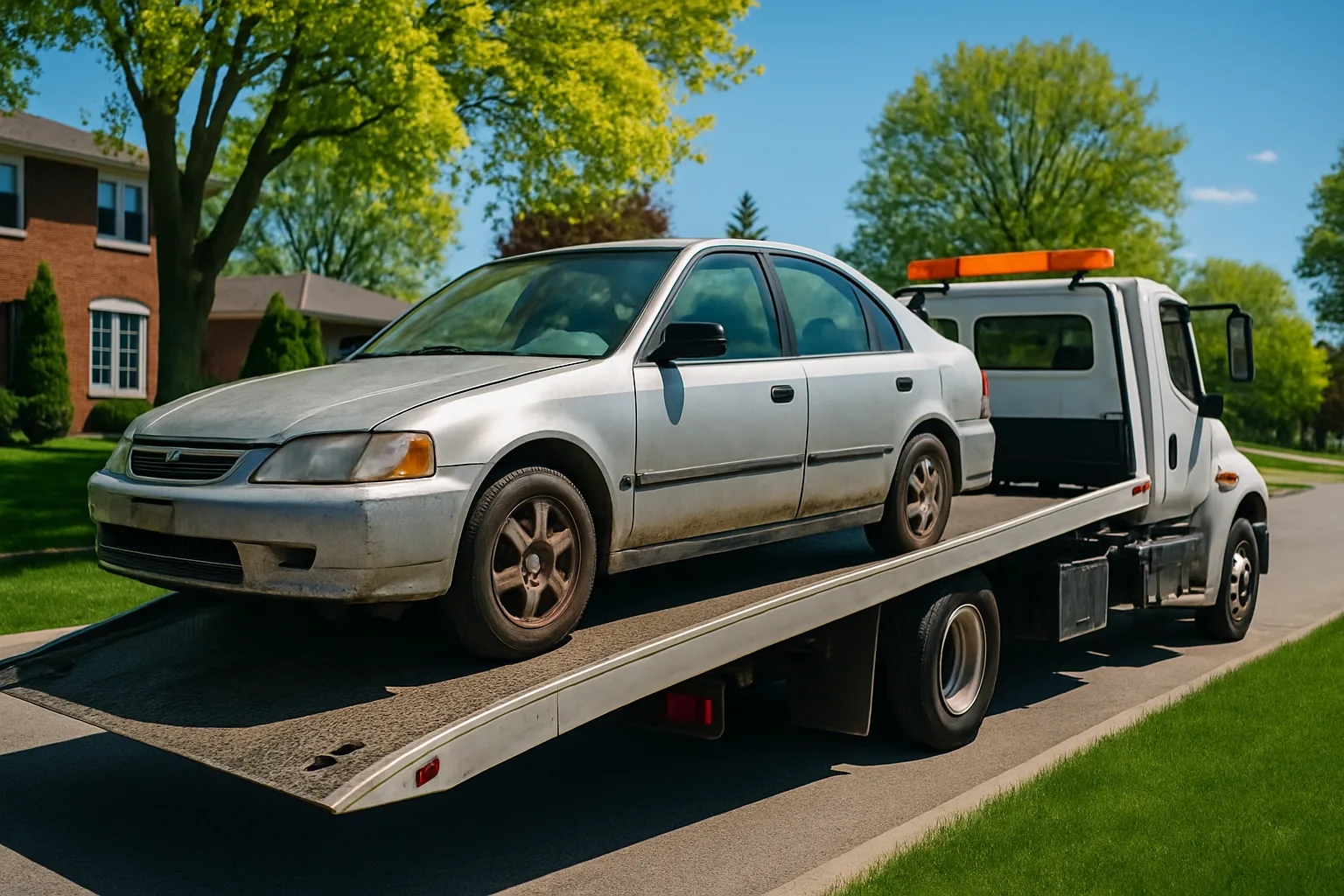
Millions of Canadians still owe money on a vehicle they desperately want to sell — and most of them think a lien makes that impossible. It doesn't. Selling a car with a lien or an outstanding loan is completely doable. It just requires knowing the right steps, in the right order, before you hand over the keys.
Whether you're upgrading to something newer, dealing with an estate vehicle, or trying to offload a damaged car that's no longer worth insuring, a lien doesn't have to be a dealbreaker. In Ontario and across Canada, thousands of these transactions happen every month. The sellers who get the best outcome are the ones who understand how the process works — and who connect with buyers equipped to handle it.
If you're in Toronto or anywhere else in Ontario looking to sell scrap car Toronto or get cash for a car you still owe on, this guide breaks it down step by step.
---What Is a Lien, and Why Does It Complicate a Car Sale?
A lien is a legal claim against your vehicle. When you finance a car through a bank, credit union, or dealership, the lender registers that lien on the vehicle's title. Until the loan is paid off in full, you don't have clean ownership — the lender does, at least partially.
This matters because a buyer — whether it's a private individual, a dealership, or a scrap buyer — generally needs a clear title to take ownership legally. If you sell a vehicle with an undisclosed lien, you're creating a legal mess for both parties. In Ontario, lien information is registered through the Personal Property Security Registration (PPSR) system, and any serious buyer will run a lien check before completing a purchase.
The good news: a lien doesn't mean you can't sell. It means the lien has to be resolved as part of the transaction — not before it, necessarily, but as part of it.
Step-by-Step: How to Sell a Car You Still Owe Money On in Canada
Here's how the process actually works when you want to sell a vehicle with an outstanding loan in Canada, including in markets like Toronto and the broader Ontario region.
-
Get your loan payoff amount.
Call your lender and ask for the payoff amount — not your current balance. The payoff amount includes any remaining interest and fees to close the loan today. It may be different from what your last statement shows. Get this number in writing, and ask how long it's valid (usually 10–30 days).
-
Know what your car is actually worth.
Before you talk to any buyer, understand your vehicle's market value. A car that's drivable, insured, and in decent shape may be worth significantly more than its scrap weight. Even a damaged, uninsured, or written-off vehicle has value in parts, in non-ferrous metals, and sometimes as a whole unit to the right buyer. Get a free car valuation in Canada before committing to any offer — you need to know your number before the conversation starts.
-
Calculate the gap (or the surplus).
If your car is worth $8,000 and you owe $5,500, you have positive equity. That's straightforward — the lien gets paid from the sale proceeds, and you pocket the difference. If your car is worth $4,000 and you owe $6,500, you're underwater. You'll need to either pay the difference out of pocket or negotiate with your lender about a settlement. Neither situation is unsolvable — but you need to know which one you're dealing with.
-
Choose the right type of buyer.
Private buyers tend to be uncomfortable with lien situations and may walk away. Dealerships will handle liens but often lowball the trade-in value to protect their margin. Specialized auto buyers — including those connected through platforms like SMASH Cars — are experienced with lien transactions and can often move faster with less friction. For older, damaged, or end-of-life vehicles, this route typically delivers better outcomes than a private sale anyway.
-
Coordinate the payoff directly with the lender.
In most lien-present transactions, the buyer pays the lender first — directly — and you receive any remaining equity. The lender then issues a lien release, and the title transfers cleanly. This protects everyone involved. A buyer who insists on paying you first and "trusting" you to pay off the lender is taking a significant risk — and most legitimate buyers won't do it that way.
-
Get the lien release and transfer the title.
Once the lender confirms payment, they'll issue a lien release. In Ontario, you'll need this document to complete the ownership transfer at a ServiceOntario location. The buyer typically handles this step, but confirm it's done — especially if you want your name off the vehicle for insurance and liability purposes.
What If Your Car Is Damaged, Written Off, or No Longer Insured?
This is where a lot of Toronto-area sellers feel stuck. You've got a car you can't drive, can't insure, and don't want — but you still owe money on it. Maybe it was in an accident. Maybe the insurance company wrote it off but your loan balance is still sitting there. Maybe you inherited a vehicle from an estate and discovered a lien during the title search.
These situations are more common than people think, and they're solvable. The key is finding buyers who specialize in damaged, salvage-title, and end-of-life vehicles — not private buyers scrolling through Kijiji looking for a weekend driver.
If the vehicle has salvage value, catalytic converters with recoverable platinum group metals, or reusable parts, you may get more than scrap weight pricing. Platforms that connect sellers with multiple vetted buyers — rather than a single phone call to one scrapyard — help reveal what the actual market is willing to pay. That's exactly what SMASH Cars does for Canadian vehicle sellers.
If you're in Hamilton or the GTA and need the vehicle gone quickly, free junk car removal across Canada is available — lien or no lien, as long as the paperwork is in order.
Selling a Car with a Lien in Toronto: Local Considerations
Toronto has one of the most active used and scrap vehicle markets in Canada. That's both an opportunity and a reason to be careful. More buyers means more competition — which is good for sellers — but it also means more people willing to make verbal offers that evaporate when the paperwork gets complicated.
In Ontario, the PPSR lien registry is the standard tool for verifying encumbrances. Any buyer who doesn't ask about it is either inexperienced or not planning to transfer the title properly. Neither is someone you want to do business with. Work with buyers who understand Ontario's title transfer process, who communicate clearly about how the lien payoff will be handled, and who can move on a timeline that works for you.
For Toronto sellers dealing with estate vehicles, accident write-offs, or cars that haven't been on the road in months, Toronto scrap metal services through SMASH connect you with buyers who handle these exact situations daily — without requiring you to figure it all out alone.
If you want to browse Canadian car selling tips on our blog, there's a full library of articles covering estate vehicles, salvage titles, and how to maximize value on damaged cars — worth reading before you accept any offer.
How to Get More Than Scrap Value Even with a Lien
Most sellers default to the scrapyard because it feels simple. One call, one number, done. But simple and optimal aren't the same thing. A single buyer has no reason to compete — and without competition, you're leaving money on the table.
Here's what drives value above basic scrap weight on end-of-life vehicles:
- Catalytic converter content — vehicles with intact cats containing recoverable platinum, palladium, or rhodium can fetch significantly more per unit. A catalytic converter auction format gives you multiple buyers bidding on actual content value, not a flat lowball rate.
- Reusable parts — engines, transmissions, wheels, and electronics all have aftermarket demand. Whole-vehicle buyers who part out before crushing pay more than those who go straight to the shredder.
- Vehicle weight and non-ferrous metal content — heavier vehicles with aluminum, copper, or other non-ferrous components are worth more per ton. Knowing your vehicle's composition matters.
- Documentation — clean title paperwork, service records, and photo documentation help buyers make confident offers. A buyer who understands exactly what they're getting bids more aggressively.
Connecting with multiple vetted buyers — rather than settling for the first number someone throws out — is how you connect with trusted auto buyers in Canada through SMASH Cars and get an outcome that actually reflects what your vehicle is worth.
Common Mistakes to Avoid When Selling a Liened Vehicle
Sellers who rush this process often make costly errors. Here are the ones worth avoiding:
- Not getting the payoff amount in advance. Assuming your loan balance equals your payoff amount is a common mistake. Interest accrues daily in most loan structures. Know the exact number before accepting any offer.
- Accepting cash and trying to pay off the lien yourself. This can go sideways quickly. A formal payoff to the lender, coordinated through the transaction, protects both you and the buyer.
- Forgetting to confirm the lien release. The loan being paid isn't enough. The lender must issue a formal lien release, and that release needs to be registered before the title transfers cleanly.
- Selling to a buyer who isn't equipped to handle the paperwork. Not every scrapyard or cash-for-cars buyer has experience with lien transactions. If they hesitate when you mention the lien, that's a signal.
- Undervaluing the vehicle because you're anxious to close. Even underwater loans are manageable. Don't take a lowball offer just to make the lien disappear faster.
Disclaimer: Vehicle values, scrap metal prices, and loan payoff conditions fluctuate. Always verify current rates and outstanding balances directly with your lender and buyer before finalizing any transaction.
---Frequently Asked Questions
Q: Can I sell a scrap car in Toronto if I still owe money on the loan?
Yes. You can sell a scrap car in Toronto even with an outstanding loan, as long as the lien is properly resolved during the transaction. The buyer typically pays the lender directly for the amount owed, and you receive any remaining equity. Buyers experienced with lien transactions — like those connected through SMASH Cars — can walk you through this process without unnecessary delays.
Q: Does free scrap car pickup in Toronto work if there's a lien on the vehicle?
It can, depending on the buyer and how the lien payoff is structured. Free junk car removal across Canada is available for end-of-life vehicles, but the lien must be resolved as part of the transaction — the vehicle can't change hands legally with an active, unresolved lien. Work with a buyer who explicitly confirms they handle lien situations before scheduling pickup.
Q: What documents do I need to sell a car with a lien in Ontario?
You'll need your vehicle registration, a valid government-issued ID, your lender's payoff information, and the lien release document once the loan is paid. In Ontario, the ownership transfer is completed at a ServiceOntario location. Having your paperwork organized ahead of time speeds up the process significantly.
Q: What happens if I owe more on my car than it's worth — can I still sell it?
Yes, but you'll need to cover the difference between the sale price and your loan payoff amount. Some lenders will negotiate a settlement on end-of-life vehicles, especially if the car is damaged or written off. Talk to your lender directly and get any settlement agreement in writing before proceeding with a sale.
Q: How do I get more than scrap value for a car I still owe money on in Toronto?
The same principles apply whether there's a lien or not — connect with multiple buyers, document the vehicle thoroughly, and don't settle for the first offer. Vehicles with intact catalytic converters, reusable parts, or higher-than-average non-ferrous metal content typically fetch more than basic scrap weight pricing. Platforms like SMASH Cars help you access that competitive market rather than leaving value on the table.
---If you're sitting on a vehicle you don't want — liened, damaged, uninsured, or otherwise complicated — the worst move is waiting. Scrap metal prices shift, loan balances keep accruing, and the vehicle depreciates further every month it sits. Get connected with trusted auto buyers in Canada through SMASH and find out what your vehicle is actually worth today at smash-cars.ca.
For ongoing market updates, Canadian car selling insights, and scrap industry news, follow SMASH on LinkedIn — it's where the industry conversation happens.
```