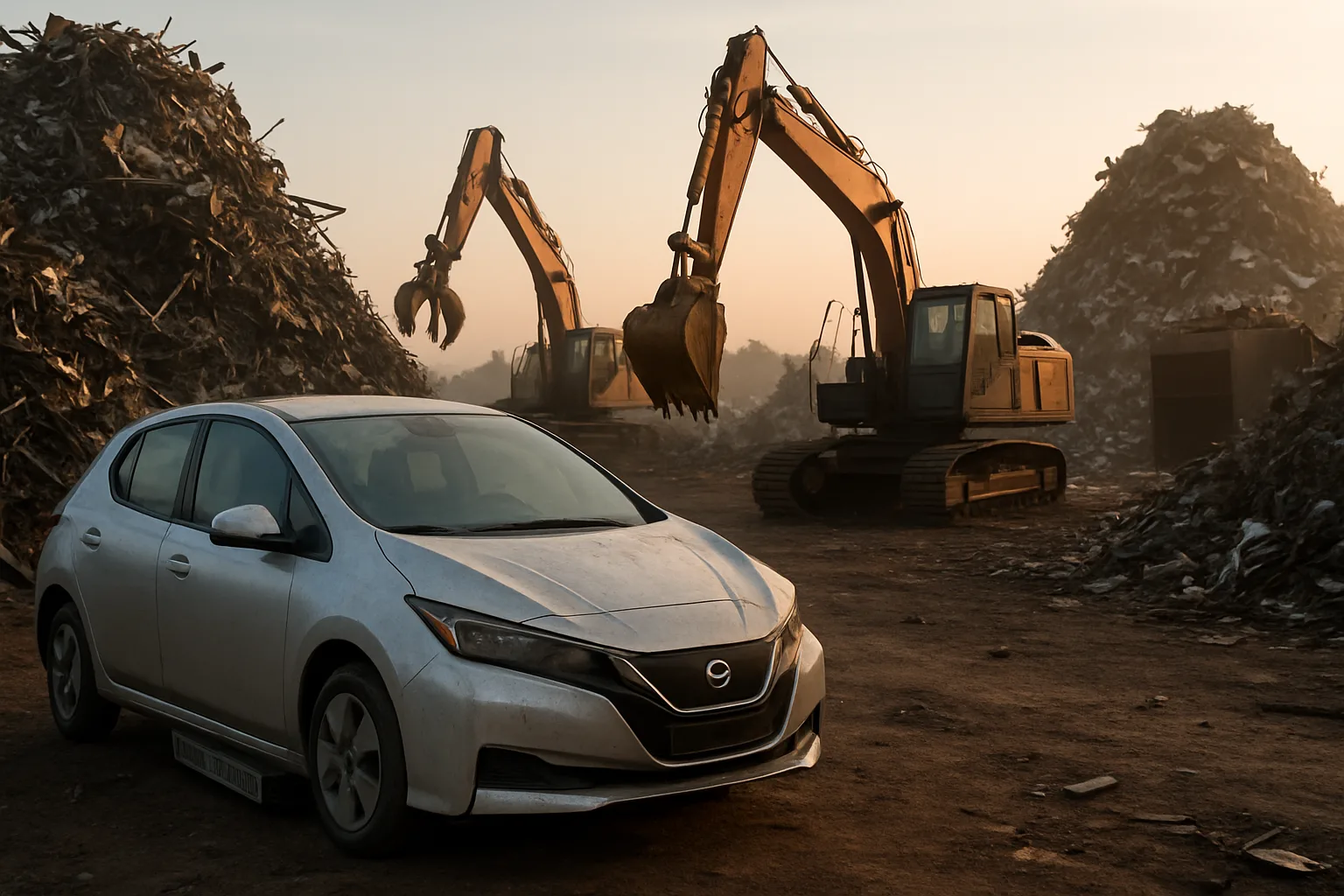
Most people assume their old EV is worth nothing once the battery dies. That assumption is costing Canadian car owners real money.
Electric vehicles are hitting end-of-life in growing numbers across Canada. The first wave of mass-market EVs from the early 2010s are now aging out — and owners are discovering that selling a dead or damaged EV is nothing like selling a conventional gas car. The rules are different. The value is different. And if you don't know what you're doing, you'll leave serious money on the table.
If you're sitting on a dead EV in Hamilton and wondering what it's worth, this is the article you need. We're going to break down exactly what happens to EV batteries at end of life, where the real value sits, and how the right approach — through platforms like SMASH — can mean the difference between a scrap offer and a real payout.
Why EV End-of-Life Is a Different Problem Entirely
A conventional scrap car is straightforward. You call someone, they weigh the steel, strip the cats and non-ferrous, and cut you a cheque. The variables are well understood. EV end-of-life is a completely different conversation — and most scrap yards in Ontario aren't equipped to handle it properly.
The battery pack in an EV is the single most valuable and most complex component in the vehicle. A lithium-ion battery pack from a Nissan Leaf, Chevrolet Bolt, or Tesla Model 3 contains cobalt, nickel, manganese, lithium, copper, and aluminum — all materials with real commodity value. The challenge is that extracting and recycling those materials safely requires specialized equipment, certified handlers, and a regulated process that most traditional yards can't support.
This creates an information gap. Owners of end-of-life EVs often get lowball scrap offers because the buyer on the other end doesn't know how to price a battery pack — or doesn't have the downstream connections to move it properly. Understanding where the value actually lives changes the conversation entirely.
What's Inside That Battery Pack — and What It's Worth
EV battery packs aren't one thing. They're a system of modules, cells, thermal management components, battery management electronics, copper wiring, aluminum casing, and in many cases, rare earth materials that carry significant commodity value. When a battery reaches end of life for vehicle use, it still has value — either for second-life energy storage applications or for material recovery through battery recycling.
Here's a rough breakdown of what's recoverable from a typical EV battery pack:
- Lithium: Used in new battery production — demand is high and growing across North America.
- Cobalt: One of the more valuable materials in older battery chemistries, though newer packs are reducing cobalt content.
- Nickel: A major component in NMC (nickel-manganese-cobalt) batteries, directly tied to commodity markets.
- Copper: Present in wiring, busbars, and motor windings — copper value is always significant.
- Aluminum: Battery casings, structural components, and heat exchangers all contain aluminum with real scrap value.
- Steel: The frame and body of the vehicle still contribute to bulk ferrous weight.
Beyond the battery, an end-of-life EV still has value in its electric motor (which contains copper windings and rare earth magnets), power electronics, charging infrastructure components, and in many cases, salvageable body panels and interior parts depending on condition. The total picture is more complex — and potentially more valuable — than a straight scrap-by-weight calculation.
This is exactly why it matters who you sell to. A buyer who understands EV components will make you a better offer than one who's just looking at curb weight.
The Hamilton Market: What We're Seeing With End-of-Life EVs
Hamilton has a long industrial history in steel and metal recycling. The infrastructure exists. But EV battery handling is still catching up — and that gap creates real variation in what sellers are being offered for their vehicles. We're seeing owners of dead or damaged EVs in Hamilton get wildly different quotes depending on who they contact first.
The owners who do best are the ones who create competition. They don't call one buyer and accept the first number. They document the vehicle properly — battery state, mileage, VIN, condition photos — and put it in front of multiple vetted buyers who understand what they're looking at. That's the model that actually works.
If your EV has been written off after an accident, lost its battery capacity below usable thresholds, or simply aged out of practical use, you still have a real asset. An Ontario driver who came to us with a 2014 Nissan Leaf — battery capacity at roughly 60% of original, body in fair condition — was quoted a basic scrap price by the first caller. Through competitive bidding with multiple buyers who understood EV components, the outcome was meaningfully better. We don't quote specific numbers because every vehicle is different, but the gap between a scrap offer and a competitive market offer can be substantial.
If you're navigating this in Hamilton, the Hamilton scrap metal services available through SMASH connect you with buyers who actually know EV value — not just bulk weight.
How the SMASH Approach Changes the Outcome for EV Sellers
The old way of selling a junk car — one call, one offer, take it or leave it — was already broken for conventional vehicles. For EVs, it's even more inadequate. Battery value, motor value, and component value require buyers who specialize. And the only way to know you're getting the right price is to have multiple qualified buyers competing for your vehicle at the same time.
That's the SMASH model. Instead of calling around and getting quotes from whoever picks up the phone, you document your vehicle once — VIN, photos, battery condition, damage details — and put it in front of a network of vetted buyers. Competition does the work. You don't have to negotiate. You let the market tell you what your EV is actually worth.
For EV sellers specifically, this matters because:
- Not all buyers are equal. A buyer with downstream battery recycling relationships will value your pack higher than one who treats it as a liability.
- Documentation drives confidence. Buyers bid more aggressively when they know exactly what they're getting. Photo documentation, VIN verification, and battery state information remove uncertainty — and uncertainty is what drives low offers.
- You need options. One buyer has no incentive to offer full value. Multiple buyers competing do.
You can get a free car valuation in Canada through SMASH — and for EV owners, that valuation process accounts for the full picture of what your vehicle contains, not just its weight on a scale.
For more context on navigating the Canadian car selling market, browse Canadian car selling tips on our blog — there's solid material there on damaged vehicles, estate sales, and written-off cars that applies directly to the EV situation.
Scrap Car Removal Hamilton: What the Process Actually Looks Like
One of the most common questions we get from Hamilton EV owners is: how does pickup actually work for an electric vehicle? It's a fair question. EVs require different handling — a dead battery pack means the vehicle may not move under its own power, and some yards aren't equipped for flatbed or specialized EV transport.
The process through SMASH is straightforward:
- Submit your vehicle details. VIN, photos, battery condition, any damage or accident history. The more detail, the better the offers.
- Receive competitive offers. Vetted buyers review your listing and submit bids. You see what the market says your vehicle is actually worth.
- Accept the offer that works for you. No pressure, no single buyer setting the terms.
- Arrange pickup. Scrap car removal in Hamilton is handled by the buyer — free pickup is standard. You don't need to move a dead EV yourself.
- Get paid. Payment terms are confirmed before pickup. No surprises at the curb.
For vehicles that can't be driven — battery failure, accident damage, salvage title, no insurance — free pickup is the standard. You can also schedule free scrap car pickup in Canada directly if you want to move quickly on a vehicle that's been sitting.
The process works the same whether your EV is a total write-off, a battery replacement candidate that you've decided isn't worth fixing, or a clean-condition vehicle with a failed pack that still has significant parts value.
Don't Leave EV Value on the Table — Here's the Bottom Line
The EV end-of-life market in Canada is still maturing. Battery recycling infrastructure is expanding. Demand for recovered lithium, nickel, and cobalt is increasing as North American battery manufacturing scales up. That means the value of end-of-life EV batteries is not going down — and sellers who approach this with the right information will consistently do better than those who take the first scrap offer they're given.
If you're in Hamilton or anywhere in Ontario with a dead, damaged, uninsured, or written-off EV, you have real options. The vehicle sitting in your driveway is not worthless. It contains materials that buyers actively want — and the right platform puts those buyers in competition for your specific vehicle.
SMASH exists precisely for this situation. No subscription fees. No single buyer setting the price. Just vetted buyers, documented vehicles, and competition that works in your favour. Whether you're selling an estate vehicle, a car after an accident, or an EV you've simply decided isn't worth repairing, connect with trusted auto buyers in Canada through SMASH Cars and find out what your vehicle is actually worth before you commit to anything.
Get connected with trusted auto buyers in Canada through SMASH — get your free offer at smash-cars.ca. If you've been sitting on a dead EV and wondering whether it's worth the effort, the answer is almost always yes — it just depends on finding the right buyers.
Frequently Asked Questions
Q: Can I sell a junk EV for cash in Hamilton even if the battery is completely dead?
Yes. A dead battery does not mean a worthless vehicle. The battery pack itself contains recoverable materials — lithium, cobalt, nickel, copper, aluminum — that have real commodity value. The rest of the vehicle (motor, electronics, body) adds to that. A dead battery affects drivability, not total value. Connecting with buyers who specialize in EV components, like those in the SMASH network, will get you a better outcome than a standard scrap quote.
Q: How does scrap car removal in Hamilton work for electric vehicles?
It works the same as any scrap car removal, with one key difference: EVs often require flatbed transport since a dead battery means no self-propulsion. Most buyers in the SMASH network handle EV-specific pickup logistics. You document the vehicle, accept an offer, and the buyer handles transportation at no cost to you. You don't need to get the car to a yard yourself.
Q: What's the difference between scrap value and market value for a junk car in Ontario?
Scrap value is based on bulk weight — mostly the steel in the vehicle body. Market value accounts for all recoverable components: catalytic converters, non-ferrous metals, working parts, and in the case of EVs, the battery pack and motor. Market value is almost always higher than scrap value. The gap between the two is where sellers lose money when they accept the first offer from a single buyer without creating any competition.
Q: Can I sell a written-off or salvage title EV in Hamilton?
Yes. A salvage or written-off title doesn't prevent a sale — it just affects how the vehicle is categorized. Most buyers purchasing end-of-life or damaged EVs are doing so for parts or material recovery, not for resale as a driveable vehicle, so the title status is less of a barrier. Be upfront about the title status when documenting your vehicle; buyers who understand salvage EVs will still bid competitively.
Q: How do I know I'm getting a fair price for my junk car in Hamilton?
The only reliable way to know you're getting fair value is to have multiple buyers competing for your vehicle at the same time. A single quote from one buyer tells you what that one buyer is willing to offer — not what the market says your car is worth. Platforms like SMASH put your documented vehicle in front of multiple vetted buyers simultaneously, so competition sets the price rather than a single buyer's preference.
Follow SMASH on LinkedIn for ongoing industry updates, scrap metal market insights, and practical tips for Canadian car sellers navigating a fast-changing market.
```