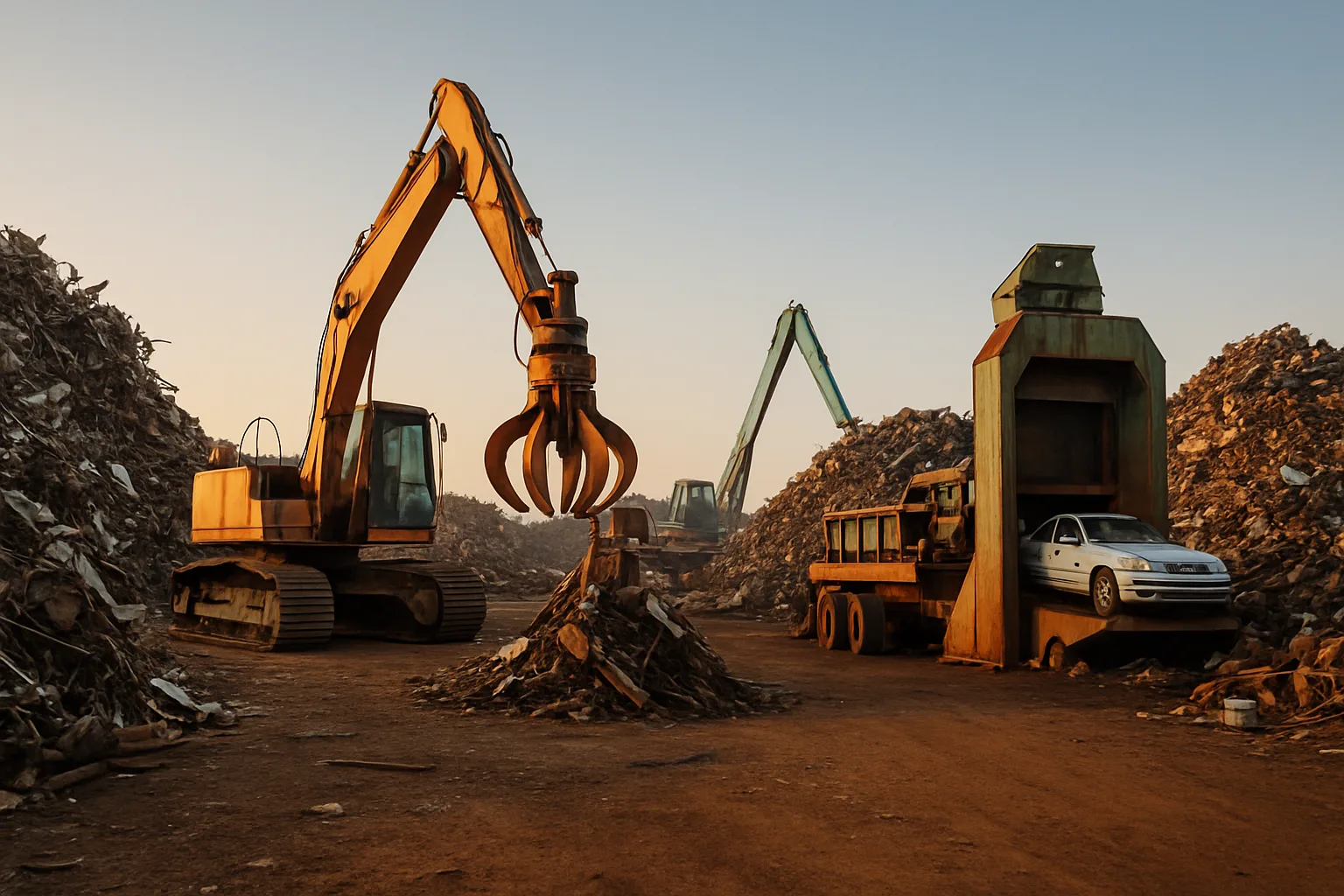
Strip It or Crush It? How Salvage Yards Decide What Happens to Your Car
Most people picture one thing when they drop off an end-of-life vehicle: a crusher flattening it into a metal cube. The reality is more calculated than that — and understanding the decision changes how much money you can walk away with. If you're trying to sell my car fast Etobicoke, knowing what a salvage yard sees when they look at your vehicle gives you real leverage.
Salvage yards aren't charities. Every decision about what to strip and what to crush comes down to time, demand, and margin. Some vehicles are worth far more disassembled. Others cost more to strip than the parts would ever sell for. The yard's job is to figure out which is which — fast.
Your job is to make sure you're not leaving money on the table before someone else cashes in on your car.
The Strip-vs-Crush Decision: What Salvage Yards Are Actually Evaluating
When a vehicle rolls into a salvage yard, someone — usually an experienced buyer or dismantler — does a quick triage. They're not being sentimental. They're running a rough mental calculation: what are the sellable parts worth versus the labour cost to remove them versus what the crushed shell will yield in scrap metal weight?
Here's what they're looking at:
- Make, model, and year: High-demand vehicles — certain pickup trucks, late-model SUVs, popular import platforms — have strong parts markets. Obscure or low-volume models often don't.
- Mileage and mechanical condition: A seized engine or blown transmission isn't worth pulling. A low-mileage engine from a totalled vehicle with body damage? That gets pulled first.
- Body condition: Doors, hoods, fenders, and bumper covers sell well if they're straight and unrusted. A vehicle that's been sitting in a field in Ontario for five winters may have panels that are worthless as parts but still contribute to the scrap weight.
- Catalytic converter: This is often the first thing evaluated. The precious metals inside — platinum, palladium, rhodium — can represent a significant chunk of a vehicle's non-ferrous value. Depending on the vehicle, a cat can be worth anywhere from a modest sum to several hundred dollars.
- Electrical components and sensors: Alternators, starters, ABS modules, and infotainment systems have active secondary markets, especially as parts availability for older vehicles tightens.
- Tires and wheels: Good rubber sells fast. Steel rims go to scrap. Alloys get assessed separately.
The yard then decides: full strip (pull everything sellable, then crush the shell), partial strip (pull the high-value items only), or straight crush (no stripping — the whole vehicle goes to the shredder as-is). Most yards are running a hybrid — they pull the obvious wins and crush the rest.
Why the Strip-vs-Crush Split Matters for Cash for Junk Cars in Etobicoke
Here's the part most car owners miss. If a salvage yard decides your vehicle is worth stripping — even partially — it's because the parts value exceeds scrap value. That gap is money. And if you sold your car to a single buyer without competition, you likely didn't capture it.
This is the core problem with the old way of selling a junk car. You call one buyer, they quote you a flat number based on weight, and that's the end of the negotiation. They don't tell you they plan to pull the catalytic converter, sell the engine to a rebuilder in Mississauga, and flip the alloy wheels before the body even hits the crusher. The cash for junk cars Etobicoke market is active — there are real buyers competing for the right vehicles. The question is whether you're accessing that competition or just accepting the first number that comes in.
Platforms like SMASH Cars help you connect with trusted auto buyers in Canada who bid competitively based on what your specific vehicle is actually worth — not just what it weighs. That competition is what reveals the real market price. When multiple buyers see your car and its documented condition, the strip value gets priced into the offer, not pocketed after the fact.
What Makes a Vehicle Worth More Than Scrap Value in 2026
Scrap metal recycling in Canada runs on commodity pricing — ferrous and non-ferrous metals fluctuate with global markets. A typical end-of-life passenger car might yield between 1,000 and 1,500 kilograms of steel. That base metal value is the floor. Everything above it comes from parts, fluids, and non-ferrous components.
In 2026, a few categories consistently push vehicles above straight scrap value:
- Catalytic converters on pre-2010 trucks and SUVs: Larger displacement engines often carry larger cats with higher precious metal loadings. If your truck has been sitting in a driveway in Etobicoke, the cat alone may justify more than a flat scrap quote.
- Low-mileage drivetrains on totalled vehicles: Insurance write-offs where the frame or body took the hit but the engine and transmission are intact are high-value targets for rebuilders.
- Vehicles with recent part replacements: New alternator? Fresh tires? Rebuilt transmission? These components have actual secondary market value — and buyers who know what they're looking for will pay for it.
- Rare or discontinued models: Parts availability dries up on discontinued platforms. Yards that specialize in a particular make will pay a premium for a clean parts car.
- Copper and aluminum content: Wiring harnesses, radiators, A/C condensers — non-ferrous metals are worth more per kilogram than steel. A vehicle with intact cooling and electrical systems carries more non-ferrous value than one that's been stripped already.
If you're not sure where your vehicle falls, get a free car valuation in Canada through SMASH Cars before you accept any single offer. Documentation matters — photo evidence of condition, the VIN, any service records — all of it helps buyers price accurately rather than discounting for uncertainty.
Scrap Car Removal Near Me: What to Expect From the Process
One of the most common questions from first-time sellers is what the actual process looks like. Whether you're settling an estate, upgrading to a newer vehicle, selling after an accident, or just clearing space on your Etobicoke property, the mechanics are straightforward.
Here's the typical flow when you sell my junk car for cash through a competitive buyer platform:
- Submit your vehicle details: Year, make, model, mileage, condition, and photos. The more accurate the information, the more accurate the offers.
- Receive competitive offers: Multiple buyers review your listing. Offers reflect what your specific vehicle is worth to buyers who intend to strip, part out, or process it — not just a generic weight-based number.
- Accept and schedule pickup: Most scrap car removal near me pickups in Ontario can be scheduled within 24 to 72 hours. The buyer handles transport.
- Get paid: Payment is confirmed at pickup. No waiting, no cheques that take two weeks to clear.
You don't need a safety certificate. You don't need the vehicle to run. You don't need insurance on it. What you do need is your vehicle ownership (or appropriate estate documents if the car belonged to a deceased family member) and a clear sense of what you're holding.
For a deeper look at what to prepare before the pickup, browse Canadian car selling tips on our blog — there's practical guidance on documentation, title transfers, and what to remove from the vehicle before it goes.
Don't Let the Yard Win What Should Be Your Money
The strip-vs-crush decision is the yard's optimization problem. They make it every day, on dozens of vehicles, and they're good at it. The only way to ensure that optimization works in your favour — not just theirs — is to create competition before you hand over the keys.
A single phone call to a single buyer is a one-sided negotiation. That buyer already knows what they're going to do with your car. You're the only one without information. Competitive bidding flips that dynamic. When multiple buyers are looking at the same vehicle, the one who can extract the most value from it has to bid accordingly to win it.
That's true whether you're in Etobicoke, Thunder Bay, or anywhere else in Ontario. The scrap metal recycling Canada market is national. Buyers operate across regions. The internet removed the geographic advantage that local yards used to rely on. Use it.
If you want to explore scrap car removal in Canada through GetMyScrapCar, that's another resource worth knowing about — especially for vehicles that are ready to go straight to the recycler.
The right move in 2026 isn't calling the first number on a yard's sign. It's putting your vehicle in front of the buyers who will actually compete for it. SMASH makes that process straightforward — no subscription, no guesswork, no leaving the strip value in someone else's pocket.
Ready to find out what your car is actually worth? Get connected with trusted auto buyers in Canada through SMASH and get your free offer at smash-cars.ca. It costs nothing to find out — and the difference between a scrap quote and a competitive offer can be significant.
Frequently Asked Questions
Q: How do I sell my car fast in Etobicoke without getting lowballed?
The best way to avoid a lowball offer is to create competition. Getting multiple offers — rather than accepting the first one — ensures buyers price in the actual value of your vehicle's parts and materials, not just what they can get away with offering. Platforms like SMASH connect you with vetted buyers who bid against each other.
Q: Do salvage yards pay more for certain vehicles than others?
Yes. High-demand makes and models, vehicles with intact drivetrains, low-mileage engines, and cars with valuable catalytic converters consistently command more than straight scrap weight pricing. If your vehicle has any of these characteristics, a flat scrap quote probably undervalues it.
Q: Can I sell my car in Etobicoke if it doesn't run?
Absolutely. Non-running vehicles are sold every day through competitive buyer platforms. You don't need the car to start, pass a safety inspection, or be insured. You do need valid ownership documents, and the buyer arranges towing as part of the transaction.
Q: What's the difference between scrap value and parts value for my junk car?
Scrap value is based purely on the weight of the steel and other metals in the vehicle. Parts value is what individual components — engines, transmissions, catalytic converters, electrical systems, body panels — can sell for on the secondary market. Vehicles worth stripping will sell for more than straight scrap. The goal is to make sure that difference ends up in your pocket, not the yard's.
Q: How quickly can I get cash for my junk car in Ontario?
Most transactions through competitive buyer platforms in Ontario complete within 24 to 72 hours from offer acceptance to pickup and payment. Same-day pickup is available in many cases, particularly in higher-density areas like Etobicoke and the Greater Toronto Area.
Follow SMASH on LinkedIn for ongoing industry updates, scrap metal market insights, and tips on getting the most out of your end-of-life vehicle.