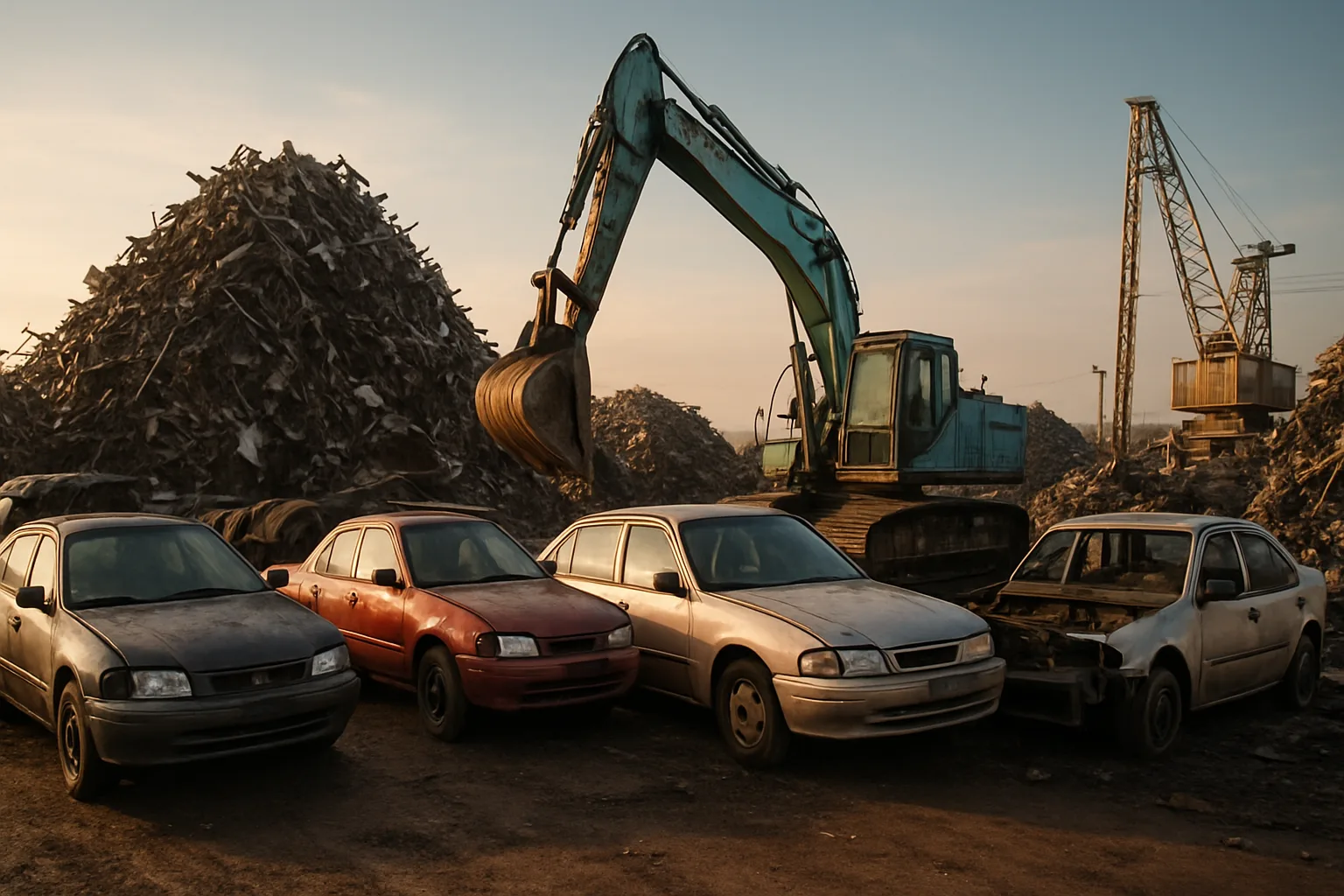
Most car owners in Canada leave serious money on the table when they sell a junk car — not because their vehicle isn't worth anything, but because they have no idea how regional pricing works. If you're searching for junk car buyers near me St. Catharines, you need to understand what's actually driving the number you get quoted — and why that number can vary by hundreds of dollars depending on who you call and when.
This isn't a market with one fixed price. Scrap metal commodities fluctuate. Buyer demand shifts by region. And the components in your car — the catalytic converter, the transmission, the aluminum wheels — carry different values depending on who's buying and how they're buying. Let's break down how the Canadian scrap car market actually works, what affects your payout, and how to make sure you're not the person who gets the lowest offer.
How Scrap Car Pricing Actually Works in Canada
When you sell scrap car in Ontario, you're not just selling dead weight. You're selling a mix of ferrous metal, non-ferrous metal, fluids, and recoverable parts — each priced differently and each contributing to your total offer. The buyer's job is to figure out how much they can recover, then offer you a fraction of that. Your job is to make sure that fraction is fair.
The main factors that drive your offer include:
- Vehicle weight: Heavier vehicles — trucks, SUVs, vans — tend to yield more scrap metal by the tonne
- Ferrous vs. non-ferrous content: Steel is the base, but aluminum, copper, and brass all command higher prices per kilogram
- Catalytic converter value: This is often the most valuable single component in an end-of-life vehicle — platinum, palladium, and rhodium inside drive its worth
- Current commodity prices: Steel and precious metals trade daily on global markets — your quote today may differ from next week's
- Vehicle condition: A car that runs or has intact parts is worth more than a stripped shell
- Local buyer competition: In markets with more buyers bidding, sellers tend to see better price discovery
This last point matters more than most people realize. If you're calling one buyer, you're getting one opinion of value — not the market. That's the core problem with the old way of selling a junk car.
Regional Pricing: Why St. Catharines Is a Strong Market to Sell In
Not every city in Canada is equal when it comes to scrap car value. Population density, proximity to steel mills and processing facilities, and the number of active buyers in a region all shape what you're likely to get quoted. St. Catharines and the broader Niagara region sit in a strong position — within driving distance of major processing infrastructure in Hamilton and the greater Golden Horseshoe corridor, which means buyers here have realistic access to end markets for the metal they recover.
That geographic advantage doesn't automatically translate to a better offer — especially if you're only calling one local buyer. But it does mean there's legitimate competition for your vehicle if you know how to access it. Platforms like SMASH Cars are built specifically to expose your vehicle to multiple vetted buyers at once, which is how price discovery actually works. One phone call to one yard gives you one data point. A competitive process gives you the market.
For St. Catharines residents dealing with an estate vehicle, a written-off car, or something that's been sitting in a driveway for years, the local buyer pool is real — and it's worth tapping properly. You can explore St. Catharines scrap metal services to connect with buyers already active in the area.
What Makes a Car Worth More Than Scrap Value?
Here's what a lot of sellers don't know: the scrap weight price is a floor, not a ceiling. Your car may be worth considerably more than scrap if any of the following apply — and most end-of-life vehicles have at least one of them.
- The catalytic converter is intact. Cats contain platinum group metals (PGMs) that are independently valuable. A single cat from the right vehicle can be worth more than the entire scrap weight of the car. A catalytic converter auction format gets you real market value on that component — not a low-ball guess from a single buyer.
- The engine or transmission is reusable. Running or recently running powertrains have parts market value above scrap.
- Tires and wheels have tread and no damage. A set of winter tires or decent alloys adds resale value.
- The vehicle is a popular make/model for parts. High-demand vehicles mean more buyers competing for components.
- The vehicle has low mileage for its age. Even a damaged car with low kilometres may attract parts buyers willing to pay above scrap.
The mistake most people make is assuming their car is "just scrap" without investigating. A proper valuation — using a scrap car value calculator or getting multiple offers — can reveal how much value you're sitting on. When you get a free car valuation in Canada, you're starting from real data, not a guess.
Cash for Cars in St. Catharines: How to Compare Buyers Without Getting Burned
The cash for cars St. Catharines market has real buyers — but not all of them are offering you the same deal. Some buyers lowball because they know you haven't shopped around. Some offer fast cash but slow pickup. Some give you a number over the phone and change it when they arrive. Knowing how to evaluate an offer protects you.
Here's how to compare offers the right way:
- Get at least three quotes before accepting anything — the spread between the lowest and highest is often significant
- Confirm the offer includes free towing — some buyers deduct a pickup fee from the final number
- Ask whether the price is firm — get clarity on whether an in-person inspection can change the quote
- Check if the buyer handles the paperwork — transfer of ownership and deregistration are your responsibility in Ontario unless the buyer handles it
- Avoid buyers who pressure you to decide immediately — a legitimate offer can withstand a 24-hour comparison window
If you're dealing with a salvage title car, a vehicle with no insurance, or an inherited vehicle from an estate, the process has a few extra steps — but none of them should cost you money upfront. A buyer asking for a fee before pickup is a red flag. For straightforward situations, Canadian scrap car removal from GetMyScrapCar handles the logistics cleanly, so you're not managing the pickup yourself.
Selling Inherited, Damaged, or Uninsured Cars in Ontario: What Changes
Not every car sale is a simple transaction. A significant portion of the vehicles people want to sell in Ontario fall into categories that require a bit more attention — estate vehicles, accident write-offs, uninsured cars sitting in storage, or donated vehicles. The good news is that these vehicles still have real value. The process just requires the right buyer.
For an estate vehicle in St. Catharines, the executor needs to transfer ownership before a sale. That means a copy of the death certificate and the will (or letters of administration) alongside the vehicle's ownership documents. Some buyers are experienced with this process and will walk you through it. Others won't touch it. Know who you're dealing with.
For a written-off or salvage title car, the value is almost entirely in the parts and scrap — but that doesn't mean it's worthless. It means you need buyers who specialize in parts recovery, not just metal processing. A platform with a broader buyer network finds those buyers faster than a single cold call to a local yard.
For a car with no insurance or no safety certificate, you don't need either to sell for scrap or parts in Ontario. The province doesn't require a safety inspection for a private sale to a registered dismantler. Confirm with your buyer that they're licensed — this protects you legally and ensures proper deregistration.
If you're navigating any of these situations, browse Canadian car selling tips on our blog — there's practical guidance on each scenario without the runaround.
How SMASH Makes the Market Work for You
The traditional way to sell a junk car is broken. One buyer, one call, one number — take it or leave it. You have no idea if that offer reflects the actual market or just the buyer's margin. SMASH was built to fix that.
When you list your vehicle through SMASH, vetted buyers compete for it. That competition does two things: it surfaces real market value, and it removes the leverage a single buyer has over you when you're the only one in the room. More buyers means better price discovery. That's not a slogan — it's how auctions work.
There are no subscription fees. SMASH only wins when you win. And the platform handles photo documentation, VIN lookup, and auto-invoicing so there's no paperwork chaos on your end. Whether your car is a running 2015 Civic or a 2008 F-150 that hasn't moved in three years, the process is the same: list it, let buyers compete, get paid.
If you're ready to stop guessing and start getting real offers, connect with trusted auto buyers in Canada through SMASH Cars — get your free offer and let the market tell you what your car is actually worth.
Frequently Asked Questions
Q: How do I find junk car buyers near me in St. Catharines?
The fastest way is to use a platform like SMASH that connects you with multiple vetted buyers already active in the St. Catharines and Niagara region — rather than calling yards one by one. You get competing offers instead of a single take-it-or-leave-it number. Local buyers are real, but you need a process that gives you access to more than one.
Q: What's the average payout for a scrap car in Ontario in 2026?
Scrap car values vary based on vehicle weight, condition, metal prices, and the components still in the car — especially the catalytic converter. Prices fluctuate with commodity markets, so there's no single fixed number. The best way to know your car's current value is to get multiple quotes and use a scrap car value calculator as a baseline before accepting any offer.
Q: Can I sell a car with no insurance or no safety certificate in St. Catharines?
Yes. In Ontario, you don't need insurance or a safety certificate to sell a vehicle to a licensed dismantler or scrap buyer. You do need to transfer ownership and notify the Ministry of Transportation — your buyer should walk you through this. Make sure your buyer is a registered dismantler to protect yourself legally.
Q: How does a catalytic converter affect what I get for my scrap car?
The catalytic converter is often the most valuable single component in an end-of-life vehicle because it contains platinum group metals — platinum, palladium, and rhodium. An intact cat in a high-demand vehicle can meaningfully increase your total payout above straight scrap weight pricing. A competitive buying process, like a catalytic converter auction format, ensures you get market value for it rather than a flat-rate lowball.
Q: What documents do I need to sell an inherited car in Ontario?
To sell an estate vehicle in Ontario, the executor typically needs the vehicle's ownership (permit), proof of death, and documentation establishing their authority to act on behalf of the estate — such as a will or letters of administration. Some buyers are experienced with estate sales and will guide you through the transfer process. Confirm this before choosing your buyer, as not all yards handle inherited vehicles regularly.
Stay connected with the scrap market — follow SMASH on LinkedIn for industry updates, metal market insights, and tips on getting the most out of your end-of-life vehicle.